




Download
iLearn application
Elevate Your Financial Knowledge with the
ICICI Direct iLearn App


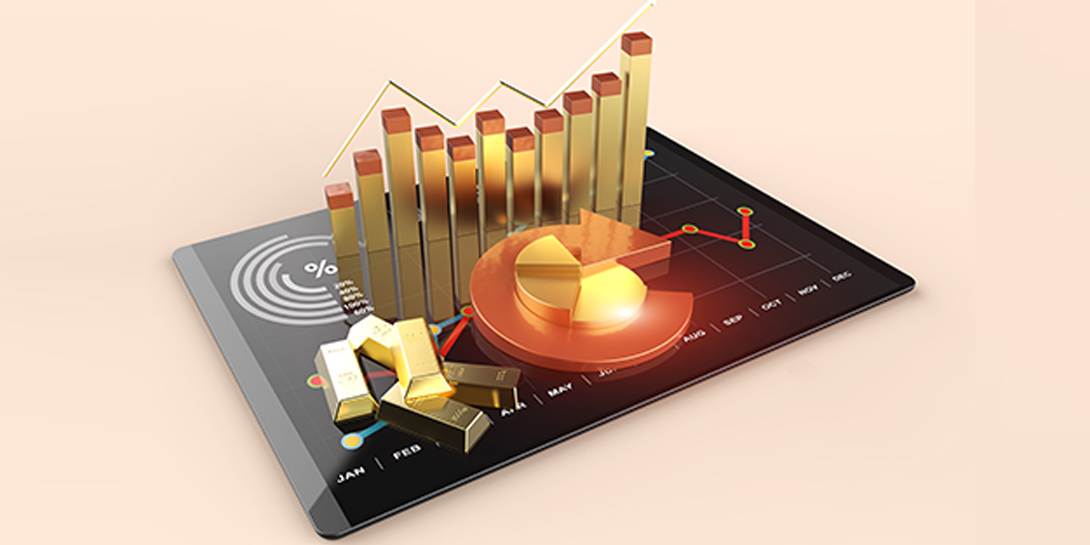
Gold is a precious metal that has found its way into Indian culture since the days of yore. The making of ornaments and also investment in gold have kept rising, regardless of its skyrocketing prices. In financial markets, gold is classified as a commodity . Like all other commodities, you can buy gold at two prices– Spot Gold and Futures Gold. It is important to know what each of these terms means to decide on how you should proceed with your investments in this yellow metal.
Spot Gold means a trade of gold where the transaction takes place on the spot. The payment for gold is made immediately against its instant delivery at the ongoing market price. The rate for this kind of gold trade is the Spot Gold rate or Spot Gold price.
For instance, let’s assume you want to buy 10 grams of gold from the Spot Trade market. If the ongoing market price of gold is Rs. 5,000/gm, you will have to pay Rs. 50,000 for immediate delivery of 10 grams of gold.
Futures Gold means trading in gold and the payment is made on a particular date in the present for delivery on a particular future date. The Futures Gold rate is typically more than the Spot Gold price, as it involves the risk of theft and inflation till the commodity is delivered to the buyer.
For instance, if you need delivery of 10 grams of gold five months from now, you can buy it now through the Futures Gold route. Let’s assume the price for Futures Gold is Rs. 5,500/gm. At this price, you have to now pay Rs. 55,000 for 10 grams of gold. Five months later, when you take the delivery of the gold, its ongoing market price could be less or more than Rs. 55,000. In case it’s more than 55,000, say Rs. 57,000, you make a profit of Rs. 2,000 from the futures trade. However, if the price is on the lower side, say Rs. 52,000, you have made a loss of Rs. 3,000.
Additional Read: Why Invest in Gold?
Gold continues to be a vital component of portfolios of almost all investors due to the lucrative returns it offers. The pricing of this metal depends on various factors like demand-supply, fluctuations in currencies , global and domestic economic and political conditions, etc. The daily price of Spot Gold keeps changing as per the market scenario. Spot gold does not involve any storage risk and market price speculations owing to its immediate delivery feature. Hence, it is cheaper than the price of Futures Gold.
|
Particulars |
Spot Gold |
Future Gold |
|
Pricing |
Spot Gold rate is the existing market price. |
Futures Gold rate is arrived at after taking into account
|
|
Risk Factor |
There is little or no risk involved in this trade. You are purchasing gold at face value. |
This is a riskier trade proposition as there is no certainty if the price of gold at the time of delivery will be less or more than the Futures Gold price. |
|
Delivery Status |
You can take immediate delivery. |
The agreed delivery date will be in the future. |
|
Liquidity Quotient |
The on-the-spot delivery associates a very high liquidity quotient with Spot Trade. |
The liquidity quotient is less as your money is locked for the given period, and you will receive the delivery on a particular date in the future. |
|
Payment Terms |
The payment for the purchase is done immediately. |
The payment for the purchase is done within 1-2 days of signing the Futures Gold contract. |
Additional Read:Comparison between Gold ETF and Gold Futures
Spot Gold trade and Futures Gold trade are fundamentally different ways of investing in the yellow metal. Now that you are aware of the basics of investing in gold, you can test the waters, and then dive. The same central principles apply to other commodities as well.


Understand contango in commodity trading, how futures prices differ from spot prices, and how financing, storage and insurance costs influence commodity pricing.
 164 views
 1 minutes
 19 Oct 2026
Copper is a widely used base metal known for its electrical and thermal conductivity, strength, ductility and corrosion resistance. It is used across electrical wiring, construction, machinery, power infrastructure and several industrial applications.
380 views
2 minutes
09 Oct 2026
Natural Gas is a widely traded energy commodity used for electricity generation, industrial activity, heating and other applications. Its prices can react sharply to weather, supply and demand, inventories, global energy markets and geopolitical developments.
647 views
1 minutes
30 Sep 2026
Elevate Your Financial Knowledge with the
ICICI Direct iLearn App
Elevate Your Financial Knowledge with the
ICICI Direct iLearn App
