



-202610121017596081271.jpg)



Download
iLearn application
Elevate Your Financial Knowledge with the
ICICI Direct iLearn App




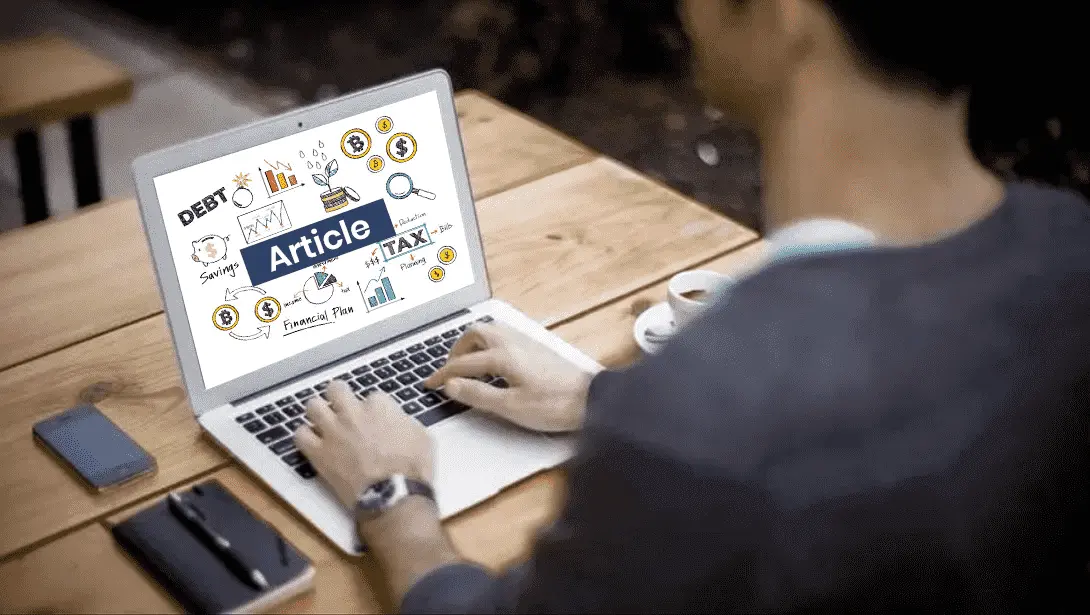
Like any other day, you go online to check your trading account details. And your jaw suddenly drops. There is minimal to nil balance in your account. But you know for sure that neither the market nor any of your investments have fallen in value. So, you quickly check the statement and collapse in shock. You see a list of money transfers from your trading account to an outside bank account. Neither did you authorize these transactions, nor did you receive notifications regarding the transfers. Unfortunately, you've just fallen prey to identity theft, hacking or cybercrime.
Your online trading account gives you instant access to check your information at any time, allows you to buy and sell securities and transfer money to and from your savings account. It offers you convenience and a host of benefits and features. But if you haven't been practising online safety measures, you could fall prey to malicious activity from lurking online cybercriminals.
For instance, as recent as last week, a popular online US stock trading platform, Robinhood, suffered a massive data breach with more than 5 million customer email addresses and 2 million customer names hacked, including a smaller set of more specific customer information. With the help of sophisticated software, malware and viruses, hackers infiltrated financial information of millions of customers.
When a trading account is hacked, cybercriminals or fraudsters obtain information to gain unauthorized access to the account. They then steal assets and securities or could misappropriate information to render the trading account invalid.
Hackers use malicious programs to attack unprotected and vulnerable computers of online investors.
For instance, you may have received a genuine-looking email from a hacker. You probably assume it to be an authentic link, attachment or URL. You click on it and, without your knowledge, launch a backend program or virus that begins to steal information. The virus or program monitors your computer activity, logs your keystrokes, thus allowing the identity thieves to obtain your credentials for all your financial accounts, including your trading account.
Additional Read: Is a demat account safe?
The most crucial step is to monitor your account vigilantly. That means you need to go through your account and read your statements carefully.
Signs that point out identity theft or cybercrime include:
If you notice any of the above signs, your trading account may have been compromised. In this case, you would need to reach out to your brokerage company immediately. While the firm takes the necessary steps to get you the requisite assistance, you must change your username and password for the breached trading account and every other financial account you use with the same login.
Watch Also: Tips To Safeguard Demat and Trading Account
At ICICIdirect, we are committed to developing robust defence mechanisms and procedures to address these concerns. We are highly sensitive and cautious about cyber security practices and understand our responsibility in securing the customer's personal information and other related details.
To achieve this objective, ICICIdirect has invested in technology systems designed to offer responsive and reliable solutions that:
Our robust and resilient Information Security processes ensure confidentiality, integrity, and data availability at all levels of infrastructure and applications.
We focus on all verticals of cyber security and follow an established framework to address cyber security relating to:
At ICICIdirect, we understand that cyber security is a constantly evolving area, hence making sustained investments in upgrading our systems and strengthening the cybersecurity team's breadth, depth, and capabilities.
We do this through:
In addition, every new application is subjected to Application Security Life Cycle (ASLC) testing. Periodic audits are conducted by the Internal Audit Group covering network security, database security and web servers. Additionally, we are also subject to SEBI-mandated Half Yearly Systems Audit and Cyber Security Audit.
While we constantly strive to put in place best-in-class controls relating to cyber security, we understand that due to the complexity of systems and sophistication of threat actors, it can be difficult to ensure complete safety at all times. Hence, we put in significant efforts and infrastructure to monitor our networks and identify threats and attacks through 24 x 7 monitoring systems.
Additional Read: How Safe is the Money I Invest Through Mutual Funds
At ICICIdirect, we hold cyber security as one of our topmost priorities and hence always remain cautious regarding the same. We constantly work towards enhancing our security posture.
Secure your financial information and protect your trading account today. Implement these simple safety measures and guard yourself against cybercriminals, malicious hackers and sophisticated thieves.
Additional Read: How to Open Currency Trading Account?
1. How do I protect my trading account?
There are many ways to protect your trading account from the risk of theft and fraud. Firstly, never divulge your trading account details such as login ID and password to anyone. Avoid clicking on unknown links on emails and texts. Update your multifactor authentication, keep the security checks on your system up to date and never use a public computer to access your trading account.
2. Can someone steal from your brokerage account?
While most banks and brokerages have safety measures in place to block online thieves and hackers from getting into your trading account, there may be chances that someone hacks your PC and gains access to your brokerage account. To avoid the same, make sure you follow safe practices to keep your brokerage account safe.
3. Is money safe in a trading account?
All major banks and brokerages have security measures in place to keep client trading accounts safe from hackers and malicious software. However, it helps to follow the best safety practices to protect your account further.
4. What if someone knows your brokerage account number?
Ideally, you should keep details such as your brokerage account number to yourself. However, if someone does get access to it, they will still need passwords and authentication to access the account. If you are suspicious that your account has been hacked, inform your bank immediately so they can take adequate measures.


Understand contango in commodity trading, how futures prices differ from spot prices, and how financing, storage and insurance costs influence commodity pricing.
 190 views
 1 minutes
 19 Oct 2026
Copper is a widely used base metal known for its electrical and thermal conductivity, strength, ductility and corrosion resistance. It is used across electrical wiring, construction, machinery, power infrastructure and several industrial applications.
409 views
2 minutes
09 Oct 2026
Natural Gas is a widely traded energy commodity used for electricity generation, industrial activity, heating and other applications. Its prices can react sharply to weather, supply and demand, inventories, global energy markets and geopolitical developments.
676 views
1 minutes
30 Sep 2026
Elevate Your Financial Knowledge with the
ICICI Direct iLearn App
Elevate Your Financial Knowledge with the
ICICI Direct iLearn App
