






Download
iLearn application
Elevate Your Financial Knowledge with the
ICICI Direct iLearn App





A concrete foundation and good understanding is must before you step into any new field, whether it is starting a business or building a investment portfolio. To diversify your investment portfolio, you should try and invest a part of your funds in commodities. Here’s a deeper understanding of the commodity market.
Many newbie investors and traders feel that the equity market is the only financial market in the world. If you think the same, you’re in for a surprise. Apart from the stock market, other popular financial markets include the commodities market and the currency market.
The stock market allows investors to trade the shares of a company. Similarly, the commodities market lets investors sell and buy commodities. A commodity market is popular amongst manufacturers, producers, and wholesale traders. It helps in price discovery of different commodities.
Trading of commodities is executed at dedicated commodity exchanges that let market participants buy and sell commodities online. In India, there are five popular commodity exchanges. These include Multi Commodity Exchange (MCX), National Commodity and Derivatives Exchange (NCDEX), National Stock Exchange (NSE), Bombay Stock Exchange (BSE) and Indian Commodity Exchange (ICEX).
Additional Read: Five Commodities to Trade in 2022
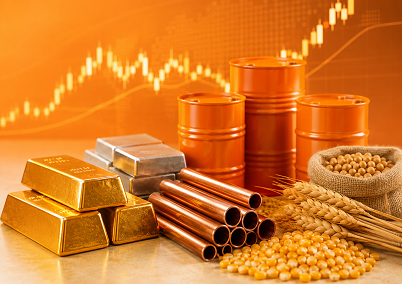
A commodity is a product that you use in daily life. Some examples include black pepper, salt, cotton, etc. It also includes valuable items like Silver and Gold. So, a commodity market allows you to invest or trade in commodities like cotton, silver, gold, etc. Just like as a stock market allows you to invest in the stocks of various companies.
Ownership is a significant difference between commodity trading and equity investment. When you buy equities, you have ownership in the listed company. The portion of ownership depends on the number of shares you buy. But with commodities, ownership is rare. You, instead, invest in the value of the underlying asset, and this value depends on supply and demand.
Additional Read: All About Commodity Indices
You must know of the two categories of commodities to start investing your funds.
These commodities are grown and cared for. They are further categorized into two categories:
- Agriculture: wheat, soybean, salt, coffee, rice, sugar, corn
- Livestock and meat: egg, live cattle, feeder cattle
These commodities include natural resources that are extracted or mined. The two categories of hard commodities are:
- Metals: Platinum, Zinc, Copper, Gold, Silver
- Energy: Gasoline, Crude oil, heating oil, Natural Gas
If you are worried about making the first move in the commodity market, here are some advantages that can make the decision clearer for you:
Commodity derivatives require a lower margin as compared to the stock market. One can trade on margin, giving hedgers and traders a chance to profit from a transaction. Traders get a chance to make returns from their investments. Here investment is the margin amount required to trade in commodity derivatives.
In comparison to the performance of stocks, the returns of the commodity market are inverse. It’s possible that the commodity market may give positive returns in a phase of declining stock market. This helps in diversifying an investment portfolio.
With changes in the economic and capital market conditions, the value of some goods is stable, while many commodities are volatile. Crude oil is an example of a volatile commodity. Its price changes because of large fluctuations in economic conditions, mining problems, and supply. Trading in such commodities may help in generating good returns but remember it could be risky and may turn other side.
After you understand commodity meaning in the stock market, you need to open a trading account to start your investment journey. Using this account, you can invest through derivative contracts such as futures and options.


Explore the meaning of a mainboard IPO, SEBI's eligibility routes, NSE and BSE listing rules, key benefits, and the checks investors should make before applying.
 1 k views
 4 minutes
 13 Aug 2026
Commodity prices don't move in isolation. Along with demand-supply dynamics and geopolitical events, one global indicator that often influences commodity prices is the US Dollar Index (DXY).
1 k views
3 minutes
11 Aug 2026
Gold can react to inflation data, while crude oil may jump after an inventory report or geopolitical disruption.
961 views
4 minutes
21 Jul 2026

Elevate Your Financial Knowledge with the
ICICI Direct iLearn App
Elevate Your Financial Knowledge with the
ICICI Direct iLearn App
