






Download
iLearn application
Elevate Your Financial Knowledge with the
ICICI Direct iLearn App





Gold has always been considered a safe-haven asset, especially during times of economic and political uncertainty. In India, gold is not just a precious metal but is also deeply rooted in the country's culture and traditions. Moreover, after the COVID-19 pandemic and its impact on the global economy, many investors are turning towards gold as a means of diversifying their portfolios and hedging against inflation.
In addition, with the recent fluctuations in the stock markets and the depreciating value of the Indian rupee, gold has emerged as an attractive investment option for Indians. The government of India has also launched various gold schemes and initiatives – such as the Sovereign Gold Bond (SGB) Scheme and the Gold Monetisation Scheme – to encourage investment in gold and reduce the country's reliance on imported gold.
Overall, the current economic climate, coupled with the cultural significance of gold in India, makes this a good time to consider investing in gold.
The right time to buy gold depends on various factors, such as global and domestic economic conditions, geopolitical risks, interest rates, and currency movements. Here are some factors to consider:
Apart from a downturn or recession, gold prices may also rise during times of high economic uncertainty or market volatility. For example, the COVID-19 pandemic led to a surge in demand for gold as a safe-haven asset.
It is important to note that inflation alone may not be enough to drive gold prices higher. Other economic factors, such as interest rates and currency movements, also play a role in determining gold prices.
The relationship between gold prices and currency movements can be complex, and it is important to consider the interplay between different currencies. For example, a stronger currency makes it more expensive for investors holding that currency to buy gold, leading to a drop in both demand and prices. The converse scenario is also equally true.
In addition to interest rates, it is important to consider the "real" interest rates (interest rates adjusted for inflation) when evaluating the impact of interest rates on gold prices. During periods of negative real interest rates, gold prices may rise as investors seek to protect their wealth from inflation.
Other geopolitical risks, such as trade tensions or natural disasters, can also impact gold prices. It is important to monitor global events and consider how they may influence the supply and demand dynamics of the gold market.
Sentiment plays an important role in determining the price of gold. During periods of high optimism and confidence in the economy, the price of gold may decrease, as investors may prefer to take on more riskier investments. Conversely, during periods of fear and uncertainty, gold may be viewed as a safe-haven investment, driving up its price.
Demand for gold tends to increase during the wedding and festival seasons in India, such as during Diwali and Dussehra. This increased demand can drive up the price of gold during these periods, so it may be wise to purchase gold during periods of lower demand.
The Indian government's policies related to gold can also impact its price. For example, changes in import duties or taxes on gold can affect its cost. Thus, it may be beneficial to stay informed of any changes to government policies related to gold before making a purchase.
Additional Read: Where does RBI store all of its gold & why?
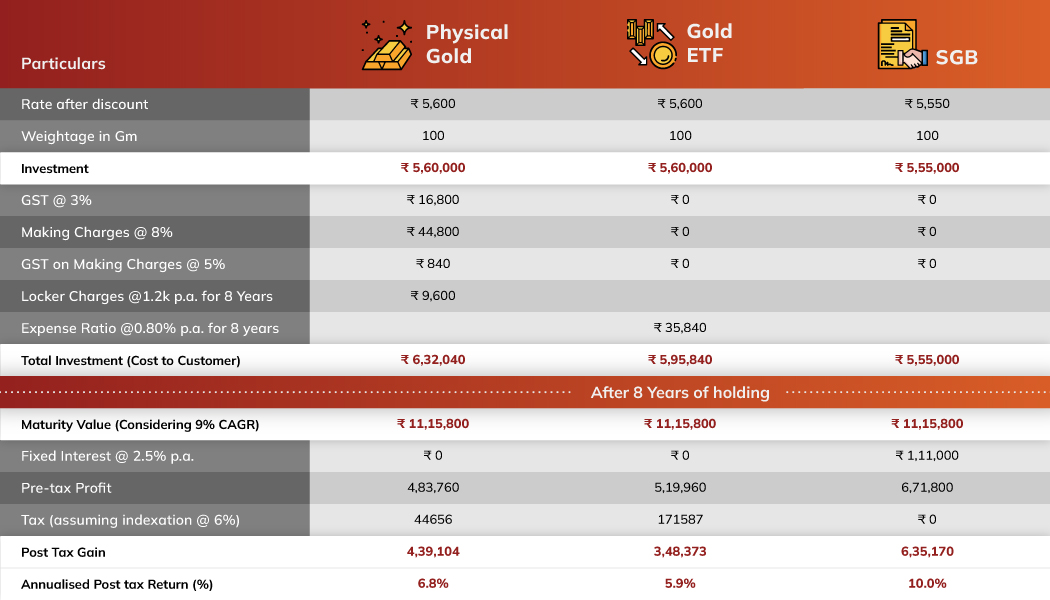
There is no one-size-fits-all answer to the question of when is the right time to buy gold in India. The decision to invest in gold should be based on careful consideration of various economic, geopolitical, and market factors that may impact the price of gold.
One thing to keep in mind is that gold should be viewed as a long-term investment rather than a short-term speculative play. It is important to have a diversified investment portfolio that includes a mix of asset classes, including stocks, bonds, real estate, and gold, among others.
Investors should also be aware of the tax implications associated with buying and selling gold, including capital gains tax and wealth tax, among others.
Ultimately, the decision to invest in gold should be based on your financial goals, risk appetite, and investment horizon. If you are looking for a safe-haven asset that can help preserve your wealth and provide a hedge against inflation and currency devaluation, gold may be a good option.


Vigilance Awareness Week 2026 promotes integrity, transparency, and ethical conduct. Join the movement and take the Integrity Pledge today.
 5 k views
 1 minutes
 26 Oct 2026
Understand contango in commodity trading, how futures prices differ from spot prices, and how financing, storage and insurance costs influence commodity pricing.
1 k views
1 minutes
19 Oct 2026
Copper is a widely used base metal known for its electrical and thermal conductivity, strength, ductility and corrosion resistance. It is used across electrical wiring, construction, machinery, power infrastructure and several industrial applications.
1 k views
2 minutes
09 Oct 2026


Elevate Your Financial Knowledge with the
ICICI Direct iLearn App
Elevate Your Financial Knowledge with the
ICICI Direct iLearn App
