




Download
iLearn application
Elevate Your Financial Knowledge with the
ICICI Direct iLearn App




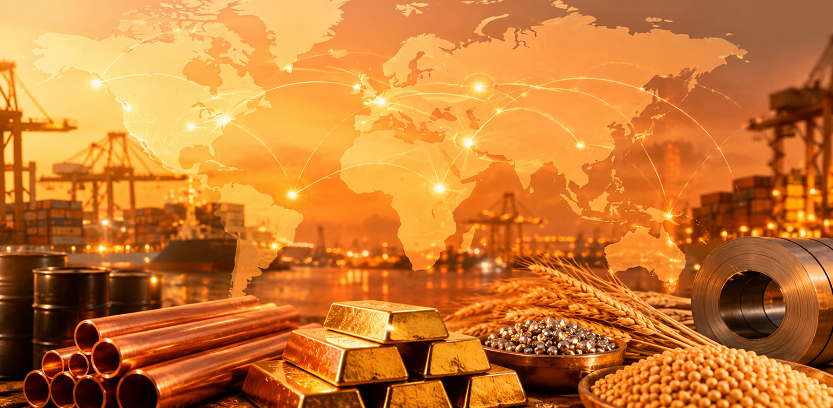
Commodity prices do not move in isolation.
Whether it is crude oil, gold, copper, or natural gas, the price you see on MCX is shaped by what is happening across the world.
Global demand and supply, inventory levels, geopolitical developments, currency movements, interest rates, and economic growth all play a role.
For a trader on MCX, understanding where these global price signals come from is a practical first step toward building a more informed view of the market.
In this article, we’ll explore the three exchanges that matter most: NYMEX, COMEX, and the London Metal Exchange (LME) and their link with MCX.
NYMEX (New York Mercantile Exchange) is part of CME Group and is a major marketplace for energy futures and options. CME Group lists WTI Crude Oil and Henry Hub Natural Gas among its global benchmark energy products.
For an MCX trader, NYMEX is an important reference for traders tracking crude oil and natural gas prices. Global crude prices, OPEC+ decisions, US energy inventories, weather conditions, and geopolitical developments can all influence sentiment in energy markets.
Source: CME Group – Energy Futures & Options | CME Group – Henry Hub Natural Gas
COMEX (Commodity Exchange Inc) is also part of CME Group and covers precious metals. CME Group offers futures and options in Gold and Silver, making COMEX an important reference for traders tracking MCX Gold and Silver prices.
International metal prices are important part of the equation. Other than this USD/INR exchange rate, domestic demand-supply conditions, import-related factors, basic custom duty and other market variables can also affect what the price looks like in rupee terms.
Source: CME Group – Precious Metals
The London Metal Exchange (LME) is a major global marketplace for industrial metals. The LME states that prices discovered on its platforms for non-ferrous metals are used as global reference prices. Its key contracts cover Copper, Aluminium, Zinc, Nickel, and Lead.
LME prices and inventory levels are closely watched by participants across the industrial metal supply chain, including traders on MCX tracking base metals.
Source: London Metal Exchange – Metals | MCX – Base Metals
|
MCX Commodity |
Segment |
Global Exchange to Track |
|
Crude Oil & Natural Gas |
Energy |
NYMEX |
|
Gold and Silver |
Precious Metals |
COMEX |
|
Copper, Aluminium, Zinc, Nickel, Lead |
Base Metals |
LME |
For an MCX trader, looking beyond domestic prices can provide a more complete view of the commodity market. Just as GIFT Nifty offers traders an early indication of global market sentiment before the Indian equity market opens, global commodity exchanges such as NYMEX, COMEX and LME can provide useful cues before the Indian commodity market begins trading.
Tracking movements in crude oil natural gas, gold, silver and base metals, along with global factors such as the US dollar index, inventories, economic data and geopolitical developments, can help traders understand the broader market direction.
So, before trading on MCX, look beyond MCX—track global commodity markets to stay informed about the factors shaping domestic prices.
Watch Video: MCX Traders: Which Global Commodity Exchanges Should You Track?


Copper is a widely used base metal known for its electrical and thermal conductivity, strength, ductility and corrosion resistance. It is used across electrical wiring, construction, machinery, power infrastructure and several industrial applications.
 19 views
 2 minutes
 09 Oct 2026
Copper is a widely used base metal known for its electrical and thermal conductivity, strength, ductility and corrosion resistance. It is used across electrical wiring, construction, machinery, power infrastructure and several industrial applications.
19 views
2 minutes
09 Oct 2026
Natural Gas is a widely traded energy commodity used for electricity generation, industrial activity, heating and other applications. Its prices can react sharply to weather, supply and demand, inventories, global energy markets and geopolitical developments.
237 views
1 minutes
30 Sep 2026

Elevate Your Financial Knowledge with the
ICICI Direct iLearn App
Elevate Your Financial Knowledge with the
ICICI Direct iLearn App
