







Download
iLearn application
Elevate Your Financial Knowledge with the
ICICI Direct iLearn App




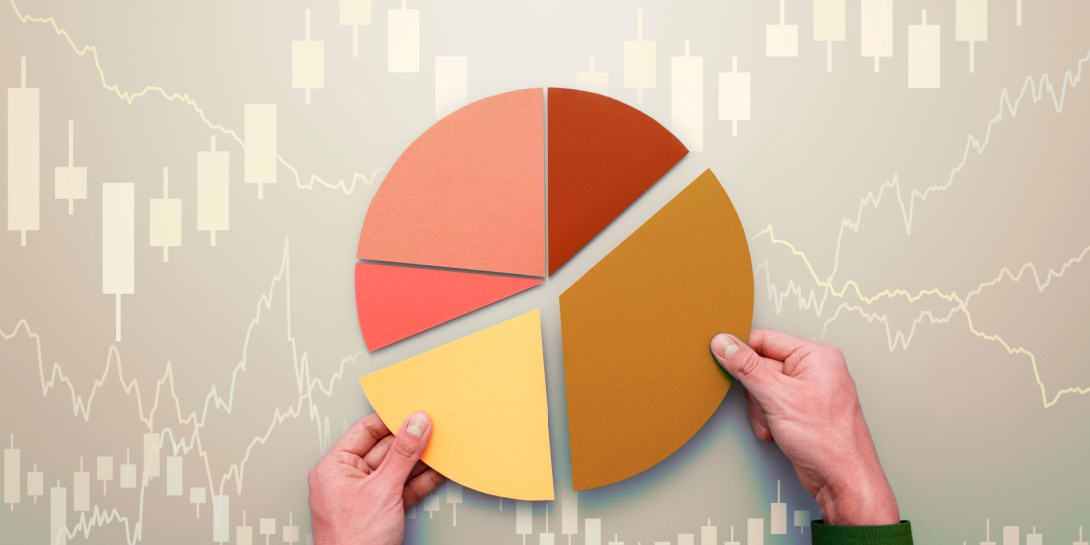
When the market is volatile, many investors, especially the new ones, panic and sell their holdings. Even investors who entered the market with a long-term vision start to doubt their strategy and investment rationale. Investors must know that market volatility is inevitable - you cannot escape it if you decide to play the investing game. However, you can learn to ride it. But what exactly is market volatility, and how can you manage your mutual funds in such times? We answer these questions here, so continue to read.
Market Volatility refers to the degree of variation or fluctuation in the price of a mutual fund (or any other asset) over a certain period. In other words, it measures how drastically prices move up or down in a given time frame. Higher volatility means prices swing widely and unpredictably, while lower volatility indicates more stable, gradual price changes. Volatility is an indicator of market risk—when volatility spikes, so does uncertainty and potential risk for investors.
Volatility can be measured using various metrics, but the most common is standard deviation, which calculates how much prices deviate from the average over a specific period. Another popular tool is the Volatility Index (VIX), often called the 'fear gauge', which reflects expected market volatility over the next 30 days.
The list of factors that can cause market volatility is long. Let us look at some of the key factors:
Mutual funds are directly impacted by market volatility because their performance is tied to the underlying assets in which they invest. In periods of market volatility, the value of these assets—whether stocks or bonds—can fluctuate significantly, causing the Net Asset Value (NAV) of the mutual fund to rise or fall sharply.
Equity mutual funds, which invest primarily in stocks, tend to experience the most pronounced impact during volatile times, as stock prices can swing wildly due to economic events, market sentiment, or geopolitical factors. Bond funds, though generally more stable, can also be affected by interest rate changes or credit risk concerns during market turbulence. Additionally, market volatility may cause investors to react emotionally, leading to large inflows or outflows from mutual funds, further affecting their performance.
Managing your mutual fund investments (or any other asset) during periods of market volatility can be tricky for investors. The good news is that, with the right strategy, you can navigate the ups and downs without panicking or making impulsive decisions. Here are some tips to help you manage your mutual fund portfolio during volatile times:
Here are some of the benefits of proactively managing mutual funds during a volatile market:
Market volatility is inevitable, but how you react to it can make a big difference in your mutual fund investments. Staying calm, focusing on your long-term goals, diversifying your portfolio, and continuing SIPs can help you manage your investments effectively during turbulent times. With a clear strategy and a bit of patience, you can weather market volatility and potentially come out stronger in the long run.


Gold is more than a precious metal. It is a safe-haven asset, investment avenue, central-bank reserve asset and industrial commodity. For a commodity trader, understanding both Gold's fundamentals and the contract being traded is important.
 127 views
 3 minutes
 23 Sep 2026
Gold is one of the world's most actively traded precious metals and is widely used for investment, jewellery and industrial applications. It is also considered a safe-haven asset during periods of economic or market uncertainty.
478 views
3 minutes
07 Sep 2026
In this article, we’ll explore the three exchanges that matter most: NYMEX, COMEX, and the London Metal Exchange (LME) and their link with MCX.
647 views
1 minutes
31 Aug 2026

Elevate Your Financial Knowledge with the
ICICI Direct iLearn App
Elevate Your Financial Knowledge with the
ICICI Direct iLearn App
