



-202610121017596081271.jpg)



Download
iLearn application
Elevate Your Financial Knowledge with the
ICICI Direct iLearn App




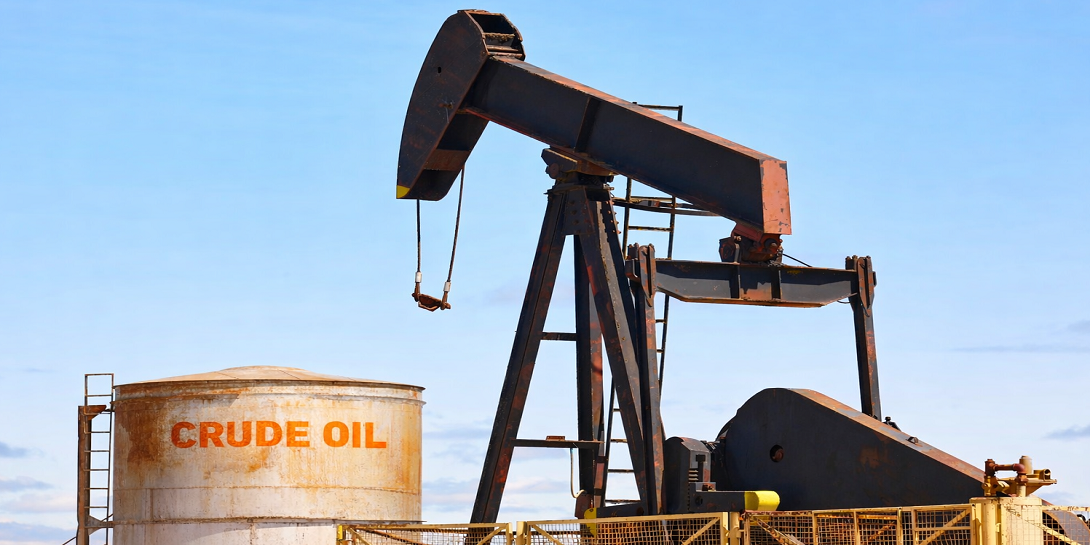
Every time you pull up to a petrol pump or check your delivery app, you feel the ripple effects of the global tug-of-war.
You check the news, see Brent Crude hitting $110, because of the middle east crisis and it makes sense.
But then you open your MCX trading app to go long on oil, and the price you're seeing isn't $110 (₹10,331.30)—it’s lower.
Why? Because in the world of oil, where you are and how you get the oil matters more than how "pure" the oil is.
Before we get into the where and the how, let’s understand what crude oil is.
Crude oil is a natural fossil fuel formed over millions of years from the remains of marine plants and animals. It is found deep underground or beneath the ocean floor and is extracted using drilling techniques. Crude oil in its raw form cannot be used directly. It must be processed
Before crude oil reaches refineries to create usable fuels like petrol, diesel, and LPG, it is traded in global markets and where its price is determined. The two most important benchmark oil indices are:
Brent crude is extracted from the North Sea and is the most widely used global benchmark. It influences the pricing of a large portion of international oil trade, including India’s imports.
WTI is a US-based crude oil benchmark known for its high quality and low sulfur content. It primarily reflects oil prices within the United States.
Countries like India rely heavily on imported crude oil, and the price they pay is largely linked to Brent crude. Any movement in these benchmark prices directly impacts fuel prices.
MCX crude oil futures track WTI (West Texas Intermediate) prices are derived from NYMEX (CME Group).
India imports crude oil priced against Brent Crude Oil this is the reason that refined Petrol/diesel prices in India are influenced more by Brent.
It seems backwards: WTI is better quality, yet Brent is more expensive.
The reason is logistics. Brent is extracted at sea. You can pump it directly onto a tanker and send it anywhere in the world—to India, China, or Europe. WTI is stuck in the middle of America and to get it to a buyer outside America becomes expensive. That "transportation tax" is why the demand for WTI is lower making it trade at a discount.
The price difference between Brent-WTI has shifted through five distinct historical eras:
|
Era |
Period |
Price Trend |
Key Market Drivers |
|
The Quality Era |
Pre-2010 |
WTI Premium |
WTI traded higher because it is "sweeter" (less sulfur) and "lighter," making it easier to refine into gasoline. |
|
The Arab Spring |
2011–2014 |
Brent Surge |
Middle East tensions and supply fears caused Brent to skyrocket, at one point trading at a $20+ premium over WTI. |
|
The Shale Boom |
2015–2019 |
WTI Discount |
U.S. fracking caused a massive supply surge. Inadequate pipelines couldn't move the oil fast enough, creating a domestic glut that kept WTI cheap. |
|
The COVID Shock |
2020 |
WTI Collapse |
With global travel stalled, storage in the U.S. hit capacity. WTI prices famously turned negative, while Brent remained relatively stable due to sea-storage options. |
|
The Geopolitical Era |
2022–2026 |
Risk Premium |
Wars in Ukraine and the Middle East heightened global supply risks. Brent, being the global benchmark, absorbed this "risk premium" more than domestic WTI. |
While MCX Crude Oil futures track WTI, not Brent; traders should keep an eye on both Brent & WTI, track US inventory data (affects WTI) and Middle East tensions (affects Brent)
Understanding the distinction between Brent and WTI crude oil is critical for Indian traders, as the MCX tracks WTI futures, while Indian petrol, diesel, jet fuel, heating oil, LPG, plastic detergent, lubricant, cosmetics prices are heavily influenced by the Brent benchmark. Although Brent serves as the global standard for international trade, MCX crude oil futures are derived from NYMEX WTI, necessitating that traders monitor US inventory data in addition to geopolitical factors impacting Brent. In Oil markets, where the crude is located and how easily it can reach buyers matters more than how refined it is.
Also Read: What determines the prices of Crude Oil?
Watch Video: BRENT V/S WTI


Understand contango in commodity trading, how futures prices differ from spot prices, and how financing, storage and insurance costs influence commodity pricing.
 36 views
 1 minutes
 19 Oct 2026
Copper is a widely used base metal known for its electrical and thermal conductivity, strength, ductility and corrosion resistance. It is used across electrical wiring, construction, machinery, power infrastructure and several industrial applications.
305 views
2 minutes
09 Oct 2026
Natural Gas is a widely traded energy commodity used for electricity generation, industrial activity, heating and other applications. Its prices can react sharply to weather, supply and demand, inventories, global energy markets and geopolitical developments.
520 views
1 minutes
30 Sep 2026


Elevate Your Financial Knowledge with the
ICICI Direct iLearn App
Elevate Your Financial Knowledge with the
ICICI Direct iLearn App
