



-202610121017596081271.jpg)



Download
iLearn application
Elevate Your Financial Knowledge with the
ICICI Direct iLearn App





Every stock market investor in India eventually hears the names NSDL and CDSL. These are India’s two main depositories, and they play a key role in the demat system. When you buy shares, your broker executes the trade, but your securities are held electronically through a depository system.
Many investors confuse depositories with brokers or Depository Participants. The broker helps you trade. The DP helps you open and manage your demat account. The depository keeps the electronic record of securities. This article explains NSDL and CDSL, their differences, charges, safety, and what really matters for your demat account.
NSDL stands for National Securities Depository Limited. It was established in August 1996 and is India’s first depository. It was created to address the problems with paper-based share certificates, such as poor delivery, delays in transfer, and certificate loss. NSDL says it handles securities held and settled in dematerialised form in the Indian capital market.
An investor cannot open an NSDL Demat account directly with NSDL. However, the NSDL Demat account opening process can be completed through a registered Depository Participant, such as a bank, broker or financial institution. The DP gives you access to NSDL’s depository services.
CDSL stands for Central Depository Services (India) Limited. It was founded in 1999 to provide convenient, dependable and secure depository services. CDSL is India’s second central securities depository and serves investors through its network of DPs.
A CDSL demat account is also opened through a DP. The investor uses the DP’s platform or app to access their account, while CDSL maintains electronic records of securities in the background.
Both NSDL and CDSL perform the same basic function: they hold securities electronically. For most retail investors, the day-to-day experience depends more on the broker or DP than on the depository.
| Point | NSDL | CDSL |
| Full Form | National Securities Depository Limited | Central Depository Services (India) Limited |
| Established | Aug-96 | 1999 |
| Account Number Format | Starts with “IN” followed by 14 digits | 16-digit numeric format |
| Exchange Association | Commonly associated with the NSE ecosystem | Promoted by the BSE-linked ecosystem |
| Investor Accounts | 4.43 crore as of March 31, 2026 | 18.01 crore as of March 31, 2026 |
| Main Investor Experience | Through the DP or broker platform | Through the DP or broker platform |
NSDL came first in 1996 and helped India move away from physical share certificates. CDSL followed in 1999 and expanded depository access across investors and DPs.
For retail investors, age alone does not make one depository better than the other. Both are regulated and widely used in India.
A simple way to identify your depository is to check your demat account number. An NSDL demat account number generally starts with “IN” followed by 14 digits. A CDSL demat account number is usually 16 digits.
You can check this number in your broker app, your holding statement, or your Consolidated Account Statement.
NSDL is closely associated with the NSE ecosystem due to its early institutional backing. CDSL is commonly linked with the BSE ecosystem. However, this does not mean that NSDL works only with NSE, or that CDSL works only with BSE.
Investors can buy and sell securities listed on recognised exchanges through their broker, regardless of whether their demat account is with NSDL or CDSL.
The depository provides the infrastructure, but the investor usually interacts with the broker or the DP’s platform. So, app quality, reports, alerts, ease of login and service response depend mainly on your broker or DP.
For example, an investor may use an NSDL Demat account login or CDSL services for depository-level access, but regular investing is usually managed through the broker’s platform.
A Depository Participant, or DP, is the investor’s main service point for a demat account. While NSDL and CDSL hold securities in electronic form, investors usually access depository services through a registered DP.
A Depository Participant is an authorised intermediary between the investor and the depository. You cannot open a demat account directly with NSDL or CDSL. You need to open it through a registered DP, which may be a bank, broker or financial institution.
The DP helps you complete account opening, submit KYC details, update personal information, access statements and carry out demat-related requests.
A DP provides most of the account-level services that investors use after opening a demat account. These may include account maintenance, dematerialisation, rematerialisation, transfer of securities, pledge and unpledge requests, nominee updates and statement access.
In simple terms, the DP is the service provider you interact with, while NSDL or CDSL maintain the electronic depository system behind the account.
A DP and a broker can be different, though the same company may offer both services.
A broker helps you place buy and sell orders in the stock market. A DP helps you hold and manage securities in your demat account. For example, when you buy shares for delivery, the broker executes the trade, and the DP-linked demat account receives the shares.
You can identify the depository linked to your demat account by checking your demat account number, holding statement, Client Master List or account-opening documents.
If the account number starts with “IN” followed by digits, it is generally linked to NSDL. If it is a fully numeric 16-digit account number, it is generally linked to CDSL.
The DP affects your account experience because it handles charges, service requests, statements, account modifications, pledge requests and support. Before opening a demat account, compare the DP or broker’s tariff sheet, platform access, support quality and service process.
For retail investors, the cost of a demat account is usually not decided only by whether the account is with NSDL or CDSL. Most day-to-day charges are applied by the Depository Participant (DP) or broker through whom you open the demat account.
This means an NSDL demat account and a CDSL demat account may have different charges depending on the DP or broker’s tariff sheet. One broker may offer lower account maintenance charges, while another may charge differently for debit transactions, pledging, off-market transfers, account modification, physical statements or other services.
So, instead of comparing only NSDL and CDSL on charges, compare the complete tariff sheets of the broker or DP. Check all applicable charges before opening the account, including maintenance charges, transaction charges, pledge and unpledge charges, off-market transfer charges, statement charges and service-related fees.
In simple terms, NSDL and CDSL are the depositories, but your actual demat account charges are usually based on the DP or broker you choose.
Both NSDL and CDSL are regulated depositories. Your securities are held in electronic form in the depository system, while your DP provides account-level services.
Depositories reduce the risks associated with physical certificates, such as loss, forgery, and bad delivery. Electronic records, alerts, statements and reconciliation processes support safer holding.
Investors should still protect login details, verify transaction alerts and review account statements regularly.
Pledging means using your securities as collateral, usually for margin or funding. Unpledging means releasing those securities once the obligation is closed.
Investors should understand the terms of pledges, margin risk, and charges before using this facility.
Your shares are not supposed to be held as the broker’s own assets. They are recorded in the depository system under your demat account.
If a broker faces issues, investors should follow the exchange, depository and SEBI complaint processes. Keeping updated statements and transaction records is important.
NSDL and CDSL are both important parts of India’s demat system. NSDL is India’s first depository, while CDSL is the second depository and has seen strong growth in retail Demat accounts. For most investors, both offer similar core depository services.
The more important decision is often the broker or DP you choose. Compare account charges, platform quality, service support, reporting, safety controls, and ease of use. Whether your account is with NSDL or CDSL, a reliable DP and a clear understanding of the Demat process matter most.
The main difference is that they are two separate depositories with different account number formats, histories and DP networks. Their core role is the same: holding securities electronically.
Yes, both are SEBI-regulated depositories and are part of India’s electronic securities system.
Yes, shares can be transferred between demat accounts across depositories through the prescribed DP process.
For beginners, the broker or DP experience matters more than the depository. Compare charges, app quality, support and ease of use.
You can find it in your Client Master List, demat statement, account-opening documents, or the broker platform.
Usually, the depository depends on the DP or broker you choose. Investors do not open accounts directly with NSDL or CDSL.
For most retail services, charges are collected through the DP or broker. Investors should check the DP’s tariff sheet.
Check the account number. NSDL usually starts with “IN” followed by 14 digits. CDSL usually has a 16-digit numeric number.
For most investors, IPO application experience depends more on the broker, bank and ASBA or UPI process than on NSDL or CDSL.
CAS is a consolidated statement of securities and mutual fund holdings across accounts. Depositories send it in accordance with regulatory rules and investor records.
Usually, your DP charges you as per its tariff. Depository-related costs may be included in DP charges.
NSDL account numbers usually start with “IN” followed by 14 digits. CDSL account numbers are generally 16-digit numeric numbers.
They offer similar core services such as electronic holding, transfer, dematerialisation and pledge support through DPs.
No. Investors can use either a depository based on their DP arrangement. Trading on the NSE or BSE depends on the broker and the exchange's order placement.


Understand contango in commodity trading, how futures prices differ from spot prices, and how financing, storage and insurance costs influence commodity pricing.
 122 views
 1 minutes
 19 Oct 2026
Copper is a widely used base metal known for its electrical and thermal conductivity, strength, ductility and corrosion resistance. It is used across electrical wiring, construction, machinery, power infrastructure and several industrial applications.
354 views
2 minutes
09 Oct 2026
Natural Gas is a widely traded energy commodity used for electricity generation, industrial activity, heating and other applications. Its prices can react sharply to weather, supply and demand, inventories, global energy markets and geopolitical developments.
597 views
1 minutes
30 Sep 2026

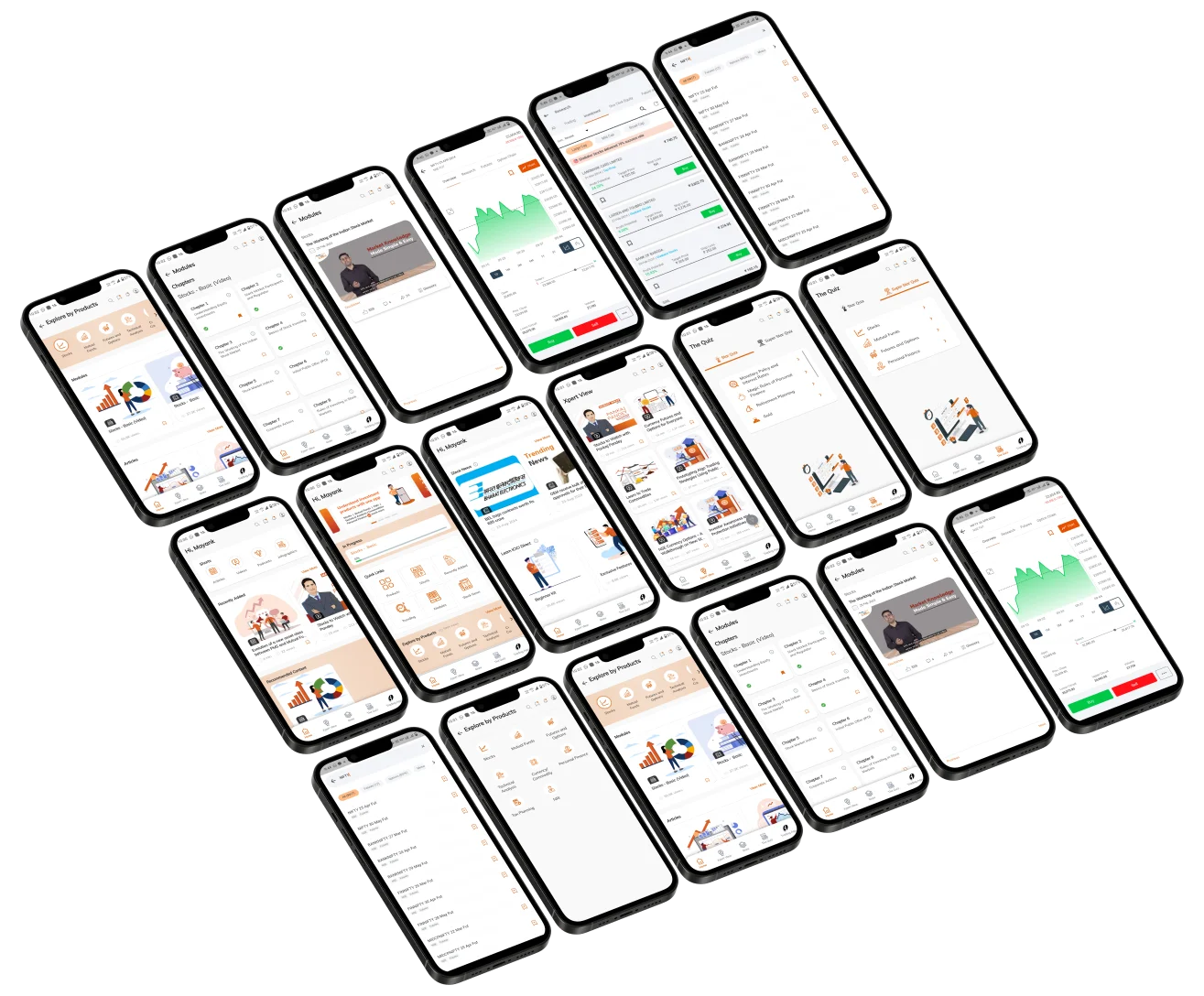
Elevate Your Financial Knowledge with the
ICICI Direct iLearn App
Elevate Your Financial Knowledge with the
ICICI Direct iLearn App
