


-202610121017596081271.jpg)



Download
iLearn application
Elevate Your Financial Knowledge with the
ICICI Direct iLearn App




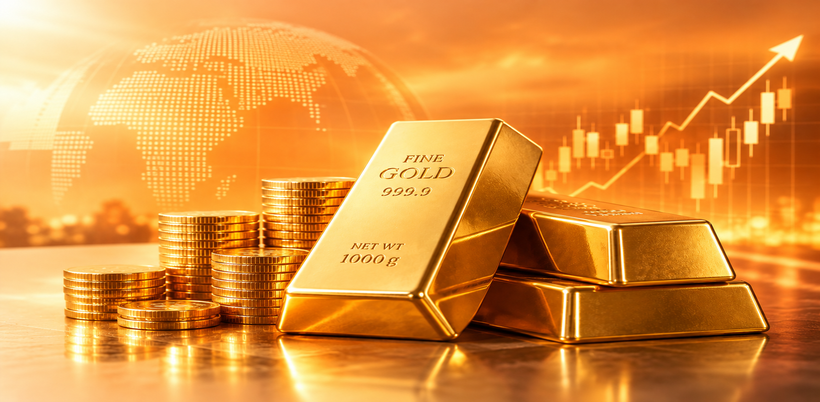
Gold is more than a precious metal. It is a safe-haven asset, investment avenue, central-bank reserve asset and industrial commodity. For a commodity trader, understanding both Gold's fundamentals and the contract being traded is important.
Gold has four major demand segments:
Gold is widely used in jewellery, particularly in major markets such as India and China. In 2025, global jewellery consumption fell 18% to 1,542 tonnes, while the value of demand reached a record US$172 billion amid higher Gold prices.
Gold bars, coins and ETFs are important investment channels. Global investment demand reached a record 2,175 tonnes in 2025, according to the World Gold Council.
Central banks hold Gold as part of their official reserves. Global central-bank net purchases were 863 tonnes in 2025, remaining historically elevated.
Gold is used in electronics and other technology applications. Technology demand was approximately 323 tonnes in 2025, according to the World Gold Council.
Commodities are traded in standardised units called lots. Each Gold contract has a fixed lot size, which determines the quantity of Gold you buy or sell in a single trade.
Here’s the breakdown:
|
Gold |
|||||
|
Future |
Option |
||||
|
Underlying Code |
Underlying Name |
Lot Size |
Underlying Code |
Underlying Name |
Lot Size |
|
GOLD |
GOLD |
1 kg |
GOLD |
GOLD |
1 kg |
|
GOLDMI |
GOLDMINI |
100 g |
GOLDMI |
GOLDMINI |
100 g |
|
GOLDTE |
GOLDTEN |
10 g |
|
|
|
|
GOLDGU |
GOLDGUINEA |
8 g |
|
|
|
|
GOLDPE |
GOLDPETAL |
1 g |
|
|
|
The standard Gold contract is a key domestic price benchmark and is deliverable with 995 fineness (99.5% pure gold).
Gold contracts trade on MCX from Monday to Friday, 9:00 AM to 11:30 PM (during US daylight saving time) / 11:55 PM. The extended hours allow Indian traders to track and respond to global market movements in real time.
Watch Video: MCX – Revision in Trading Hours from March 09, 2026
Every gold futures contract has an expiry date, the last day on which it can be traded. The period just before expiry is called the staggered delivery period (Tender Period), during which open positions can result in actual physical delivery of Gold.
Gold & Gold Mini expire on the 5th of every month (the preceding day in case of a holiday); Gold Ten, Gold Guinea, and Gold Petal expire on the last trading day of the month.
The delivery period is the window during which traders with open positions can participate in the physical delivery process.
The staggered delivery tender period comprises the last trading days for the contract, including expiry day—3 trading days.
During this period, buyers and sellers may submit their intention to take or give delivery. Any open positions remaining on the expiry day are subject to compulsory delivery.
Source: MCX Gold – official contract specifications
End of Settlement (EOS) is the final settlement process conducted by the broker, generally one day before the beginning of the delivery period of the respective contract.
COMEX (Commodity Exchange Inc.) is part of CME Group and covers precious metals. CME Group offers futures and options in Gold and Silver, making COMEX an important reference for traders tracking MCX Gold and Silver prices.
International metal prices are an important part of the equation. Other than this USD/INR exchange rate, domestic demand-supply conditions, import-related factors, basic customs duty and other market variables can also affect what the price looks like in rupee terms.
Additional Read: NYMEX, COMEX & LME: How They Impact MCX Prices- ICICI Direct
Source: CME Group – Precious Metals
Gold prices are influenced by a combination of global macroeconomic and physical-market factors.
1. US Dollar: Gold is internationally quoted in US Dollars. Changes in the Dollar can affect the metal's attractiveness to global buyers.
2. Interest Rates and Bond Yields: Higher interest rates can reduce the appeal of non-yielding assets such as gold.
3. Geopolitical Risk: Wars, trade tensions, financial uncertainty and other geopolitical risks can increase safe-haven demand.
4. Central Bank Buying: Central-bank purchases remain an important source of structural demand.
5. Investment Flows: Gold ETF holdings increased by around 801 tonnes in 2025, reflecting strong investment demand.
6. Jewellery Demand: Jewellery is an important source of physical demand, although high prices can reduce consumption volumes.
7. Mine Supply and Recycling: Gold supply comes mainly from mine production and recycling.
8. USD/INR: For Indian traders, currency movement matters because international Gold is quoted in US Dollars while MCX Gold is traded in Indian Rupees.
Central banks hold Gold as part of their official reserves, making central-bank demand an important structural factor for the Gold market.
The US holds the largest official Gold reserves at around 8,134 tonnes, followed by Germany (3,350 tonnes), Italy (2,452 tonnes) and France (2,437 tonnes). India holds around 880 tonnes of Gold, according to end-2025 sources: the IMF, BIS, and respective central banks.
For an MCX trader, global production and trade flows are useful background indicators.
Source: https://www.instagram.com/p/DaiDE_mO7PM/?stkn=MWt0dGJqdTJ4bnE5dw==
Gold futures provide opportunities for trading and hedging, but they also involve significant risks.
According to the US Geological Survey, the leading Gold-producing countries in 2025 included:
These countries together accounted for about 41% of estimated global mine production.
Trading Gold is not just about predicting its price direction. Knowing the commodity and understanding the contract are equally important.
Gold's role as a safe-haven asset, investment instrument, central-bank reserve and industrial commodity makes it sensitive to both global macroeconomic developments and physical demand.
None of this guarantees a view on where Gold is headed, but it does make for a more informed one.


Copper is a widely used base metal known for its electrical and thermal conductivity, strength, ductility and corrosion resistance. It is used across electrical wiring, construction, machinery, power infrastructure and several industrial applications.
 149 views
 2 minutes
 09 Oct 2026
Natural Gas is a widely traded energy commodity used for electricity generation, industrial activity, heating and other applications. Its prices can react sharply to weather, supply and demand, inventories, global energy markets and geopolitical developments.
320 views
1 minutes
30 Sep 2026
Gold is more than a precious metal. It is a safe-haven asset, investment avenue, central-bank reserve asset and industrial commodity. For a commodity trader, understanding both Gold's fundamentals and the contract being traded is important.
453 views
3 minutes
23 Sep 2026
Elevate Your Financial Knowledge with the
ICICI Direct iLearn App
Elevate Your Financial Knowledge with the
ICICI Direct iLearn App
