



-202610121017596081271.jpg)



Download
iLearn application
Elevate Your Financial Knowledge with the
ICICI Direct iLearn App




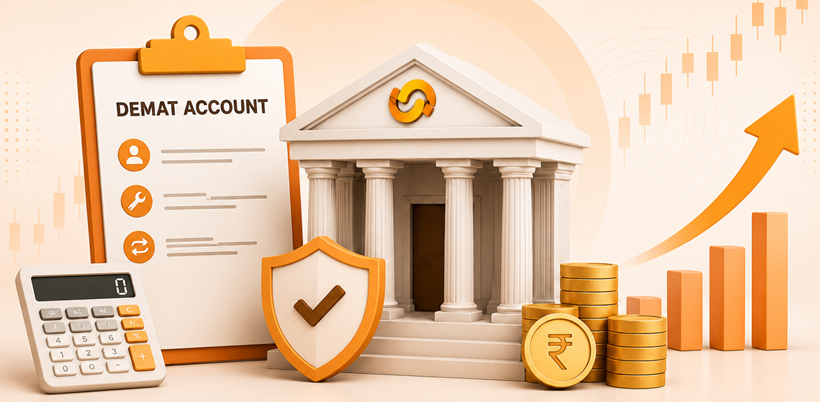
A Demat account is more than a digital locker for shares. It is the foundation of modern investing in India, enabling securities to be bought, sold, transferred and tracked in electronic form. Whether you invest in equity shares, ETFs, bonds, mutual funds or government securities, a Demat account keeps your holdings organised and accessible through a single platform.
For investors, this shift from paper certificates to electronic holdings has made the investment process faster, safer and easier to manage. It reduces paperwork, lowers the risk of loss or damage, supports seamless transactions and enables corporate benefits such as bonus shares and rights entitlements to be credited electronically, while dividends can be processed more efficiently through linked bank accounts.
So, before you start investing, it is important to understand how a Demat account works, what features it offers and how it can support your long-term investment journey. This guide explains the key features and benefits of a Demat account in a clear, practical way.
A Demat account is an account used to hold securities in electronic form. The word Demat comes from dematerialisation, which means converting physical securities into digital records.
In India, Demat accounts are maintained through depositories such as NSDL and CDSL. Additionally, investors do not open the account directly with the depository. They open it through a Depository Participant, also called a DP. A bank, broker or financial institution may act as a DP.
A Demat account is used for holding eligible securities such as:
A Demat account is different from a bank account. A bank account holds money, but a Demat account holds securities. When you buy eligible securities, they are credited to your Demat account. However, when you sell them, they are debited from the account after the transaction is processed.
A Demat account works as the electronic record of the securities you own. It is commonly linked with your trading account and bank account when you invest through an online platform.
Here is how it usually works:
Suppose you buy 50 shares of a listed company. After the settlement, those 50 shares appear in your Demat account. If you sell 20 shares later, your holding reduces to 30 shares.
The purpose of a Demat account is not limited to storage. It also supports portfolio tracking, electronic transfer, nomination, pledging, account statements and credit of eligible corporate benefits.
A Demat account holds securities digitally, so investors do not need to maintain physical share certificates. This reduces issues such as misplaced certificates, damaged documents, fake certificates, signature mismatch and manual transfer delays.
By keeping securities in electronic form, a Demat account makes the overall investment process more convenient and secure.
A Demat account can hold different eligible securities in one place. These may include shares, ETFs, bonds, debentures, government securities and mutual fund units held in demat form.
This is useful for investors who hold more than one type of security. Instead of tracking investments through separate physical records, they can review their holdings through one account statement or online dashboard.
A Demat account gives investors a clear view of their holdings. They can check the quantity of securities held, review transaction history and track changes after purchases, sales or corporate actions.
This makes portfolio review more organised and allows investors to assess their investment position with better clarity.
Most Demat accounts can be accessed online through a broker or Depository Participant platform. Investors can view their holdings, account statements, transaction records and other details through a mobile app or website.
This is useful for checking whether purchased securities have been credited, reviewing holdings before placing a sell order or accessing account details from different locations.
Electronic holding makes securities transactions smoother than the physical certificate system. Once a trade is settled, securities are credited or debited electronically.
Transfers between Demat accounts can also be completed through the prescribed process, reducing the need for physical submission in routine securities transfers.
A Demat account reduces the paperwork involved in holding and transferring securities. This is useful for investors who invest regularly or hold multiple securities.
However, investors should keep their KYC details, bank account information, mobile number and email ID updated to avoid account-related issues.
When a company announces eligible corporate actions, the benefits may be credited or reflected in the Demat account. These may include bonus shares, stock splits, rights entitlements or other applicable benefits.
This makes it easier to track such benefits electronically. Investors should still check company announcements, record dates and account statements for accuracy.
A Demat account allows investors to add a nominee. This can make the transfer of securities easier for the nominee after the account holder’s death, subject to applicable rules and required documents.
For long-term investors, nomination is an important part of account management as it keeps ownership records clearer.
A Demat account provides statements showing holdings and transactions. These records are useful for portfolio review, tax-related documentation and reconciliation with trading activity.
Reviewing statements regularly also allows investors to identify errors or unauthorised activity at an early stage.
Eligible securities held in a Demat account may be pledged as collateral. Investors may use this facility for margin requirements or loans against securities, depending on the broker, lender and depository process.
Before using this facility, investors should understand the terms, charges and risks. If obligations are not met, pledged securities may be sold as per the applicable process.
A Demat account offers several advantages, but investors should also understand the possible limitations before opening or using one.
|
Aspect |
Advantages |
Points to Keep in Mind |
|
Safety |
Reduces risks linked with physical certificates |
Login details and OTPs must be protected |
|
Convenience |
Holds securities electronically |
Requires online access and basic platform understanding |
|
Portfolio view |
Gives a consolidated view of eligible securities |
Mutual funds can also be held outside a Demat form |
|
Transactions |
Supports faster credit, debit and transfer |
Charges may apply for certain services |
|
Corporate benefits |
Eligible benefits may be credited electronically |
Investors should track the record dates and statements |
|
Pledging |
Eligible securities may be pledged when needed |
Pledging carries risk if obligations are not met |
|
Record keeping |
Statements support investment review and tax work |
KYC, nominee and bank details should remain updated |
The disadvantages of a Demat account are mostly linked to charges, digital access and investor behaviour.
You may have to pay account opening charges, annual maintenance charges, debit transaction charges, pledge charges or other service fees, depending on the provider.
Since the account is accessed online, you must also follow digital safety practices. Passwords, OTPs and account credentials should not be shared.
Another point to consider is over-trading. Easy online access may encourage frequent buying and selling. This can increase costs and may affect disciplined long-term investing.
Before opening a Demat account, compare the account structure, charges, platform experience and support facilities. A low account opening charge alone should not be the only deciding factor.
Some providers may offer free account opening, while others may charge a fee. Check this before starting the process.
Also, read the terms carefully. Free account opening does not always mean there are no other charges.
Annual Maintenance Charge, or AMC, is the yearly fee for maintaining a Demat account. The amount can vary across providers and account types.
Small investors may also check whether they are eligible for a Basic Services Demat Account, where charges may be lower based on holding value and applicable rules.
Apart from AMC, there may be charges for debit transactions, pledge creation, rematerialisation, failed instructions, physical statement requests and other services.
Review the schedule of charges before choosing a provider. This gives you a clearer picture of the actual cost of using the account.
A Demat account is usually accessed through a website or mobile app. A clean dashboard, easy statement access, clear portfolio view and timely alerts can improve the user experience.
New investors should also check whether the platform explains key terms clearly and offers support when needed.
Since Demat accounts are accessed digitally, account security matters. Use strong passwords, avoid sharing OTPs and do not log in through public devices or unsecured networks.
Keep your registered mobile number and email ID updated so that you receive transaction alerts and account communication on time.
If a Demat account remains unused for an extended period, it may be classified as inactive or dormant in accordance with applicable procedures and regulatory requirements.
Long-term investors should review their accounts periodically, even if they do not trade often. This keeps them updated on holdings, statements and account status.
A Demat account is generally required if you want to hold and trade listed equity shares in electronic form through stock exchanges. Most listed share transactions in India happen in Demat form.
For mutual funds, a Demat account is not mandatory in many cases. You can invest through
AMC websites, RTAs and other approved platforms without holding units in Demat form.
Whether you need a Demat account depends on what you want to invest in and how you want to hold it. If you plan to invest in listed shares, ETFs or certain bonds through market platforms, a Demat account is usually required.
A Demat account gives investors a digital way to hold shares, ETFs, bonds and other eligible securities. It reduces paperwork, lowers certificate-related risks and makes portfolio tracking more convenient.
At the same time, investors should compare charges, follow safe login practices and avoid impulsive trading. A Demat account works best when it is used with a clear investment plan.
If you are planning to invest in the securities market, understanding the features, benefits and possible limitations of a Demat account can make your account-opening decision more informed.
The main benefit of a Demat account is that it holds securities electronically. This reduces risks linked with physical certificates, such as loss, theft, damage, forgery and transfer delays.
Yes, you can have a Demat account without a trading account if you only want to hold securities. To buy or sell listed securities through the exchange, you generally need a trading account.
Yes, mutual fund units can be held in Demat form. However, a Demat account is not mandatory for most mutual fund investments, as you can also invest through AMC websites, RTAs and other approved platforms.
Yes, you can open more than one Demat account. Each account must follow KYC requirements and may have separate charges.
If you do not use your Demat account for a long time, it may become inactive or dormant as per your DP’s policy. You may need to complete verification, clear pending dues or update KYC details before using it again.
Yes, eligible securities can be pledged, depending on depository rules and the broker or lender’s policy. Before using this facility, understand the terms, charges and risks involved.
A Demat account is safer than holding physical certificates. However, you should protect your login details, avoid sharing OTPs, keep contact information updated and review statements regularly.
No, a Demat account is not mandatory for most mutual fund investments. You can invest through AMC websites, RTAs and other approved platforms without a Demat account.
The activation time depends on the provider, KYC status and document verification. In many online account-opening processes, activation may happen within a few minutes to 24 to 48 hours after successful verification. It can take longer if PAN, Aadhaar, bank details, signature, nominee details or other required information need correction or additional verification.
You can hold equity shares, ETFs, bonds, debentures, government securities, preference shares, rights entitlements and mutual fund units held in Demat form, depending on platform support and applicable rules.


Understand contango in commodity trading, how futures prices differ from spot prices, and how financing, storage and insurance costs influence commodity pricing.
 66 views
 1 minutes
 19 Oct 2026
Copper is a widely used base metal known for its electrical and thermal conductivity, strength, ductility and corrosion resistance. It is used across electrical wiring, construction, machinery, power infrastructure and several industrial applications.
323 views
2 minutes
09 Oct 2026
Natural Gas is a widely traded energy commodity used for electricity generation, industrial activity, heating and other applications. Its prices can react sharply to weather, supply and demand, inventories, global energy markets and geopolitical developments.
547 views
1 minutes
30 Sep 2026

Elevate Your Financial Knowledge with the
ICICI Direct iLearn App
Elevate Your Financial Knowledge with the
ICICI Direct iLearn App
