




Download
iLearn application
Elevate Your Financial Knowledge with the
ICICI Direct iLearn App




-202608111337560988979.jpg)
Commodity prices don't move in isolation. Along with demand-supply dynamics and geopolitical events, one global indicator that often influences commodity prices is the US Dollar Index (DXY).
The US Dollar Index (DXY) is one of the most closely watched global indicators for commodity traders. Since commodities like Gold, Silver, Crude Oil and Base Metals are largely priced in US dollars, changes in the Dollar Index can influence commodity prices worldwide.Understanding DXY can give commodity traders another lens to read global market trends.
The US Dollar Index (DXY) measures the value of the US dollar against a basket of six major global currencies. It is widely viewed as a benchmark for the strength or weakness of the US dollar in international markets.
|
Currency |
Weight (%) |
|
Euro (EUR) |
57.6
|
|
Japanese Yen (JPY)
|
13.6
|
|
British Pound (GBP)
|
11.9
|
|
Canadian Dollar (CAD)
|
9.1
|
|
Swedish Krona (SEK)
|
4.2
|
|
Swiss Franc (CHF)
|
3.6
|
Source: U.S. Dollar Index - Wikipedia
|
Did You Know? The Euro alone accounts for nearly 58% of the Dollar Index, making Euro movements one of the biggest drivers of DXY. Source: ICE – U.S. Dollar Index |
Most globally traded commodities are priced in US dollars.
This means shifts in the dollar's value directly affect the purchasing power of buyers using other currencies.
Let’s see how.
A stronger dollar makes dollar-denominated commodities more expensive for buyers using other currencies. This can soften global demand and may put downward pressure on commodity prices.
Potential impact:
A weaker dollar makes commodities relatively cheaper for global buyers, which can support demand and commodity prices.
Potential impact:
Important: The Dollar Index is one of many factors affecting commodity prices. Supply-demand fundamentals, geopolitical developments, weather events, inventory levels, and central bank policies & other geopolitical factors also play significant roles.
Gold and DXY generally move in opposite directions.
Higher US interest rates tend to strengthen the dollar, which can make gold comparatively less attractive since it does not generate interest income. Expectations of lower rates can weaken the dollar and support gold prices.
However, this relationship does not always hold. During periods of heightened geopolitical uncertainty or financial stress, investors often seek safe-haven assets, and gold and the dollar can rise together.
Crude oil is one of the world's most actively traded commodities and is primarily priced in US dollars.
A stronger dollar can:
Conversely, a weaker dollar can make oil more affordable for international buyers, potentially supporting demand and prices.
Source: U.S. Energy Information Administration (EIA)
Several macroeconomic factors influence DXY:
Commodity traders closely monitor these events because they can trigger significant moves in both the Dollar Index and commodity prices.
Although commodities are traded on the Multi Commodity Exchange (MCX) in India, domestic prices are influenced by global markets.
MCX prices are affected by:
Monitoring DXY alongside these factors can provide valuable context for understanding price movements and market sentiment.
Suppose the US Consumer Price Index (CPI) comes in lower than expected. Markets may anticipate that the Federal Reserve could lower interest rates in the future.
A possible chain of events could be:
Lower-than-expected CPI → Expectations of lower interest rates → Softer US Dollar → Lower DXY → Gold prices may strengthen→ MCX Gold may also receive support (subject to USD/INR movements and domestic factors).
✔ The US Dollar Index (DXY) measures the strength of the US dollar against six major global currencies.
✔ Since most commodities are priced in US dollars, DXY is an important indicator for commodity traders.
✔ A stronger dollar may create headwinds for commodity prices, while a weaker dollar can provide support.
✔ Gold often shares an inverse relationship with DXY, though safe-haven demand can sometimes cause both to rise together.
✔ Tracking DXY alongside key US economic data can help traders better understand the broader drivers of commodity price movements.
No single indicator can explain every move in commodity prices, but the US Dollar Index offers valuable insight into global market sentiment.
When viewed alongside economic data, supply-demand fundamentals, and geopolitical developments, DXY can help traders better interpret price movements and make more informed trading decisions.
Watch Video: What is the Dollar Index? And Why Does It Matter for Commodities?


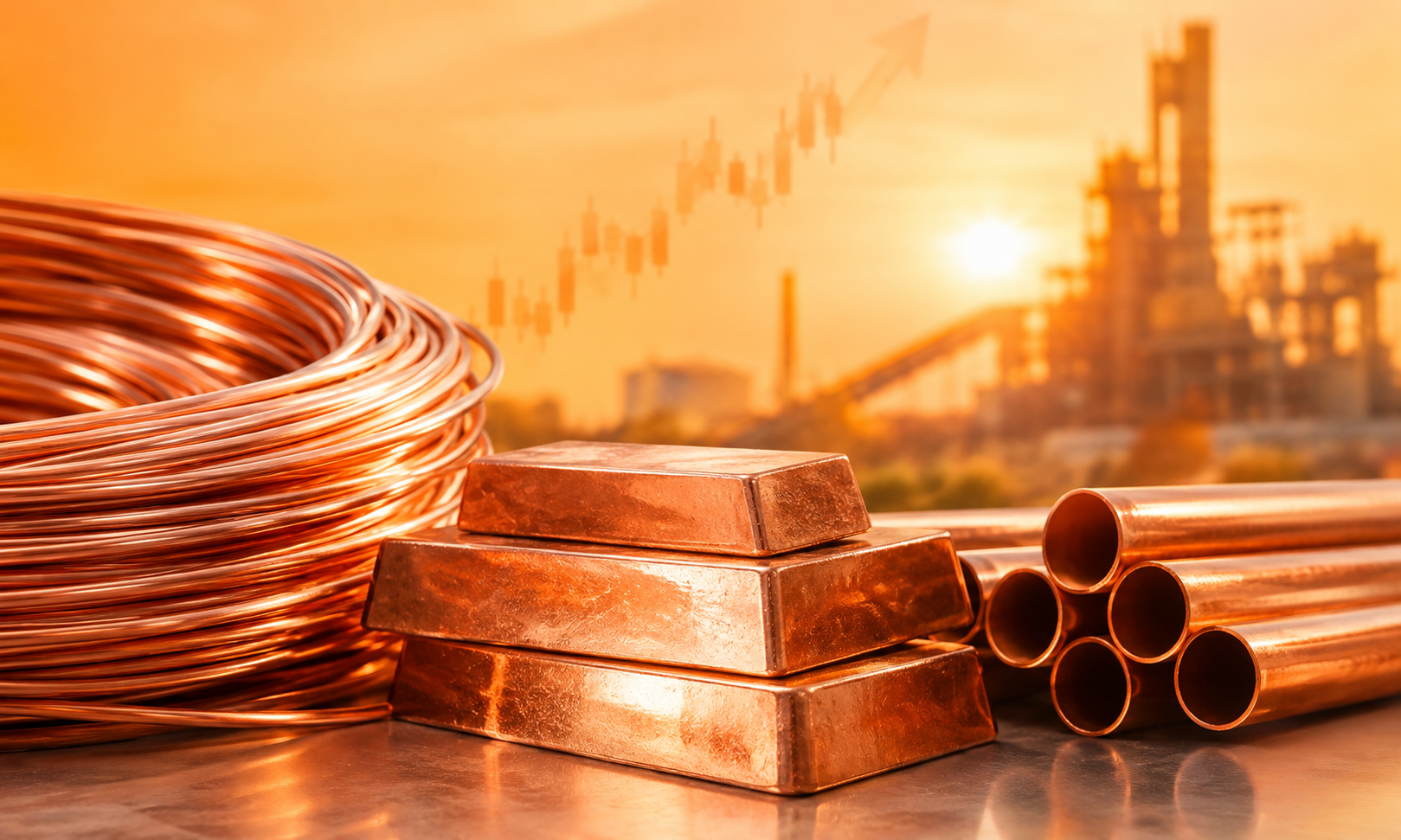
Copper is a widely used base metal known for its electrical and thermal conductivity, strength, ductility and corrosion resistance. It is used across electrical wiring, construction, machinery, power infrastructure and several industrial applications.
 84 views
 2 minutes
 09 Oct 2026
Copper is a widely used base metal known for its electrical and thermal conductivity, strength, ductility and corrosion resistance. It is used across electrical wiring, construction, machinery, power infrastructure and several industrial applications.
63 views
2 minutes
09 Oct 2026
Natural Gas is a widely traded energy commodity used for electricity generation, industrial activity, heating and other applications. Its prices can react sharply to weather, supply and demand, inventories, global energy markets and geopolitical developments.
280 views
1 minutes
30 Sep 2026


Elevate Your Financial Knowledge with the
ICICI Direct iLearn App
Elevate Your Financial Knowledge with the
ICICI Direct iLearn App
