



-202610121017596081271.jpg)



Download
iLearn application
Elevate Your Financial Knowledge with the
ICICI Direct iLearn App





Trading APIs have transformed how individuals and institutions interact with financial markets. These APIs provide a direct and efficient way to execute trades, manage portfolios, and access real-time market data by allowing developers and traders to customize their trading strategies. Trading APIs facilitate a more personalized and dynamic approach to trading. This article provides a comprehensive understanding of trading API, how it works, its benefits, and why traders use it.
Trading API is a set of APIs that enable users to get live market data and execute real time trades. Build strategically for trading purpose, clients can manage their live positions, call orderbook, checking the account balance, managing the portfolio, and much more.
API, in general, is a set of protocols that that facilitates seamless communication two different systems. Trading API allows communication between client’s systems with brokers servers that in turn communicate to exchange servers.
API based trading has several benefits, such as eliminating emotions and human errors from trading decisions.
It also allows for faster trading execution as there are no manual interventions. Additionally, trading API is flexible, allowing traders to tailor their trading systems to meet their unique needs. This enables them to create their own algorithms, execute sophisticated trading strategies, and integrate risk management practices. Such extensive customization empowers traders to adjust their systems in response to fluctuating market conditions, thereby enhancing their trading efficiency
Built especially for market participants with technical knowledge looking for personalised trading experience using innovative logic, Trading APIs can help one build a complete investment and trading platform in no time.
Traders can acquire API keys through an initiation process. An API given by a broker can only be used for communication between the client’s system and the broker’s server. The broker and the respective exchange communicate with each other separately. These keys act as essential credentials, enabling the trader's automated system to interface seamlessly with the exchange's API for optimal operations.
Traders need to create a link between their trading software or an algorithmic trading platform and the exchange's API. This vital connection allows for seamless communication, enabling efficient data retrieval and trade execution.
Traders can access real-time market insights, including price feeds, order book details, and historical data, via the API. This information undergoes several technical and fundamental analysis that help uncover trading opportunities and guide decision-making processes.
Trader’s craft and execute their trading strategies utilizing their chosen programming language or an algorithmic trading platform. The API facilitates the automated execution of trades according to predefined criteria and rules, such as indicators, signals, or sophisticated mathematical models, ensuring precision and efficiency in trade execution.
Upon finalizing the trading strategy, the trader with the use of the API dispatches a buy or sell order to the exchange, adhering to the established rules. The exchange’s trading engine then evaluates and executes these orders when the specified conditions align, ensuring timely and accurate trade execution.
In today's interconnected technology landscape, platforms rely on each other's services for optimal performance. To facilitate this collaboration, APIs are developed, serving as essential bridges that enable seamless interactions and efficiency. Below are a few ways API trading is used:
A trading API acts as a versatile tool that enhances efficiency by integrating various systems and services. It allows trading platforms to expand their capabilities through connections with third-party services for trading analytics, market analysis, and sentiment tracking. Additionally, APIs facilitate the integration of diverse solutions, streamlining the trading process by adding practical functionalities from other systems
The core of any API is the integration of diverse systems, a concept that gains even greater significance as it opens up expansive possibilities in electronic trading. APIs facilitate seamless connections between large-scale trading systems and smaller components like widgets and plug-ins for financial asset analysis. Moreover, they enable the linking of various trading platforms via an API key. This is particularly useful for integrating multiple exchanges with automated trading tools, offering a comprehensive view of fund movements across all linked exchange accounts.
Data security plays a pivotal role in ensuring safe online transactions within financial markets. These API systems offer traders enhanced encryption for both incoming and outgoing data among the various servers involved in the trading process, ensuring a more secure trading environment.
The trading API stands out for its customizable user interface, tailored to fit traders' unique needs, allowing for a flexible and efficient trading environment. It enables a secured direct connection and provides compact data packets designed to carry only specified information, minimizing the risk of incorrect requests. This feature enhances both usability and security, making the trading process more streamlined and reliable.
Before we delve into the diverse range of individuals who utilize trading APIs, let's explore the various advantages that accompany trading API:
Following are the steps you can follow to start using Breeze API:
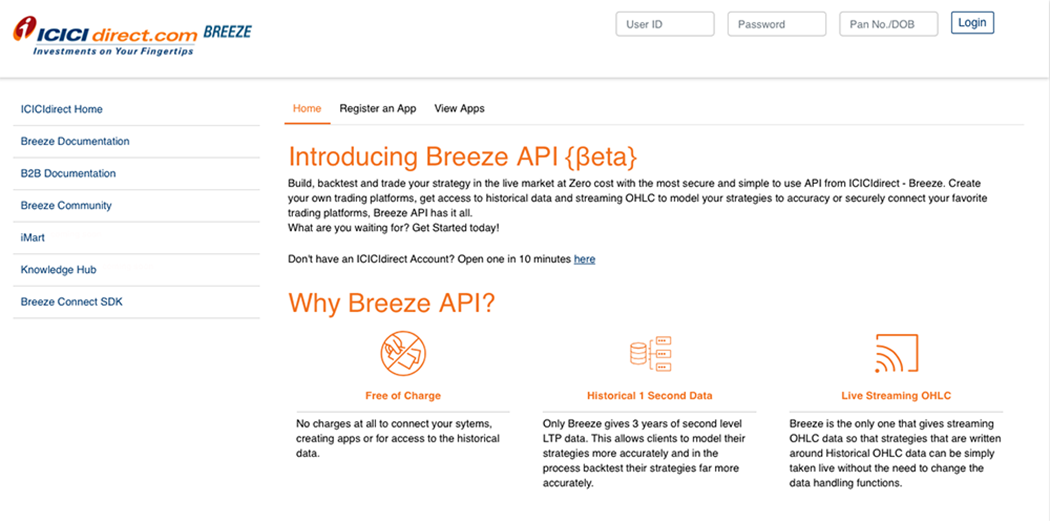
Note: while www.icicidirect.com allows you to enter case-insensitive username (i.e. “Ramesh” can also be spelled “RAMESH” or “ramesh"), on this login you must use case sensitive username (i.e. “RAMESH” and “ramesh" will give an “Invalid username or password” error.)
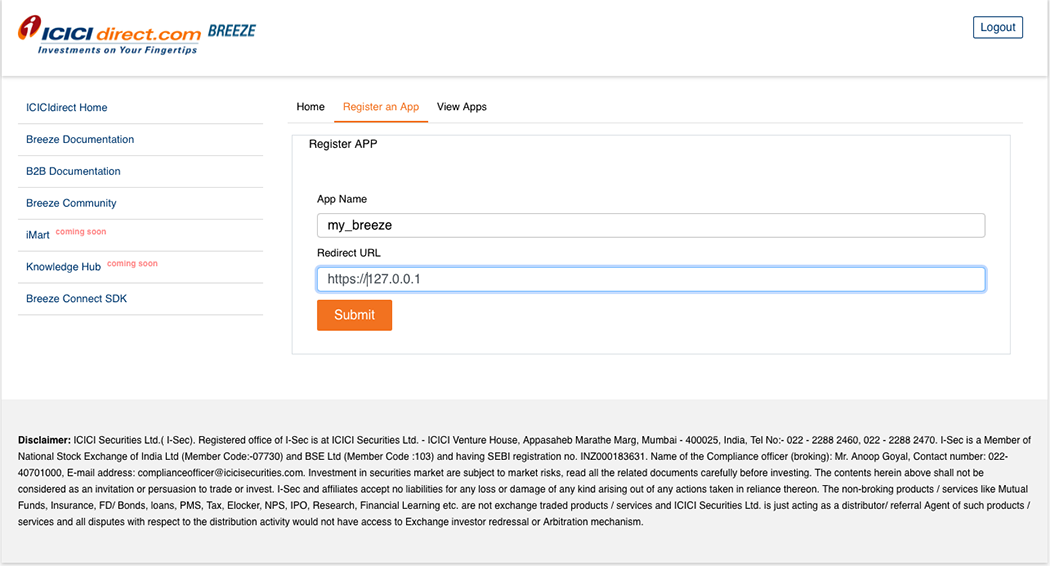
Note : Redirect URL should be in the format https://. You can put any number here. Also referred to as URL Forwarding, Redirect URL is a technique which is used to redirect your domain's visitors to a different URL.
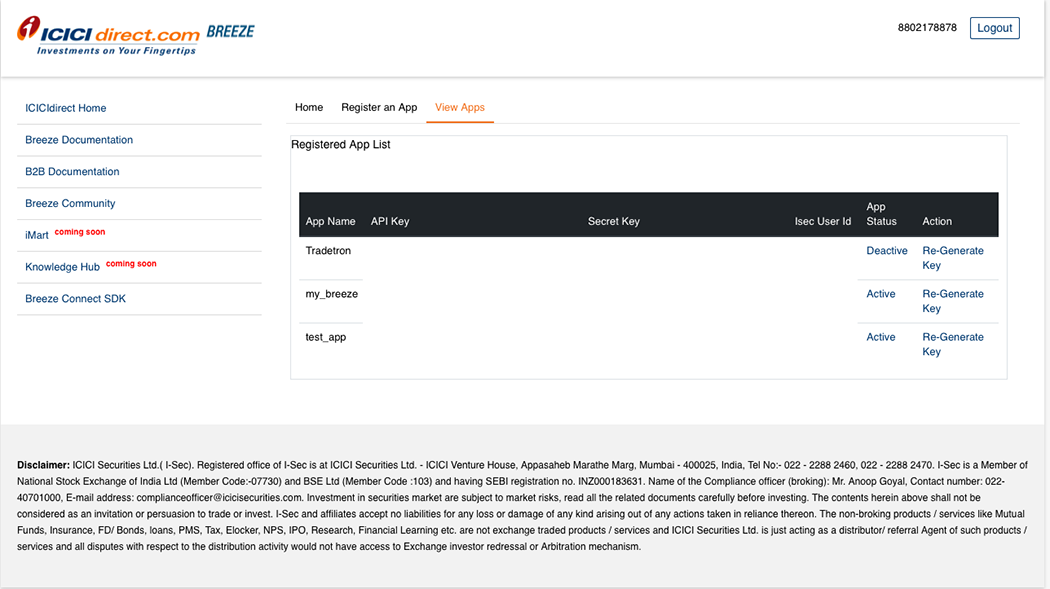
Please check our article on “What is a Session key and how to generate it for using Breeze API”, to know the steps of session key creation.
Please Note:
To start creating your trading strategies with Breeze API, you only need a platform / environment (IDE) to write your code on. There are many development environments out there you can use. Some of the most popular ones are: Jupyter, Anaconda, Spyder, Microsoft Visual Studio, PyCharm and others. You can download Anaconda - a popular data science application which provides python IDE like Jupyter and Spyder by clicking on the following link : https://www.anaconda.com.


Understand contango in commodity trading, how futures prices differ from spot prices, and how financing, storage and insurance costs influence commodity pricing.
 156 views
 1 minutes
 19 Oct 2026
Copper is a widely used base metal known for its electrical and thermal conductivity, strength, ductility and corrosion resistance. It is used across electrical wiring, construction, machinery, power infrastructure and several industrial applications.
376 views
2 minutes
09 Oct 2026
Natural Gas is a widely traded energy commodity used for electricity generation, industrial activity, heating and other applications. Its prices can react sharply to weather, supply and demand, inventories, global energy markets and geopolitical developments.
637 views
1 minutes
30 Sep 2026


Elevate Your Financial Knowledge with the
ICICI Direct iLearn App
Elevate Your Financial Knowledge with the
ICICI Direct iLearn App
