







Download
iLearn application
Elevate Your Financial Knowledge with the
ICICI Direct iLearn App





According to Peter Drucker, the undisputed guru of modern management, “The first rule of business is to survive, and the guiding principle of business economics is not the maximisation of profit, it is the avoidance of loss.”
While Drucker is correct, it is evident that most, if not all, businesses (and professionals) often experience cycles of profits and losses. Sometimes it is not possible to avoid losses in business or profession. What does this mean in the context of filing income tax returns (ITR) for loss-making entities?
The Income Tax rules in this aspect are clear. For individual taxpayers, in case of a loss of income in a particular financial year, it is not mandatory to file income tax returns for that year. However, for persons in a business or self-employed professionals, filing an ITR is necessary even if they have incurred a loss. For such persons, the loss incurred in a particular financial year may be offset against incomes in future years, but only if they have filed an Income Tax Return. Otherwise, the future adjustment(s) shall be disallowed. It is also pertinent to note that carry forward and adjustment has to be under the same head.
For example, if the said loss occurs under ‘Profits and Gains of Business and Profession’, ‘Income from House Property or ‘Capital Gains’, then you can carry it forward to the following year. You can then offset the loss against any future gain in those particular income heads only.
Additional Read: Know more about Income Tax Basics, tax slabs and e-filing
Loss in business activities specified under section 35AD is not allowed to set off against other incomes except income from those selected business activities and for any number of years. For individual taxpayers, if the loss occurs under ‘Income from House Property, then filing an income tax return is not mandatory, and this loss can be carried forward even if the return is not filed or filed after the due date. Such losses incurred can be carried forward and adjusted against the same income head for the next eight years. Besides, any individual with a housing loan who files their ITR late can still benefit from the loan’s interest payment deduction under Section 24 of the Income Tax Act.
Additional read: Income tax v/s Capital Gains Tax
Losses on long-term capital loss can be carried forward and adjusted only against long-term capital gains for the next eight financial years. Losses on short-term capital loss can be adjusted against long-term capital gains as well as against short-term capital gains for eight years immediately succeeding the year in which the loss is incurred. In each of these cases, you can carry forward the loss only if the ITR for the financial year you incurred is furnished on or before the due date.
Additional Read: Benefits of filing returns on time
Paying taxes and filing ITR on time is the sign of a responsible citizen. It is important to file ITR consistently to maintain a clean record even if one’s income is below the taxable limit or businesses and self-employed professionals have incurred a loss in a particular year. Apart from carrying forward losses and adjusting against future income, filing timely ITR helps them avail credit from banks and financial institutions and also processing visas for overseas travel. Besides, the taxpayer always risks that the Income Tax department treats this as non-filing of ITR and imposes a penalty.


Gold can react to inflation data, while crude oil may jump after an inventory report or geopolitical disruption.
 432 views
 4 minutes
 21 Jul 2026
Understand how crude oil trading works on MCX and also learn about contract sizes, expiry, trading hours, global benchmarks, price drivers and risks before you trade.
647 views
2 minutes
20 Jul 2026
Learn how to calculate the break-even point in commodity trading by factoring in brokerage, taxes, and other charges
1 k views
1 minutes
01 Jul 2026

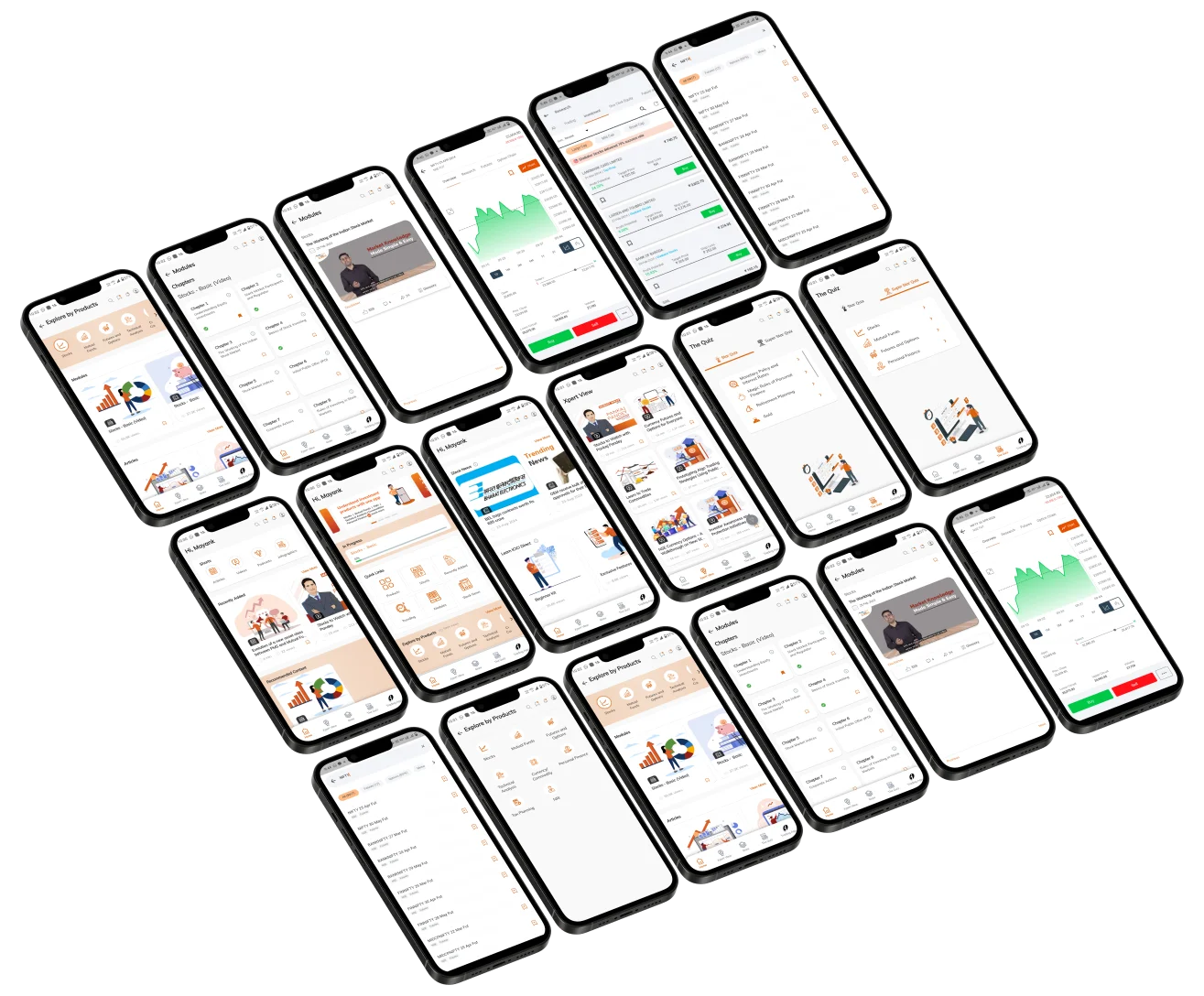
Elevate Your Financial Knowledge with the
ICICI Direct iLearn App
Elevate Your Financial Knowledge with the
ICICI Direct iLearn App
