


-202610121017596081271.jpg)



Download
iLearn application
Elevate Your Financial Knowledge with the
ICICI Direct iLearn App





An Exchange Traded Fund (ETF) is a basket of securities like stocks, bonds, or gold that tracks a specific index (like the Nifty 50). Think of it as a "ready-made portfolio." Unlike traditional mutual funds, ETFs are listed on the NSE and BSE, meaning you can buy or sell them instantly during market hours just like any regular share.
Example: Buying one unit of a Nifty 50 ETF gives you instant exposure to all 50 companies in the Nifty index in one single trade.
Lower Costs (The Expense Ratio Edge): Because ETFs are passively managed (they simply mirror an index), they don't need expensive fund managers. This keeps expense ratios significantly lower than active mutual funds.
Intraday Liquidity: Want to "buy the dip" at 11:00 AM? You can. Unlike mutual funds, where you get the end-of-day NAV, ETFs allow you to trade at live market prices throughout the day.
Diversification: With a single trade, you can own a slice of an entire sector (like Banking) or an asset class (like Gold), reducing the risk associated with picking individual stocks.
Transparency: Most ETFs disclose their holdings daily, so you always know exactly where your money is invested.
Easy Accessibility: ETFs do not require large minimum investments. Since they trade like stocks, investors can start with the price of a single unit, making ETFs accessible to individuals across different income levels and portfolio sizes.
Wide Range of Investment Options: ETFs cover a broad spectrum of asset classes, sectors, and investment strategies. This allows investors to select options that align with their financial goals and risk preferences.
While ETFs are powerful tools, they aren't without "fine print" risks:
|
Feature |
ETF |
Index Mutual Fund |
|
Trading |
Once a day (End-of-day NAV) |
|
|
Demat Account |
Mandatory |
Not Required |
|
Costs |
Lower Expense Ratio + Brokerage |
Slightly Higher Expense Ratio |
There is no one-size-fits-all answer, the better option depends on investor behaviour and goals.
Q1. Are ETFs better than mutual funds?
A. ETFs and mutual funds each have their own advantages. ETFs typically offer lower costs, greater tax efficiency, and the ability to trade during market hours. Mutual funds, on the other hand, may offer more hands-on management and broader investment options. The choice between ETFs and mutual funds depends on an investor's preferences and investment objectives.
Q2. Why are some ETFs not liquid?
A. If an ETF tracks a very niche sector or has very few investors trading it on the exchange, the "liquidity" (ease of buying/selling) might be low. Stick to high-AUM ETFs for better liquidity.
Q3. What is tracking error?
A. It is the difference between the performance of the ETF and the actual index it follows. The smaller the error, the better the fund.
Q4. Do ETFs have fund managers?
A. Yes. ETFs do have fund managers, but their role is largely operational. They are responsible for ensuring that the ETF closely tracks its underlying index, rather than making active stock selection decisions.
Q5. Can ETFs give negative returns?
A. Yes. Since ETFs track market indices, if the market goes down, the value of your ETF will also decrease.


Copper is a widely used base metal known for its electrical and thermal conductivity, strength, ductility and corrosion resistance. It is used across electrical wiring, construction, machinery, power infrastructure and several industrial applications.
 124 views
 2 minutes
 09 Oct 2026
Natural Gas is a widely traded energy commodity used for electricity generation, industrial activity, heating and other applications. Its prices can react sharply to weather, supply and demand, inventories, global energy markets and geopolitical developments.
301 views
1 minutes
30 Sep 2026
Gold is more than a precious metal. It is a safe-haven asset, investment avenue, central-bank reserve asset and industrial commodity. For a commodity trader, understanding both Gold's fundamentals and the contract being traded is important.
430 views
3 minutes
23 Sep 2026

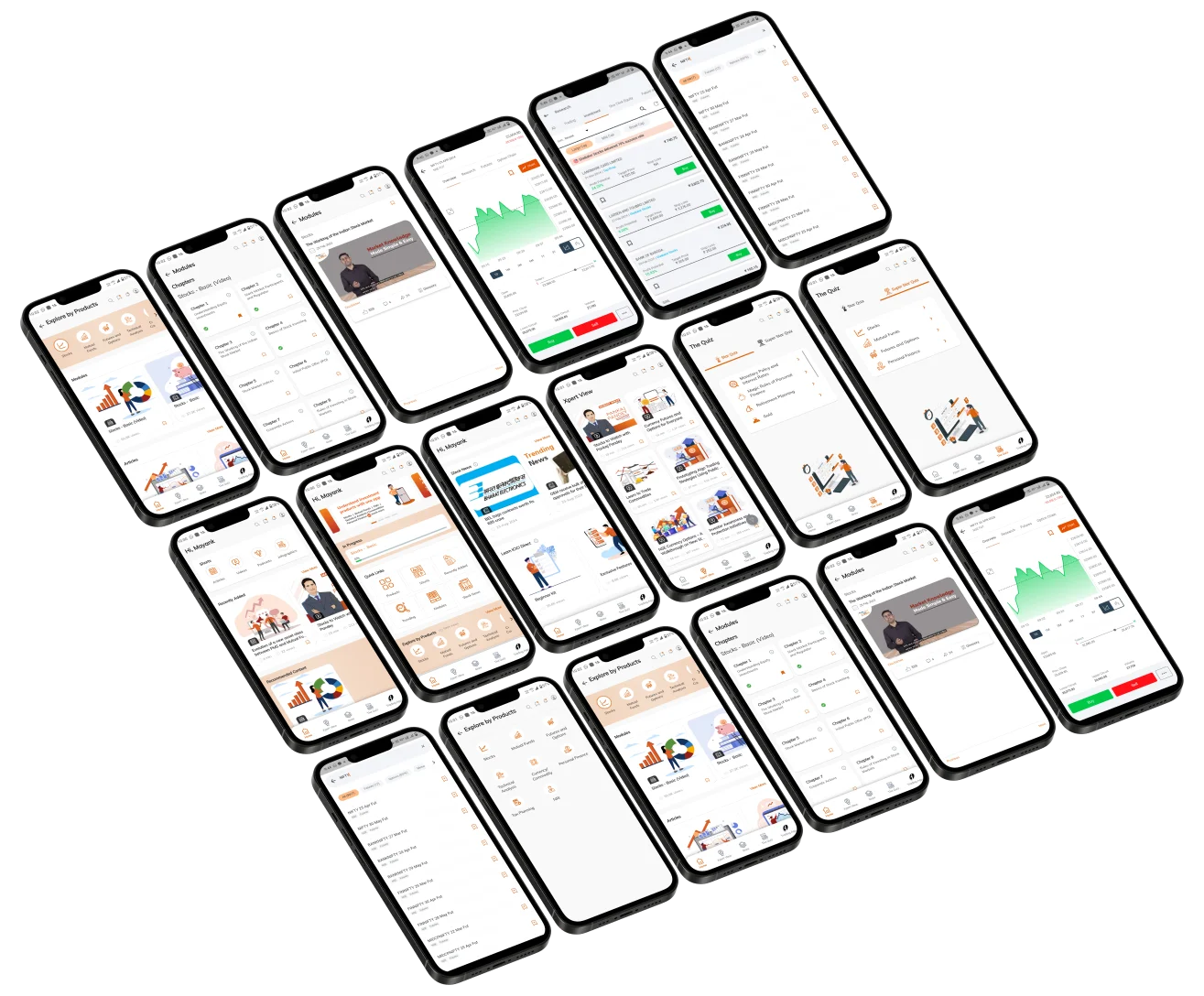
Elevate Your Financial Knowledge with the
ICICI Direct iLearn App
Elevate Your Financial Knowledge with the
ICICI Direct iLearn App
