





Download
iLearn application
Elevate Your Financial Knowledge with the
ICICI Direct iLearn App




A BSDA account, or Basic Services Demat Account, is a low-cost demat account for individual investors with low-value portfolios. It offers basic demat services with nil or capped annual maintenance charges, based on holdings.
SEBI introduced the Basic Services Demat Account to reduce the cost of maintaining a demat account for small investors. Many people start with modest portfolios and do not trade frequently, so a full-service demat account can feel unnecessary.
By offering basic services at lower charges, the framework supports wider participation and keeps demat access practical for first-time and low-value investors.
The BSDA eligibility rules matter because the benefit is not available to every demat holder. An investor may qualify only when the account meets SEBI and Depository Participant (DP) eligibility conditions.
No. An investor cannot hold more than one Basic Services Demat Account as a sole or first holder across depositories. This rule prevents misuse of the low-cost facility.
Yes, an existing demat account can be converted into a BSDA if it meets the required conditions. In many cases, eligible accounts may be classified as BSDA unless the investor chooses a regular account.
Before conversion, check the holding value, account position and DP tariff. Also, confirm whether services used in the regular account may change.
The annual maintenance charge depends on the value of securities held in the demat account, as shown below.
|
Value of holdings in demat account |
Maximum AMC for BSDA |
|
Up to ₹4 lakh |
₹0 (Nil) |
|
More than ₹4 lakh and up to ₹10 lakh |
₹100 per year (plus 18% GST) |
|
More than ₹10 lakh |
Not eligible for BSDA; regular AMC may apply |
These limits help investors who are building their portfolio slowly. However, transaction charges, statutory charges or service charges may still apply as per the depository participant’s tariff. Read the schedule of charges before opening or converting the account.
A BSDA account and a regular demat account both hold securities electronically, but they are designed for different investor needs.
|
Point of Difference |
BSDA Account |
Regular Demat Account |
|
Purpose |
Low-cost demat account for eligible investors |
Standard demat account |
|
Holding limit |
Up to ₹10 lakh |
No BSDA-specific limit |
|
AMC |
Nil or capped, based on holding value |
As per the DP tariff |
|
Eligibility |
Only eligible individual investors |
Broader eligibility |
|
Best suited for |
Small investors |
Active or larger portfolio investors |
If your portfolio grows beyond the BSDA limit or you need services outside the BSDA framework, a regular demat account may be more suitable.
Choosing between a BSDA and a regular demat account depends largely on the size of your portfolio and the services you require.
A BSDA account is a cost-effective demat category for eligible small investors in India. It helps reduce annual maintenance charges while allowing securities to be held in electronic form. The account is useful when the portfolio value is limited, and when the account is used for basic investment needs. Before opening or continuing with BSDA, investors should check holding value, demat accounts, DP tariff and latest eligibility rules. A regular account may be better once investing grows.
The maximum holding limit for a BSDA account is ₹10 lakh in securities value. If the value of holdings exceeds ₹10 lakh, the account ceases to qualify for BSDA benefits and the DP may levy regular annual maintenance charges in accordance with applicable rules.
Yes, AMC is free when the value of holdings is up to ₹4 lakh. If holdings are more than ₹4 lakh and up to ₹10 lakh, the maximum AMC is ₹100 per year.
No, you cannot have two BSDA accounts as a sole or first holder. The rule allows only one Basic Services Demat Account across depositories.
Yes, BSDA is different because it is meant for eligible small investors and has nil or capped AMC. A regular demat account has wider eligibility and DP-based charges.


Copper is a widely used base metal known for its electrical and thermal conductivity, strength, ductility and corrosion resistance. It is used across electrical wiring, construction, machinery, power infrastructure and several industrial applications.
 76 views
 2 minutes
 09 Oct 2026
Copper is a widely used base metal known for its electrical and thermal conductivity, strength, ductility and corrosion resistance. It is used across electrical wiring, construction, machinery, power infrastructure and several industrial applications.
60 views
2 minutes
09 Oct 2026
Natural Gas is a widely traded energy commodity used for electricity generation, industrial activity, heating and other applications. Its prices can react sharply to weather, supply and demand, inventories, global energy markets and geopolitical developments.
274 views
1 minutes
30 Sep 2026

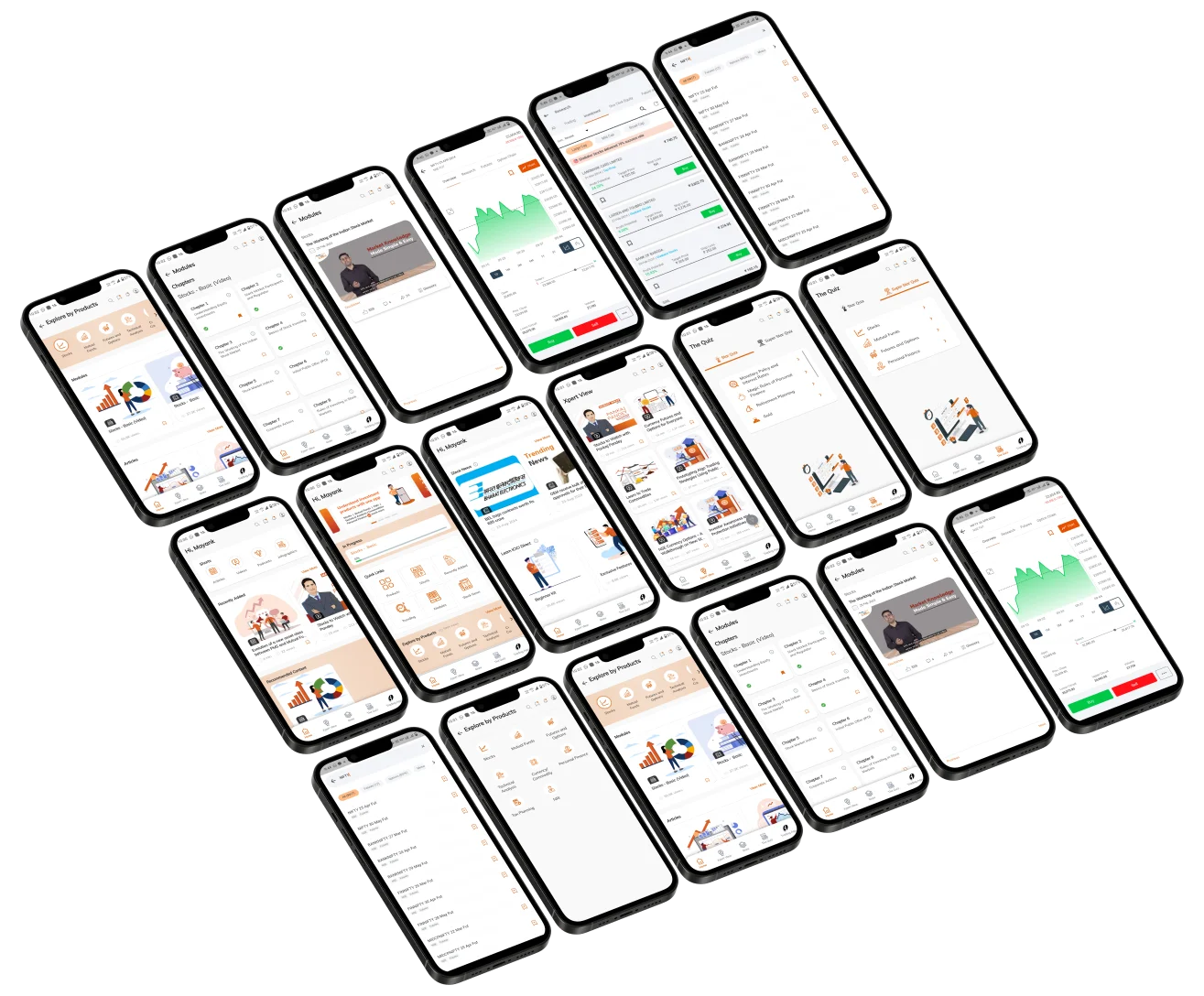
Elevate Your Financial Knowledge with the
ICICI Direct iLearn App
Elevate Your Financial Knowledge with the
ICICI Direct iLearn App
