







Download
iLearn application
Elevate Your Financial Knowledge with the
ICICI Direct iLearn App





Many investors start with one demat account and later think about opening another one. The reason may be simple. You may want to separate long-term investments from short-term trades, compare broker platforms, access different research tools or organise old holdings more clearly.
In India, you can have multiple demat accounts, as long as the accounts follow the required KYC, PAN and Depository Participant rules. Your PAN acts as the common identity link across accounts, which means your holdings and transactions can be tracked under one identity.
However, opening an extra account should have a clear purpose. A second demat account can offer flexibility and better portfolio separation, but it can also bring extra charges, more statements and additional record management. This guide explains the rules, benefits, costs and smart ways to manage multiple demat accounts.
Yes, an investor can have more than one demat account in India. There is no fixed market-wide limit that says an individual can hold only one demat account. You may have accounts with different brokers or Depository Participants, depending on your investment needs and the provider’s account-opening process.
That said, every account must be opened with the correct details. Your PAN, mobile number, email ID, bank details and other KYC information should be accurate and updated across all active accounts.
Multiple demat accounts are allowed, but they need to follow the regulatory and operational framework of the securities market.
Your PAN is the main identity link across demat accounts. Even if you hold accounts with different brokers or DPs, they are connected to your PAN.
This means you cannot treat each account as a separate investing identity. Capital gains, holdings, dividends and other investment records still remain linked to you through your PAN.
Each demat account must meet KYC requirements. This may include PAN, address proof, bank details, mobile number, email ID and other required information.
If your details change, such as address, bank account or mobile number, update them across all active accounts. This keeps alerts, statements and account communication in order.
The documentation process may differ for individual accounts, joint accounts, minor accounts, NRI accounts and corporate accounts.
For example, an individual account and a joint account may not require the same set of documents. If you are opening a second account for a specific purpose, check which account type fits that purpose.
Regulatory rules may allow more than one demat account, but the exact process can vary across brokers and DPs. Some providers may allow more than one account under the same
PAN in specific cases, while others may follow their own operational policy.
Before applying, check whether the provider allows the type of second account you want to open.
A second demat account can be useful when it solves a clear investing need. Here are common reasons investors consider it.
Some investors prefer one demat account for long-term holdings and another for active trading.
For example, you may keep blue-chip shares, ETFs and long-term investments in one account.
A separate account may be used for short-term trades. This can make it easier to review your long-term portfolio without mixing it with frequent transactions.
A second account can also be useful when you want to test a broker’s app, customer support,
order execution, reports or transfer process before moving larger holdings.
This is especially relevant when an investor wants to switch platforms but does not want to transfer the entire portfolio immediately.
Different platforms offer different research notes, watchlists, screeners, charts and portfolio views. Active investors may value these tools because they support better tracking and decision-making.
A second demat and trading account may be useful when the tools support a distinct investment approach.
A second demat account can be useful, but it should not be opened only because the option exists. Review the account costs and record-keeping needs first.
Each demat account may carry an Annual Maintenance Charge, also called AMC. If you hold three accounts, you may have to pay AMC for each account, depending on the provider’s pricing.
Before opening another account, check whether the value you get from the account is higher than the cost of maintaining it.
Brokerage structures can vary. Some brokers may charge a flat fee, while others may charge based on order type, segment or transaction value.
Apart from brokerage, there may be debit transaction charges, pledge charges, dematerialisation charges, rematerialisation charges and other DP service fees.
With multiple accounts, you may receive more statements, contract notes and transaction records. This is manageable if you maintain a central tracking method.
You can use CAS, broker reports, portfolio tools or a spreadsheet to track all holdings in one place.
Multiple accounts do not change your tax identity because your PAN remains the same. However, tax reporting can require more careful record collection.
You may need capital gains reports, contract notes, dividend records and transaction statements from each broker or platform.
Every active demat account should have updated login details, mobile number, email ID, nominee information and bank details.
It is better to keep fewer well-managed accounts than many accounts that are rarely reviewed.
BSDA stands for Basic Services Demat Account. It is meant for eligible individual investors with smaller holdings and offers reduced annual maintenance charges.
As per SEBI’s latest BSDA framework update dated December 24, 2025, an investor may be eligible if:
The annual maintenance charge structure is generally:
|
Value of Holdings |
Maximum Annual Maintenance Charge |
|
Up to ₹4 lakh |
Nil |
|
More than ₹4 lakh and up to ₹10 lakh |
Up to ₹100 |
|
More than ₹10 lakh |
Not treated as BSDA, regular charges may apply |
If you have more than one demat account where you are the sole or first holder, you may not qualify for BSDA. If you are only a second holder in another demat account, eligibility may be treated differently depending on the rules and DP checks. Before relying on BSDA benefits, confirm your eligibility with your DP.
If you already hold multiple demat accounts, the focus should be on clean tracking.
Keep a single record of all demat accounts. This can include:
The Consolidated Account Statement, or CAS, can be useful when you hold investments across demat accounts and mutual fund folios.
CAS gives a consolidated view of transactions and holdings across demat accounts held with CDSL and NSDL, along with mutual fund units held in statement-of-account form.
It is also useful for identifying inactive or forgotten demat accounts. If you opened an account years ago and are unsure whether it still has holdings, CAS can support your review.
If an account has not been used for a long time, check whether it still has securities, pending dues, nominee details or linked services.
If the account no longer serves a purpose, you may consider closing it after transferring holdings and clearing dues.
Your mobile number, email ID, address, bank account and nominee details should be updated across active demat accounts.
This ensures you receive alerts, statements and communication related to corporate actions, transactions and account activity.
Each demat account should have a defined role. For example:
Investors may forget older accounts, especially if they opened them through banks, workplace arrangements or brokers they no longer use.
You can check your demat accounts through the following methods.
CAS can show a consolidated view of demat holdings and mutual fund investments, depending on available records and PAN details.
If you have multiple accounts across depositories, the depository linked to the earlier opened demat account generally acts as the default depository for sending CAS.
Search your email inbox for terms such as:
If you remember the broker or bank through which the account was opened, contact them with your PAN and registered details.
They can guide you on account status, holdings and closure or transfer procedures.
If an account is no longer useful, you may close it or transfer holdings to another demat account.
Closing an account may be suitable when:
Before closing a demat account:
Do not submit a closure request until you have checked whether any securities are still present in the account.
A transfer is useful when you want to move securities but keep the old account open.
Closure is useful when the account is no longer required.
If your goal is portfolio consolidation, closure after transfer may be suitable. If your goal is only to separate strategies, a transfer alone may be enough.
You can have multiple demat accounts in India, provided the required KYC, PAN and DP rules are followed. A second demat account can be useful when it has a clear role, such as separating investments from trades, comparing broker services or accessing different tools.
At the same time, more accounts mean more charges, statements and records to manage. For many investors, one well-managed demat account is enough. For others, two accounts can bring useful flexibility.
The right choice depends on your investment style, portfolio size, cost comfort and ability to manage records properly.
Yes, you can have two or more demat accounts with the same PAN. In fact, your demat accounts should be linked to your PAN because it is your common identity for investment and tax records.
It may be possible, depending on the broker, DP and KYC process. Check with the provider before opening another account using the same mobile number.
It depends on the broker or DP policy. Some providers may allow more than one account under the same PAN in specific cases, while others may follow their own operational policy. Confirm the rules, charges and documentation process before applying.
There is no fixed market-wide cap on how many demat accounts a person can have. However, each account must meet KYC, PAN and DP requirements.
Yes, shares can be transferred from one demat account to another through the prescribed online or offline process, depending on the DP and depository system.
No, having two demat accounts does not directly affect your credit score. Credit scores are linked to credit behaviour, such as loans, credit cards and repayment history.
If you have more than one demat account where you are the sole or first holder, you may not be eligible for BSDA. BSDA eligibility depends on SEBI rules, depository checks and DP-level verification. Confirm your status with your DP before assuming eligibility.
You can review your CAS, old emails, broker statements, DP records and account-opening documents. CAS can support tracking because it gives a consolidated view of demat holdings and mutual fund investments where records are available.
You may consider closing an inactive demat account if it has no useful purpose, attracts charges or makes portfolio tracking difficult. Before closure, transfer holdings, clear dues and download important statements.


Natural Gas is a widely traded energy commodity used for electricity generation, industrial activity, heating and other applications. Its prices can react sharply to weather, supply and demand, inventories, global energy markets and geopolitical developments.
 180 views
 1 minutes
 30 Sep 2026
Gold is more than a precious metal. It is a safe-haven asset, investment avenue, central-bank reserve asset and industrial commodity. For a commodity trader, understanding both Gold's fundamentals and the contract being traded is important.
341 views
3 minutes
23 Sep 2026
Gold is one of the world's most actively traded precious metals and is widely used for investment, jewellery and industrial applications. It is also considered a safe-haven asset during periods of economic or market uncertainty.
702 views
3 minutes
07 Sep 2026

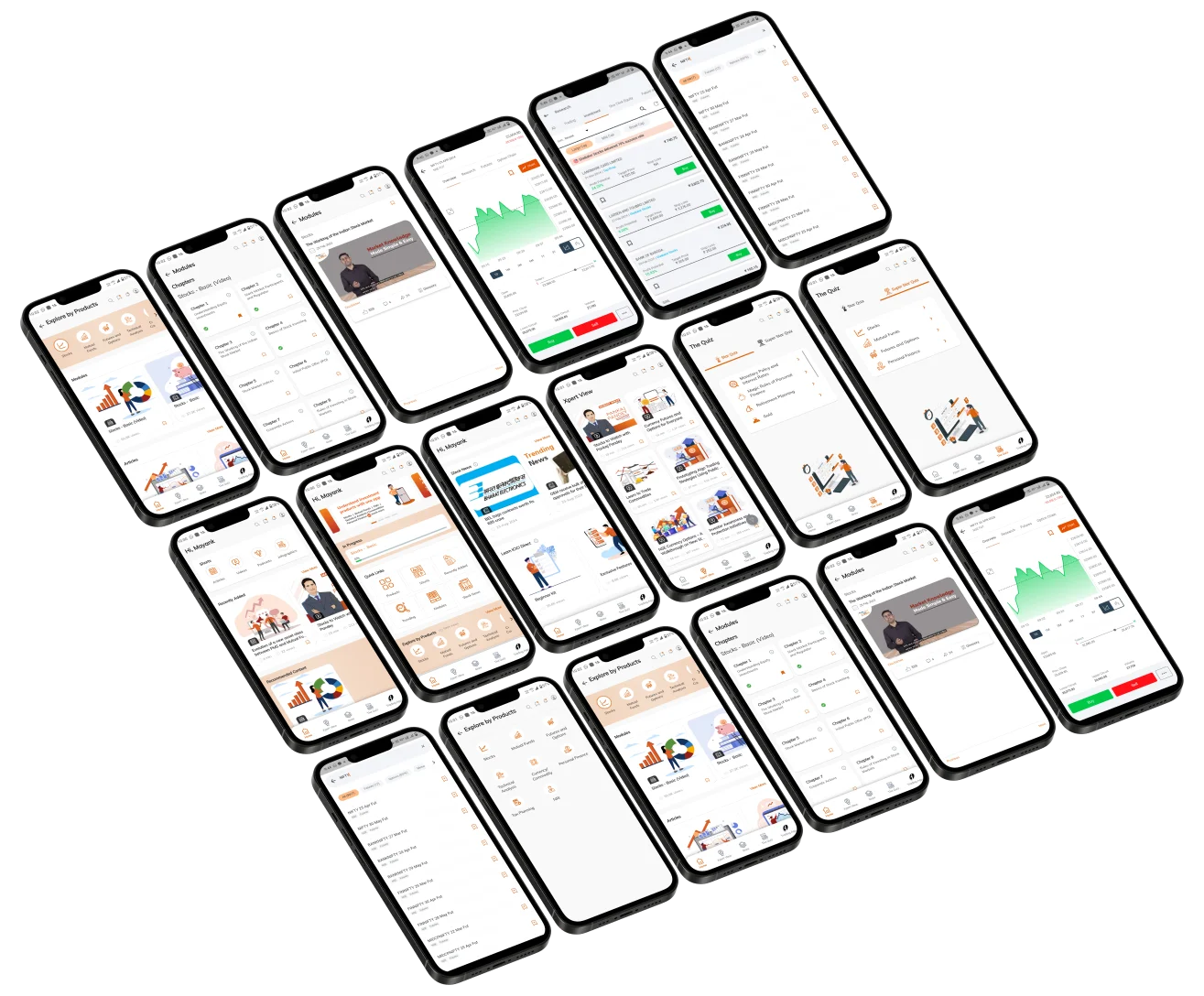
Elevate Your Financial Knowledge with the
ICICI Direct iLearn App
Elevate Your Financial Knowledge with the
ICICI Direct iLearn App
