







Download
iLearn application
Elevate Your Financial Knowledge with the
ICICI Direct iLearn App





Shares can be moved from one demat account to another for many reasons. You may want to consolidate holdings, change your broker, separate long-term investments from trading holdings, gift shares to a family member, or close an old demat account.
The process depends on whether both accounts are under the same depository, whether the transfer is between NSDL and CDSL, and whether you choose the online or offline route. In some cases, the process is also linked to account closure.
This guide explains how to transfer shares from one demat account to another in a simple way, including key details, charges, timelines, tax points, and common mistakes to avoid.
Transferring shares means moving securities from one demat account to another through the depository system. Your shares remain in electronic form throughout the process.
A demat-to-demat share transfer is not the same as withdrawing physical certificates or selling shares in the market. It is a movement of securities from one account to another.
However, shares can be transferred between demat accounts, and such transfers may occur for reasons such as consolidating holdings, segregating portfolios, or moving to another broker.
Investors usually transfer shares when they want to shift to a new broker, combine multiple demat accounts, separate investment and trading holdings, gift shares to family members, or close an old demat account.
For example, you may have opened a new account with better service or easier digital access. Instead of selling your existing shares, you can transfer stocks from one demat account to another, subject to the rules of your DP and depository.
No, a share transfer is not the same as selling shares. A sale occurs through the stock market and transfers ownership from the seller to the buyer.
A self-transfer from one demat account to another in your own name shifts the location of your holdings without changing ownership.
The share transfer process usually involves four main parties.
|
Party |
Role in the Process |
|
Investor |
Gives the instruction to transfer securities |
|
Current broker or DP |
Holds the source demat account |
|
New broker or DP |
Holds the target demat account |
|
Depository |
NSDL or CDSL processes securities through the depository system |
If you are looking to transfer shares online from one demat account to another, the route depends on whether your account is CDSL- or NSDL-linked.
For CDSL accounts, investors may use the CDSL Easiest facility, subject to registration and DP approval.
The broad process usually includes registering on CDSL Easiest, adding a trusted account or choosing the permitted account transfer option, entering the target BO details, selecting the ISIN and quantity, verifying the instruction, and confirming the transfer.
CDSL states that Easiest offers trusted account transfers to pre-notified CDSL demat accounts and account-of-choice transfers to other demat accounts, subject to the applicable authentication process.
For NSDL-linked accounts, investors should check the route provided by their DP and NSDL services. NSDL has online facilities for certain eligible journeys, including account-closure-cum-transfer in specific cases.
NSDL closure-cum-transfer can be initiated via the NSDL account transfer link when both the source and target accounts are NSDL accounts and the source account is being closed.
The process includes entering the source and target DP ID and Client ID, completing eSign and Aadhaar or VID OTP authentication, and downloading the acknowledgement PDF.
Online transfer may not work in every case. You may need the offline DIS route if your DP does not support the required online facility, if the transfer type is not eligible for online processing, if the account details do not match, or if there is a pledge, freeze, lock-in, or pending instruction.
In such cases, your DP can guide you on the correct process.
Before starting the process, it is important to understand the type of transfer you are making. This will help you choose the right route and avoid rejection.
This applies when both accounts are with the same depository. For example, if both accounts are CDSL accounts, you can follow the CDSL route. If both accounts are NSDL accounts, your DP or NSDL-enabled services may guide the process.
This applies when one account is with NSDL and the other is with CDSL. Inter-depository transfers may require additional care because the source and target account formats differ.
The transfer instruction must clearly mention the correct DP ID, Client ID or BO ID, ISIN and quantity.
Online transfers are usually made through depository-enabled services such as CDSL Easiest or applicable NSDL online routes, where available.
Offline transfers are done through a Delivery Instruction Slip (DIS). In this method, the investor fills in the details and submits the slip to the DP.
CDSL says the Easiest facility allows Beneficial Owners to submit off-market, inter-depository, and early pay-in debit instructions online.
A transfer to your own demat account is usually done for consolidation, broker change or portfolio management.
A transfer to another person may be treated differently. It may require a valid reason, gift documentation, and tax review, depending on the relationship, value, and nature of the transfer.
A share transfer request can be delayed or rejected if even a single important detail is incorrect. Check the following before submitting the instructions.
Keep the source and target account details ready. You may need DP ID, Client ID, BO ID, PAN and the account holder's name.
If it is a transfer between your own accounts, the name and PAN should match. For transfers to another person, check with your DP about the required documentation.
The transfer path depends on the depository. If both accounts are under the same depository, it is an intra-depository transfer. If they are under different depositories, it is an inter-depository transfer.
Every security has an ISIN, which serves as a unique identifier for that security. Entering the wrong ISIN can lead to rejection, delay, or incorrect processing of the transfer request.
While filling out a DIS, make sure the ISIN, company name and quantity are entered correctly, as demat transfer instructions are processed based on these details.
Shares that are pledged, frozen, under lock-in, marked lien, or linked to pending demat instructions may not be freely transferable.
For NSDL closure-cum-transfer, the facility is available only when there are no pledges, freezes or pending demat requests on the account.
If your old account remains active, you can use the normal transfer process. If you want to close the old account, you may need a closure-cum-transfer route.
This is useful when you are shifting fully from one broker to another.
The offline route is still widely used, especially when online transfer is not available or the investor prefers manual submission.
A Delivery Instruction Slip is a form given by your DP. It instructs your DP to debit securities from your demat account and transfer them to another demat account.
A DIS generally requests the ISIN, company name, quantity, target DP ID, Client ID, transfer type, execution date, and, if applicable, the reason code.
Fill every detail carefully. The target account name and account number should match the beneficiary details. Any mismatch can lead to rejection.
You need to submit the filled and signed DIS to your DP. Follow the DP’s deadline, signature rules and document requirements.
Your signature should match the signature available in the DP’s records. A signature mismatch can result in the request being rejected.
Offline processing may still be relevant for inter-depository transfers, especially when online routes are unavailable. In such cases, the correct transfer type must be selected, and the target depository details must be filled in accurately.
Closure-cum-transfer is used when you want to close one demat account and move the holdings to another account.
You can consider this route when changing your broker, closing an unused demat account, or consolidating all holdings into a single account.
It avoids keeping an extra account active after the securities are transferred.
|
Point |
Normal Transfer |
Closure Cum Transfer |
|
Purpose |
Move selected securities |
Close the old account and move holdings |
|
Account status |
The source account may remain active |
The source account is closed |
|
Use case |
Portfolio movement or gifting |
Broker change or account consolidation |
|
Conditions |
Based on the transfer mode |
May require no dues, no pledge and matching details |
Before submitting the request, check for pending dues, pledged shares, frozen holdings, pending demat requests and account holder details.
For NSDL closure-cum-transfer, the PAN in both the source and target NSDL accounts should be the same, and there should be no pledges, freezes, or pending demat requests.
Costs and timelines may vary across DPs, depositories and transfer modes. Always confirm the exact details with your broker or DP before submitting the request.
Yes, there may be charges for transferring shares from one demat account to another. These charges can vary depending on the DP, transfer type and mode.
The timeline can vary by DP, depository, instruction type and whether the details are correct.
Online routes may be faster in eligible cases, while offline requests may take longer because they depend on document submission and verification.
You may be able to transfer multiple securities in a single request, depending on the mode, DP rules, and the eligibility of your holdings.
However, pledged, locked-in, frozen or restricted securities may not move in the same way as free holdings.
After successful processing, shares should reflect in the target demat account. The time may vary. You should check the target account statement or app after the transfer is processed.
If the shares do not reflect within the expected time, contact the source DP first and keep the acknowledgement or DIS copy ready.
Tax treatment depends on whether the transfer is to your own account or to another person. It is better to keep records and consult a tax expert when the value is high, or when the transfer is not a self-transfer.
A transfer to your own demat account usually does not amount to a sale because ownership does not change.
When shares are transferred between your own demat accounts, there are no tax implications, as both accounts are held by you.
A gift of shares is different from a self-transfer. It may need documentation, such as a gift deed, and may have tax implications depending on the relationship between the giver and receiver.
However, transferring shares as a gift to specified close relatives may not be taxed in the hands of the giver in certain cases, whereas transfers to others may be subject to tax depending on the value and relationship.
Keep the DIS copy, online acknowledgement, transaction reference and statement entries. These records may be useful for tracking costs, proving ownership movements, answering tax queries, or resolving future disputes.
Even a small error can delay the transfer. Check every detail before final submission.
This is one of the most common mistakes. If the target account details are wrong, the instruction may be rejected.
The ISIN identifies the security. The quantity tells you how many units should be moved. Both must be correct.
For DIS-based transfer, your signature must match the DP records. A mismatch can lead to rejection.
Do not assume every transfer follows the same route. NSDL-to-NSDL, CDSL-to-CDSL, and NSDL-to-CDSL transfers may follow different paths.
Charges and timelines can vary. Confirm with your DP before making the transfer.
Pledged, frozen or locked-in shares may not be transferable through the normal route. Check the holding status first.
Transferring shares from one Demat account to another can be straightforward when you know the right process. First, identify whether both accounts are with NSDL or CDSL. Then, check the source and target account details, ISIN, quantity and holding status. For eligible CDSL accounts, online transfer may be possible through CDSL Easiest.
For NSDL-linked closure-cum-transfer, follow the route offered by NSDL and your DP. If online transfer is not feasible, use the DIS route. Keep all records safely and confirm charges, timelines and tax treatment before proceeding.
Yes, you can transfer shares from one demat account to another in your own name. This is often done for consolidation, broker change or portfolio separation.
Yes, an online transfer may be possible if your DP and depository support it. CDSL Easiest is one such facility for eligible CDSL users.
Yes, this is called an inter-depository transfer. You must enter the correct source and target depository details.
Not always. If an eligible online route is available, you may not need a DIS. For offline transfers, DIS is required.
You may be charged. The amount can vary by DP, transfer type and mode.
A transfer to your own demat account usually does not lead to tax because ownership does not change. Still, retain records for future reference.
Usually, pledged shares cannot be freely transferred unless the pledge is released or the required process is completed. Check with your DP.
The transfer may be rejected or delayed. Contact your DP immediately if you notice an error.
The timeline depends on your DP, depository, transfer mode, and the correctness of the details. Check your target account statement after processing.
Mutual fund units held in demat form may be transferred, subject to DP and depository rules. Confirm the process with your DP.
Fractional entitlements may be handled differently depending on the security, corporate action and depository rules. Check with your DP before transfer.
For a self-transfer, there is usually no separate reporting required, since shares are moved between your own demat accounts. For gifts or transfers to another person, tax review is advisable.


Natural Gas is a widely traded energy commodity used for electricity generation, industrial activity, heating and other applications. Its prices can react sharply to weather, supply and demand, inventories, global energy markets and geopolitical developments.
 180 views
 1 minutes
 30 Sep 2026
Gold is more than a precious metal. It is a safe-haven asset, investment avenue, central-bank reserve asset and industrial commodity. For a commodity trader, understanding both Gold's fundamentals and the contract being traded is important.
341 views
3 minutes
23 Sep 2026
Gold is one of the world's most actively traded precious metals and is widely used for investment, jewellery and industrial applications. It is also considered a safe-haven asset during periods of economic or market uncertainty.
702 views
3 minutes
07 Sep 2026

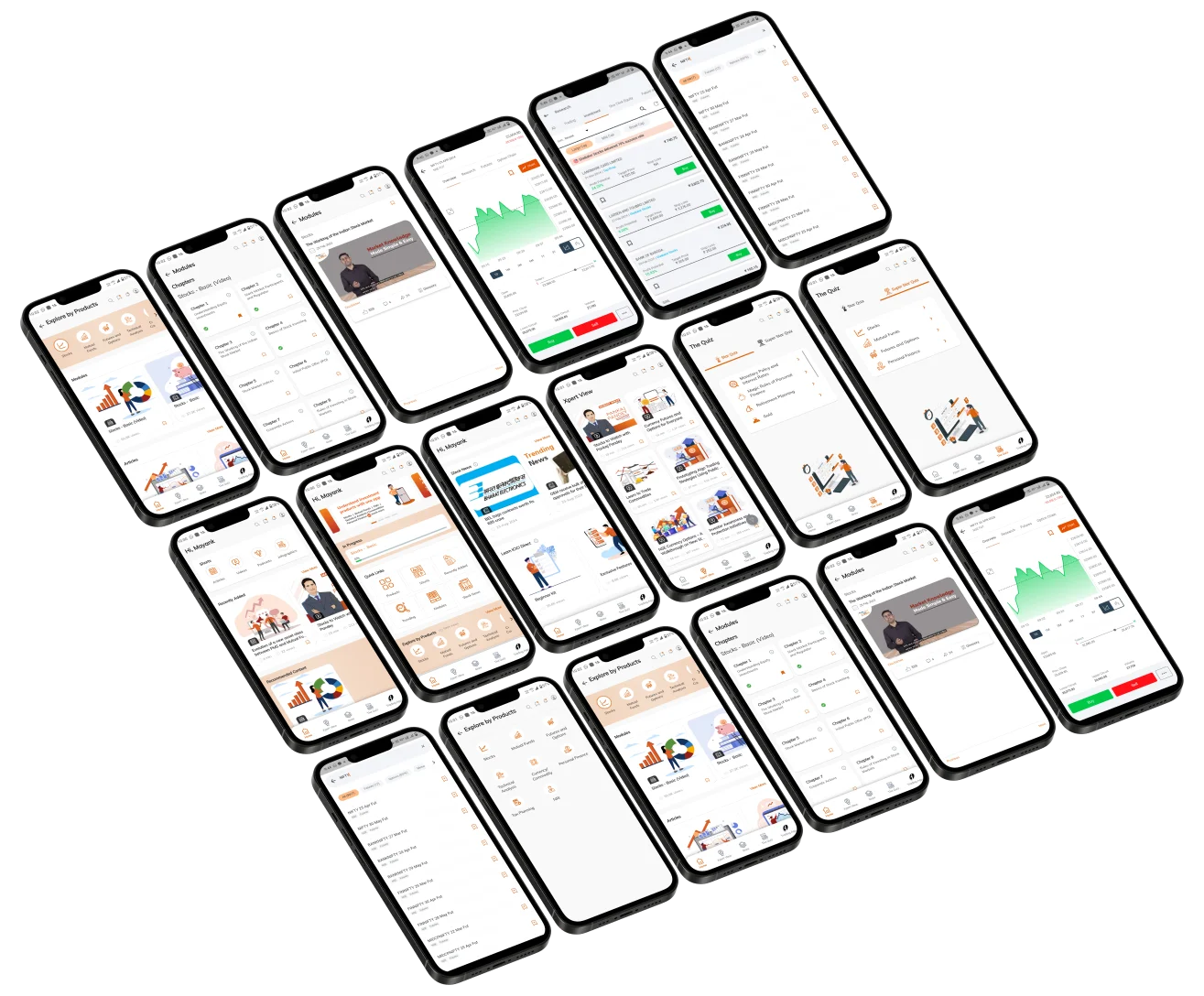
Elevate Your Financial Knowledge with the
ICICI Direct iLearn App
Elevate Your Financial Knowledge with the
ICICI Direct iLearn App
