



-202610121017596081271.jpg)



Download
iLearn application
Elevate Your Financial Knowledge with the
ICICI Direct iLearn App




Derivatives trading, particularly Options trading, is complex and requires many considerations. Before you trade an Options contract, you need to make two critical decisions: the strike price you want to trade and the expiration date.
The strike price is the price at which an Options contract can be exercised. In other words, it is the price at which an Option buyer will buy or sell an underlying asset if they wish to exercise their right.
Read More: All about Derivatives
The strike price plays a crucial role in determining the premium paid for an Options contract. In the case of a Call Option, if the spot price is more than the strike price, then the Option contract is said to be In-the-Money(ITM). If the spot price is equal to the strike price, the Option contract is said to be At-the-Money (ATM). If the underlying market price remains below the strike price, it will expire worthlessly or Out-of-The-Money (OTM). In the case of Put Options, the scenario would be reversed. If the spot price is below the strike price, the Option is ITM; otherwise, it will be out of the money.
When it comes to a Call Option, the lower the Option's strike price, the more valuable or expensive the Call Option will be due to higher intrinsic value. Intrinsic value is the difference between the spot and strike prices and can't be negative. An Option premium is the total of intrinsic value and time value.
Read More: Strike Price In Options Trading
Option premium = Intrinsic value + Time value
Intrinsic value of a Call Option = Max (0, Spot price - Strike price)
Intrinsic value of a Put Option = Max (0, Strike price - Spot price)
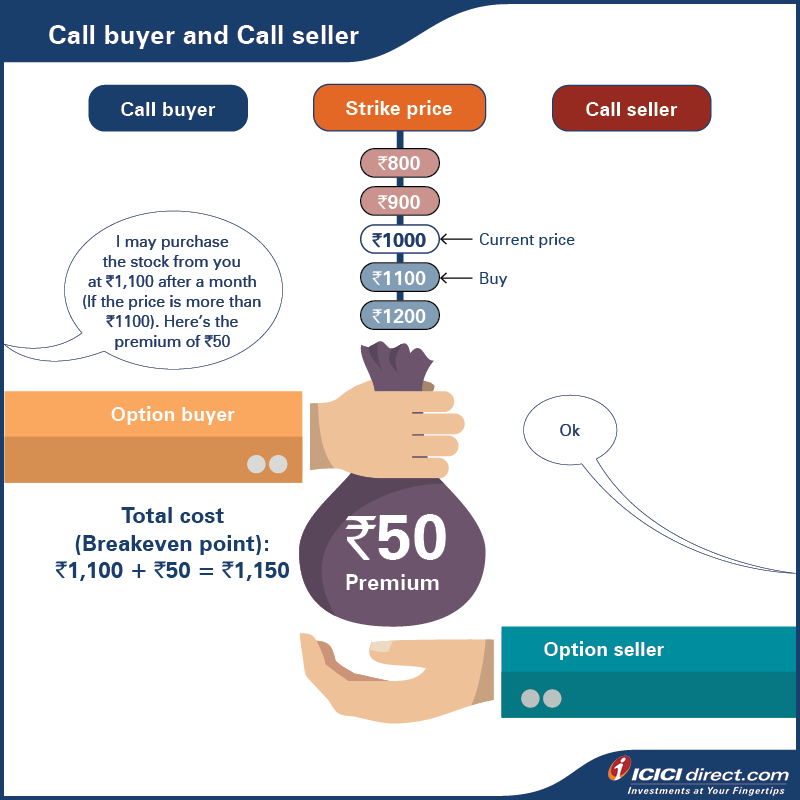
Let’s understand this with an example:
Stock ABC spot price = 1000
Intrinsic value of Call Option with a strike price of 900 = Max (0, Spot price- Strike price) = Max (0, 1000 - 900) = Max (0,100) = 100
Intrinsic value of Call Option with a strike price of 800 = Max (0, Spot price- Strike price) = Max (0, 1000 - 800) = Max (0,200) = 200
We can see that Call Option with lower strike prices has higher intrinsic value.
The scenario will be the opposite for Put Options. Let’s understand this with an example:
Stock ABC spot price = 1000
Intrinsic value of Put Option with a strike price of 1100 = Max (0, Strike price - Spot price) = Max (0, 1100 - 1000) = Max (0,100) = 100
Intrinsic value of Put Option with a strike price of 1200 = Max (0, Strike price - Spot price) = Max (0, 1200 - 1000) = Max (0,200) = 200
We can see that Put Option with higher strike prices has higher intrinsic value.
When choosing the strike price, you need to be clear on these fronts.
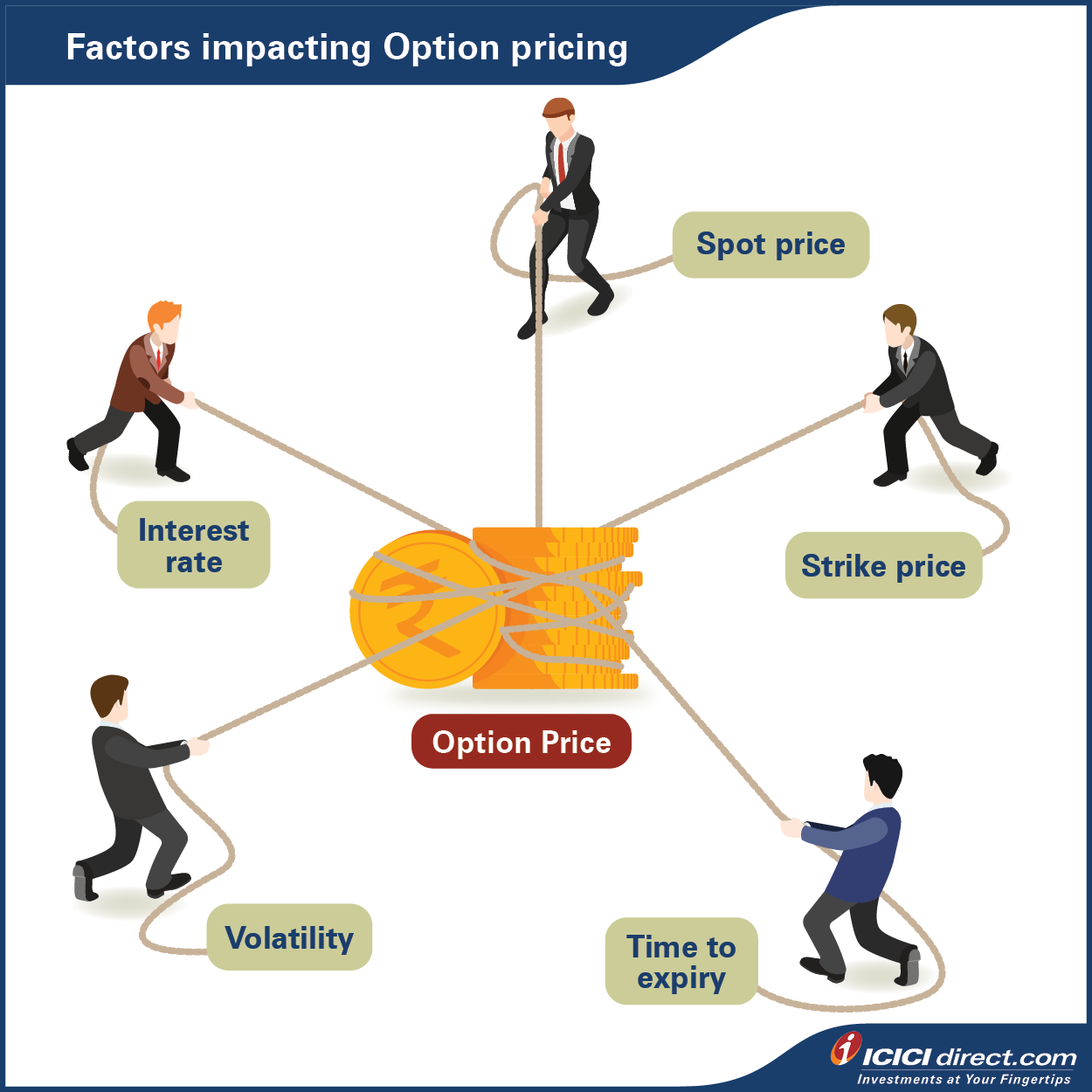
Choosing the right strike price is an important decision you make while trading in Options contracts. It determines the premium that you will pay and the possibility of profit. Consider the strike price against your risk appetite, the implied volatility, the intrinsic value and time value of the Options contract before entering into a trade.
Learn more about Options here: Options Module


Understand contango in commodity trading, how futures prices differ from spot prices, and how financing, storage and insurance costs influence commodity pricing.
 258 views
 1 minutes
 19 Oct 2026
Copper is a widely used base metal known for its electrical and thermal conductivity, strength, ductility and corrosion resistance. It is used across electrical wiring, construction, machinery, power infrastructure and several industrial applications.
462 views
2 minutes
09 Oct 2026
Natural Gas is a widely traded energy commodity used for electricity generation, industrial activity, heating and other applications. Its prices can react sharply to weather, supply and demand, inventories, global energy markets and geopolitical developments.
759 views
1 minutes
30 Sep 2026


Elevate Your Financial Knowledge with the
ICICI Direct iLearn App
Elevate Your Financial Knowledge with the
ICICI Direct iLearn App
