




Download
iLearn application
Elevate Your Financial Knowledge with the
ICICI Direct iLearn App





If you’re investing in a company for the long term, you should always look at its financials, which include the existing debts of the company, profits and revenues generated by the firm in the past few years, and its balance sheet.
A company with zero debts is said to be a debt-free company. Investing in debt-free company stocks is considered a good idea as these companies have a greater chance to survive and grow in the long term. Read up to know what debt-free companies are and the names of the top debt-free companies in India.
Any company, irrespective of its size and nature, needs financing from time to time. Companies usually meet business financing requirements by acquiring debts or loans or selling their equity stakes. When a company has no debt or outstanding on its balance sheet, it is said to be a debt-free company.
Debt-free companies are those with zero outstanding debt or external borrowings. However, this doesn’t mean that these companies have never ever borrowed. It is just that they have no current debt as they have repaid their loans in full (if taken). Debt-free companies are self-reliant and have more control over their finances and business decisions.
There are more than 6,800 companies listed on the two stock exchanges of India—the National Stock Exchange (NSE) and the Bombay Stock Exchange (BSE). Of these, at least 500 are debt-free companies. Here is a list of the top debt-free companies in India with a market capitalisation of more than Rs 50,000 crore:
TCS is India’s largest Information Technology (IT) Services and Consultancy company. It is the second-largest company in India in terms of market capitalisation after Reliance Industries. The company was founded in 1995 and has zero debts on the current date. TCS offers services across industries, including healthcare, insurance, telecom, retail, and others. As of 26 September 2022, the market capitalisation of TCS is Rs 10,91,147 crore.
After TCS, Infosys is another IT and consulting company that finds its name on this list. It is the second-largest IT company in India, with a market capitalisation of Rs 5,72,576 crores as of 26 September 2022. This company was founded in 1991 and is one of the top debt-free companies in India at the present date. The core operating countries of Infosys include India, China, and Japan.
SBI Life Insurance is an India-based life insurance company that offers an array of unit-linked and non-unit-linked insurance products. It also offers savings plans, retirement plans, child plans, and long-term wealth creation plans. SBI Life Insurance is one of the top life insurance companies in India and is listed on both NSE and BSE. As of 26 September 2022, the company has a market capitalisation of Rs. 1,27,381 crores.
ITC is one of the top holding companies in India. It deals in four segments—Fast Moving Consumer Goods (FMCG), Hotels, Paperboards, and Agri-Business. Some of the most well-known brands in India, such as Aashirvaad, Bingo, Fiama, Classmate, Candyman, Gold Flake, and Homelite, are all part of the ITC Group. This company was founded in 1910 and has managed to remain debt-free despite heavy investment across the industries.
Hindustan Unilever, or HUL, is India’s largest FMCG company. It is a subsidiary of a British Company and offers products in several categories, including food, beverages, personal care, and water purifiers. The company’s portfolio includes well-known household brands in India, such as Lux, Lifebuoy, Surf Excel, Lakme, Closeup, Ponds, Vaseline, Brooke Bond, Kissan, Horlicks, and PureIt.
To Conclude
Although the prices of these debt-free stocks are on the higher side, it’s never a bad idea to invest in them. Since there is no financial burden on these companies, they are free from the vagaries of the interest-rate hikes by the Reserve Bank of India (RBI).
Additionally, these companies usually have strong fundamentals and stable financial positions as they have been running their operations without external borrowings. Furthermore, debt-free companies are less risky for investors as they are less likely to go bankrupt.


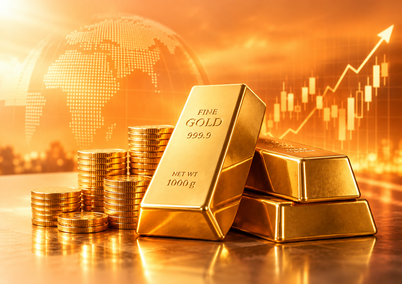
Gold is more than a precious metal. It is a safe-haven asset, investment avenue, central-bank reserve asset and industrial commodity. For a commodity trader, understanding both Gold's fundamentals and the contract being traded is important.
 145 views
 3 minutes
 23 Sep 2026
Gold is one of the world's most actively traded precious metals and is widely used for investment, jewellery and industrial applications. It is also considered a safe-haven asset during periods of economic or market uncertainty.
504 views
3 minutes
07 Sep 2026
In this article, we’ll explore the three exchanges that matter most: NYMEX, COMEX, and the London Metal Exchange (LME) and their link with MCX.
668 views
1 minutes
31 Aug 2026
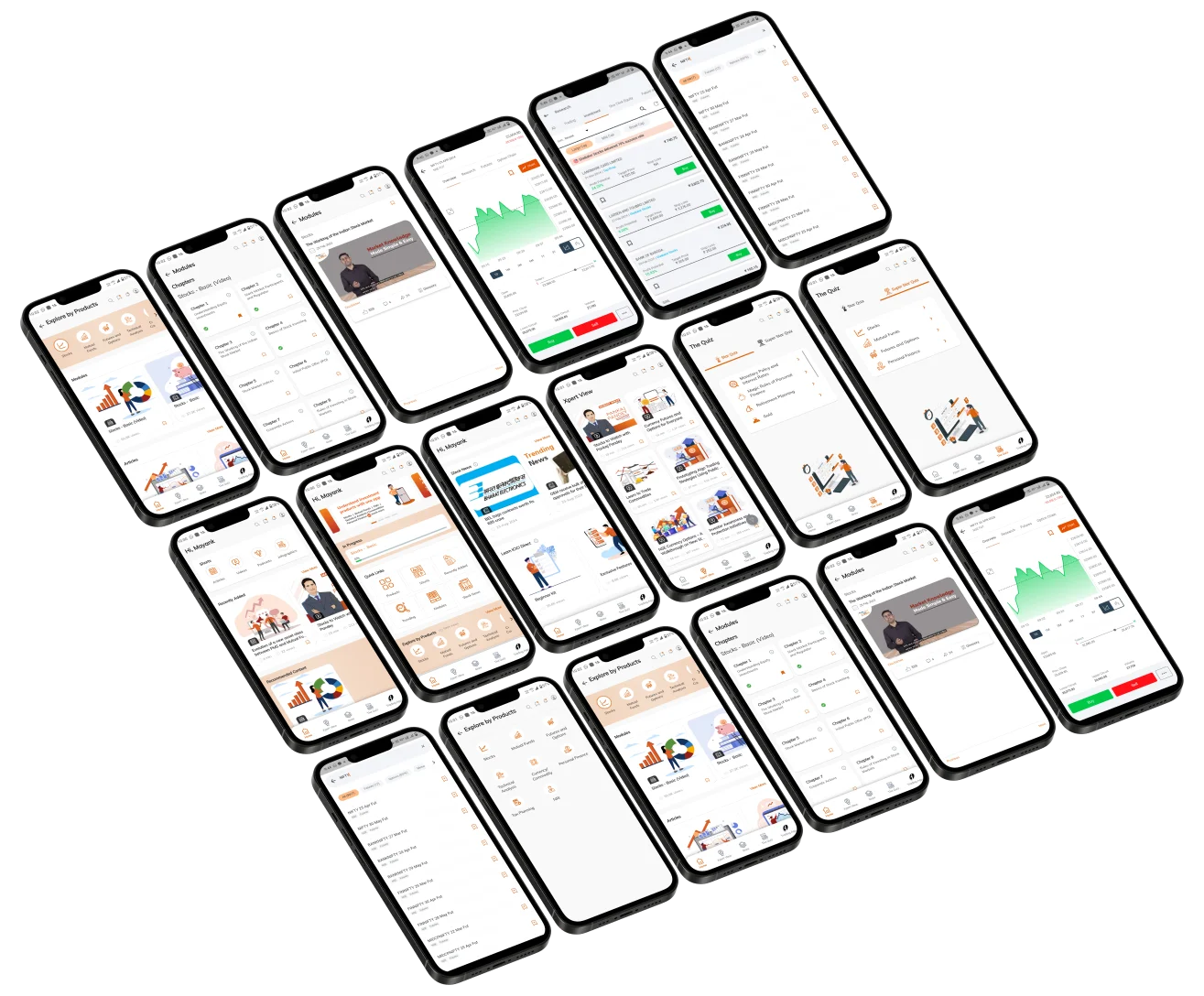
Elevate Your Financial Knowledge with the
ICICI Direct iLearn App
Elevate Your Financial Knowledge with the
ICICI Direct iLearn App
