



-202610121017596081271.jpg)



Download
iLearn application
Elevate Your Financial Knowledge with the
ICICI Direct iLearn App




A Demat account is a dematerialised account that stores all your shares and other securities like exchange-traded funds, bonds, debentures, futures and options, mutual funds, Initial Public Offers (IPOs), etc. It is similar to a bank savings account that holds your money. However, instead of money, a Demat account holds your investments electronically. Since you cannot store your shares in a physical form, the Demat account dematerialises it for you and converts it to an electronic format.
Here are the eligibility criteria to open a Demat account:
- There is no specific age limit to invest in the stock market. However, you need to be at least 18 years old to open a Demat account. Students above 18 can open their accounts themselves. Those below the age of 18 can ask a parent or guardian to open it for them.
- You must be a citizen of India to open a regular Demat account. If you are a Non-Resident Indian (NRI), you can use other types of Demat accounts, such as a repatriable or a non-repatriable Demat account.
- You must have a valid Pan Card to open a Demat account.
- You must have proof of identity or address, such as an Aadhaar card, driver’s license, passport, ration card, etc.
- Brokers may ask for proof of your net worth, such as bank statements, Income Tax Return (ITR) statements, income certificates, etc., to process your application.
Yes, a student may open a demat account. But there are certain terms and conditions that students need to know. They are as under:
Demat accounts have revolutionized share market investments. As a student, the earlier you begin your investment journey, the more substantial are the benefits.
Disclaimer: The contents herein mentioned are solely for informational purpose and shall not be considered as an invitation or persuasion to trade or invest. I-Sec and affiliates accept no liabilities for any loss or damage of any kind arising out of any actions taken in reliance thereon.
A Demat account can allow students to start their financial journal in investing from a young age. This can make you financially disciplined and offer you a head start in life, taking you a step closer to your goals. Stock market investments do not require large sums of money and can be initiated with a small amount. Moreover, with minimal fees and a simple account opening process, most students can open a Demat account easily without any hassles. So, instead of waiting to start investing when you begin your career, start as a student and get your Demat account today!
1. How can I open a Demat account as a student?
If you are over the age of 18 and have a valid Pan Card, you can go ahead and open a Demat account for yourself by contacting a Depository Participant (DP). You will be asked to fill up the account opening form and submit your KYC (Know Your Customer) documents. The DP will verify your documents and open your account. Once the process is complete, you will get a Demat account number.
If you are below 18, you can request your parent or guardian to do so for you.
2. Can an 18 year old open a Demat account?
Yes, an 18 year old can open a Demat account. However, you will need a valid Pan Card to complete the KYC for the account.
3. Can students invest in stocks?
Yes, students can invest in stocks of other companies. There is no minimum age to invest in the stock market, and both minors and adults can buy and sell stocks.
4. What is the minimum age to open a Demat account?
The minimum age to open a Demat account is 18 years. However, minors below 18 can also open their account through their parents or guardians and buy and sell stocks.


Understand contango in commodity trading, how futures prices differ from spot prices, and how financing, storage and insurance costs influence commodity pricing.
 161 views
 1 minutes
 19 Oct 2026
Copper is a widely used base metal known for its electrical and thermal conductivity, strength, ductility and corrosion resistance. It is used across electrical wiring, construction, machinery, power infrastructure and several industrial applications.
376 views
2 minutes
09 Oct 2026
Natural Gas is a widely traded energy commodity used for electricity generation, industrial activity, heating and other applications. Its prices can react sharply to weather, supply and demand, inventories, global energy markets and geopolitical developments.
642 views
1 minutes
30 Sep 2026
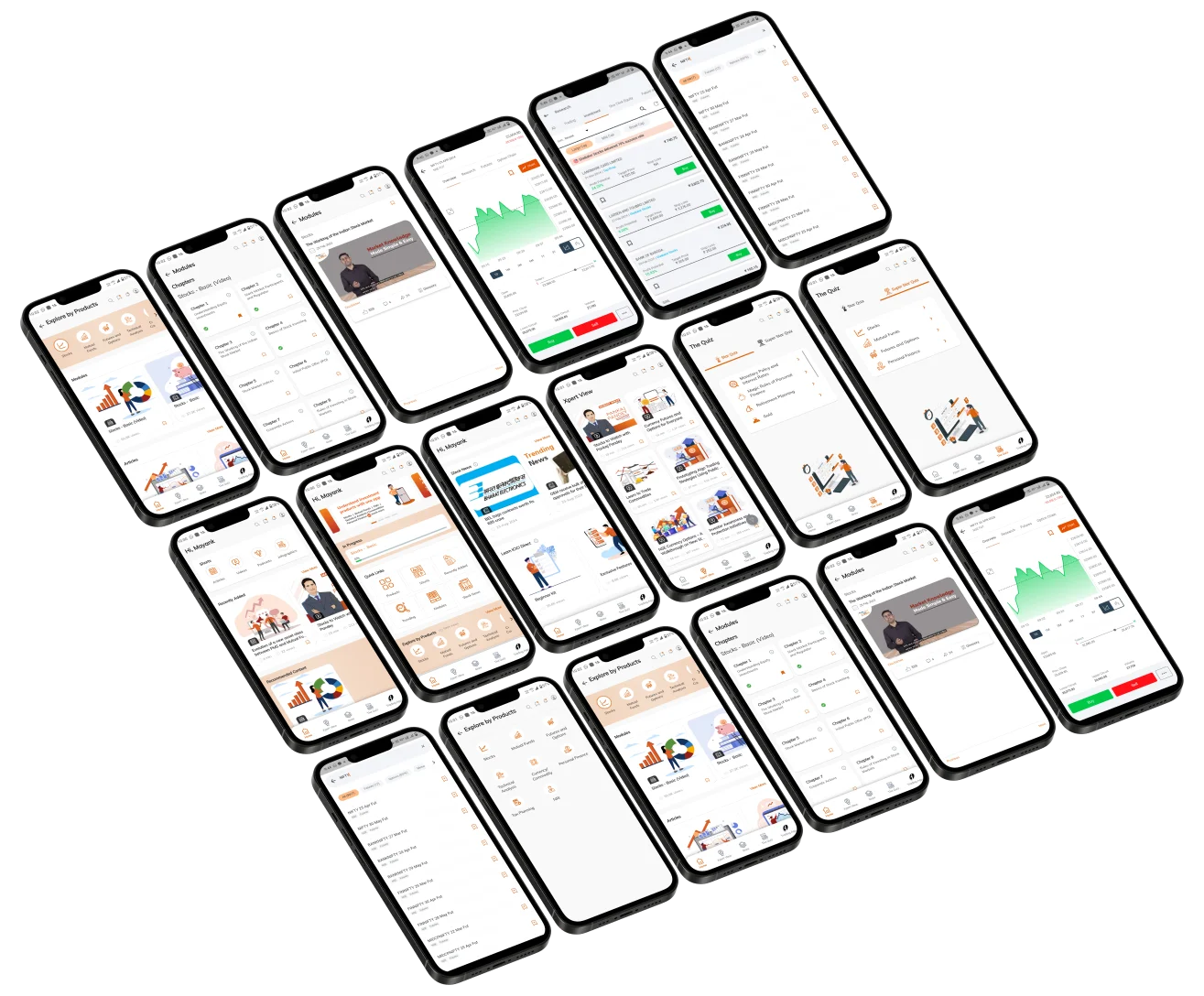
Elevate Your Financial Knowledge with the
ICICI Direct iLearn App
Elevate Your Financial Knowledge with the
ICICI Direct iLearn App
