





Download
iLearn application
Elevate Your Financial Knowledge with the
ICICI Direct iLearn App




A gold ETF is a commodity exchange-traded fund that can be used to gain exposure to the price increase in the gold. Gold ETFs trade on a stock exchange just like a normal stock or equity but derives its value from holding 'underlying assets' that is Gold.
Demat account charges on an annual basis.
Brokerage charges on both buying and selling.
Fund Management Expenses. This could be up to 1 % of the fund value. Lower the expenses, higher the return.
In the trading of futures, "rollover" refers to the process of closing out open positions in soon-to- expire contracts in favor of contracts with later expiration dates. Rollover is a key aspect of futures trading that must be accounted for, as it directly impacts the bottom line of the trading account.
In the process of rollover there is a rollover yield. A rollover yield could be positive or negative depending on market situation. In a backwardation market (where future price is lesser than current price), a rollover yield would be positive and in a contango market, the rollover yield would be negative. For e.g. current month expiry Gold Futures is trading at Rs 50,000 and next month at Rs 49,000. This is a backwardation market and a rollover cost would be positive. Futures contract of current month expiry would be closed(squared off) at Rs 50,000 and a position in next month Futures contract could be taken at Rs 49,000 (lesser price hence lesser margin requirement).
Rollover Yield would be calculated as :{( Next Month Futures Price-Current Month Futures Price)/ Current Month Futures Price} *100
If a Gold Futures is rolled over multiple times then there could be both positive and negative rollover yields at different rollovers.
In addition to roll-over yield there would be other charges in Futures Trading.
Overall cost of trading in Gold Futures could be enumerated as below: Broker Account opening charges, Demat account is not required, Cost of Margin Funding, Rollover Yield. Let’s understand Comparison between Gold ETF and Gold Futures on the basis of Return on Investment (ROI)
what would be the return if a position is taken in Gold ETF compared to Gold Futures with the same amount of money? A trader would be interested to know which option would provide better returns
|
Gold ETF |
Gold Futures (Mini) |
|
|
Initial Investment |
100,000 |
100,000 (as margin, @10%) |
|
Purchase Value |
100,000 |
Rs 1,000,000 (Notional Value) |
|
Quantity |
20 gms (approx.) |
200 gms |
|
Price Movement (Tick Value in the case of Futures Contract) |
@ Rs per 10 gms |
@ Rs per 10 gms |
|
Total Price Movement per 10 gms |
Rs 1,000 |
Rs 1,000 |
|
ROI# |
2% [{(1000/10)*20}/100,000] |
20% [{(1000/10)*200}/100,000] |
Note: The above table is for illustration purpose only and should not considered as invitation to trade.
# Net ROI would be calculated by adjusting rollover yield and other charges like brokerage, etc.
In a scenario if price of the gold goes down by Rs 1,000 per 10 gms then the loss in terms of percentage in Gold ETF and Gold Futures would be same; i.e. by 2% in Gold ETF and 20% in Gold Futures. Reason that percentage loss or gain is higher in Gold Futures is that Futures allow leverage by paying margin amount and not the entire purchase value.
Gold Futures could be used as a hedging tool. Depending upon the scenario, an individual can either take a long or short position in Gold Futures to hedge against the unfavorable price movement; for example, if an individual has to buy approx. 100 gms gold after one month and the gold price is volatile then the individual could take a long position in Gold Futures (i.e. buy Gold Futures). Similarly, if a jeweler wants to lock in a price for a delivery expected after one month and the price is not fixed then the jeweler can hedge the adverse price movement by taking a short position in Gold Futures (i.e. sell Gold Futures)
Both Gold ETF and Futures contracts are used for trading and investment in gold. However, Gold Futures has advantages over Gold ETF in terms of ROI and can also be used for hedging. For more details on Commodity, visit our website www.icicidirect.com
About the author: Pankaj Agarwal is a part of Commodity and Currency team at ICICI Securities limited. He has more than a decade experience in Learning & Development in BFSI area also in financial product distribution and personal financial planning. The views expressed in the article are personal views of the author and do not necessarily represent the views of ICICI Securities.


Discover the right demat account for your investing needs by checking costs, platform quality, product access, safety features and support services.
 1 k views
 6 minutes
 17 Jun 2026
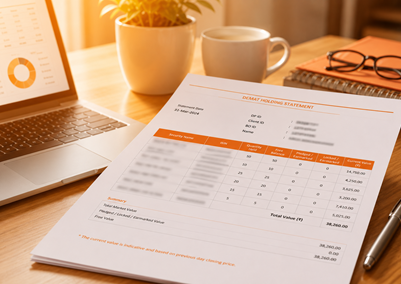
Learn how to read a demat holding statement, check securities, DP ID, client ID, BO ID, valuation and download statements from NSDL, CDSL or CAS.
511 views
9 minutes
17 Jun 2026
Discover the features of a demat account along with its benefits, uses, charges and possible disadvantages before opening an account to hold shares, ETFs, bonds and more.
475 views
8 minutes
16 Jun 2026
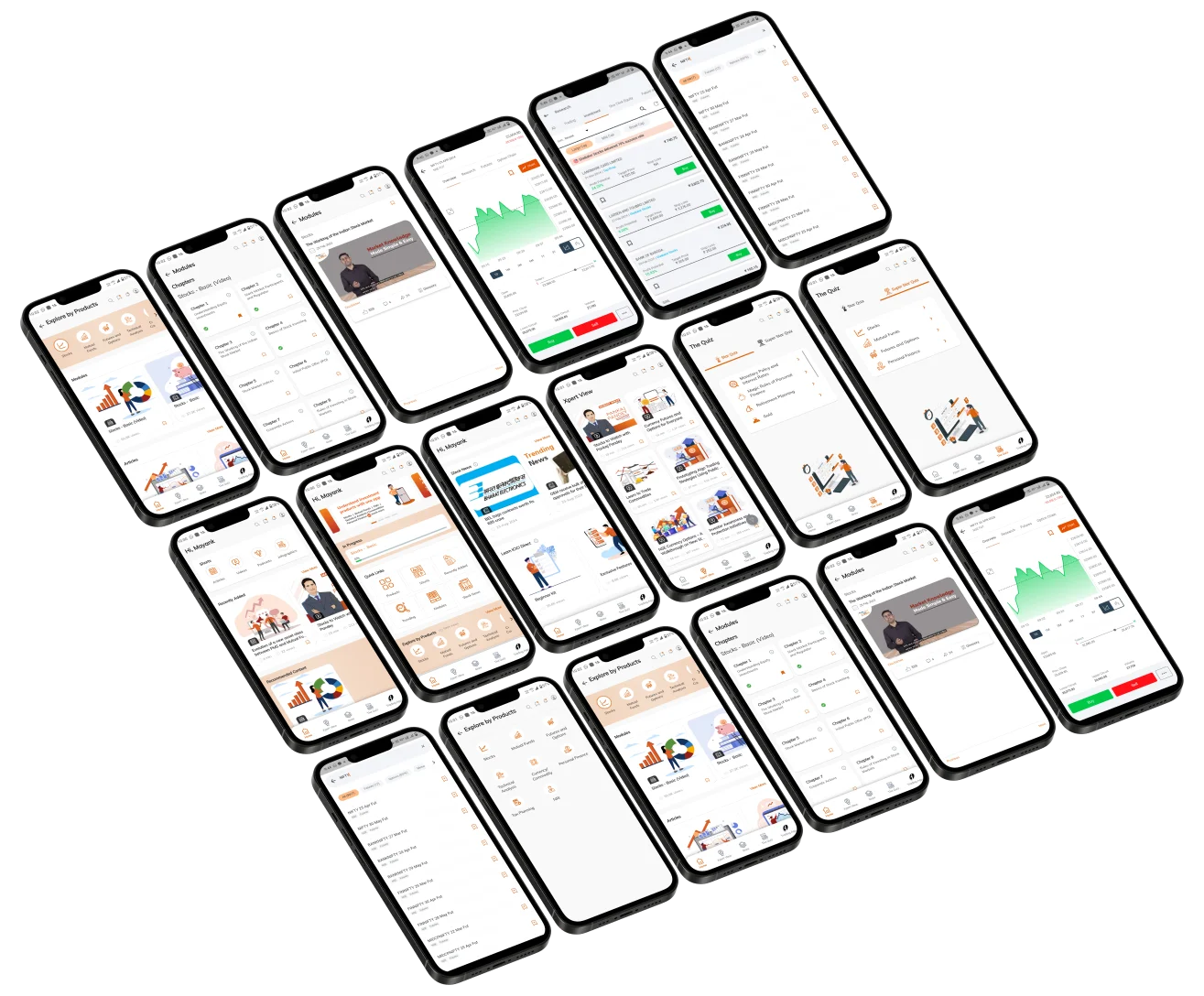
Elevate Your Financial Knowledge with the
ICICI Direct iLearn App
Elevate Your Financial Knowledge with the
ICICI Direct iLearn App
