





Download
iLearn application
Elevate Your Financial Knowledge with the
ICICI Direct iLearn App





Financial planning is fast becoming a cornerstone of modern family life. A family that invests together creates opportunities for wealth creation. Mutual Funds can play a critical role in financial planning.
Mutual funds enable you to invest in multiple asset classes like bonds , stocks , derivatives , and other financial securities. You can use them for financial planning in the following ways:
Mutual funds are meant for diversification. However, it is important while investing in them to make sure the diversification fills the long term needs as per one’s financial plans. Taking advantage of diversification is critical for leveraging mutual fund investments for long-term financial planning.
While building any long-term financial plan, it is essential to take notice of the highly liquid nature of mutual funds. This liquidity allows for minimal impact costs and is a crucial factor to consider in any emergency plans built into one’s long term financial plan.
The use of a systematic investment plan is essential for long term financial planning. It adds value to your investments over time, partly by reducing costs of holding over time. In essence, the longer you stay invested, the larger the benefit you reap. Despite its passive nature, a systematic investment plan makes a mutual funds scheme a large wealth generator.
Long term mutual funds, such as thematic funds, equity diversified mutual schemes, index funds, gold funds, and sector funds, are ideal for long term financial planning.
Use of dynamic plans wherein the mutual funds manager modifies an investor’s portfolio based on valuations, interest rates, market conditions, etc. That, however, makes the mutual fund riskier to the investor, as it may lead to less or over-diversification and the removal of safety nets present in traditional mutual funds.
Tailoring mutual funds to suit the nature of long-term financial needs is another important consideration. A mutual fund’s tenure and its amount and other clauses are ideally suited to meet specific financial needs.
Taking advantage of the tax efficiency of long-term mutual funds is also a consideration. Mutual fund schemes are liable for 10% of LTGR. However, in reality, the tax affects less than 10% of the returns, with advanced indexation benefits on long-term gains.
Mutual funds are an investment option that represents a handy tool for long-term financial goals if appropriately leveraged. Mutual funds offer a wide diversification of one’s investment portfolio and a host of other benefits. It is important, however, that one understands one’s specific long-term needs before investing in mutual funds, in order to be able to tailor the investment properly to reap the maximum benefits possible.


Learn about DP ID in a demat account, how it differs from a Client ID, NSDL and CDSL formats, where to find it, and why it matters for investors.
 93 views
 3 minutes
 26 Jun 2026
Discover the right demat account for your investing needs by checking costs, platform quality, product access, safety features and support services.
1 k views
6 minutes
17 Jun 2026
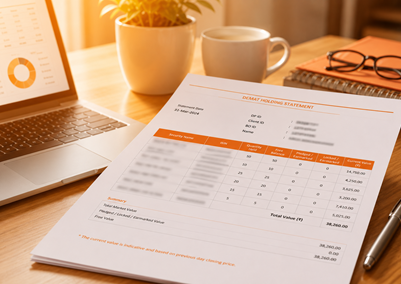
Learn how to read a demat holding statement, check securities, DP ID, client ID, BO ID, valuation and download statements from NSDL, CDSL or CAS.
655 views
9 minutes
17 Jun 2026


Elevate Your Financial Knowledge with the
ICICI Direct iLearn App
Elevate Your Financial Knowledge with the
ICICI Direct iLearn App
