


-202610121017596081271.jpg)




Download
iLearn application
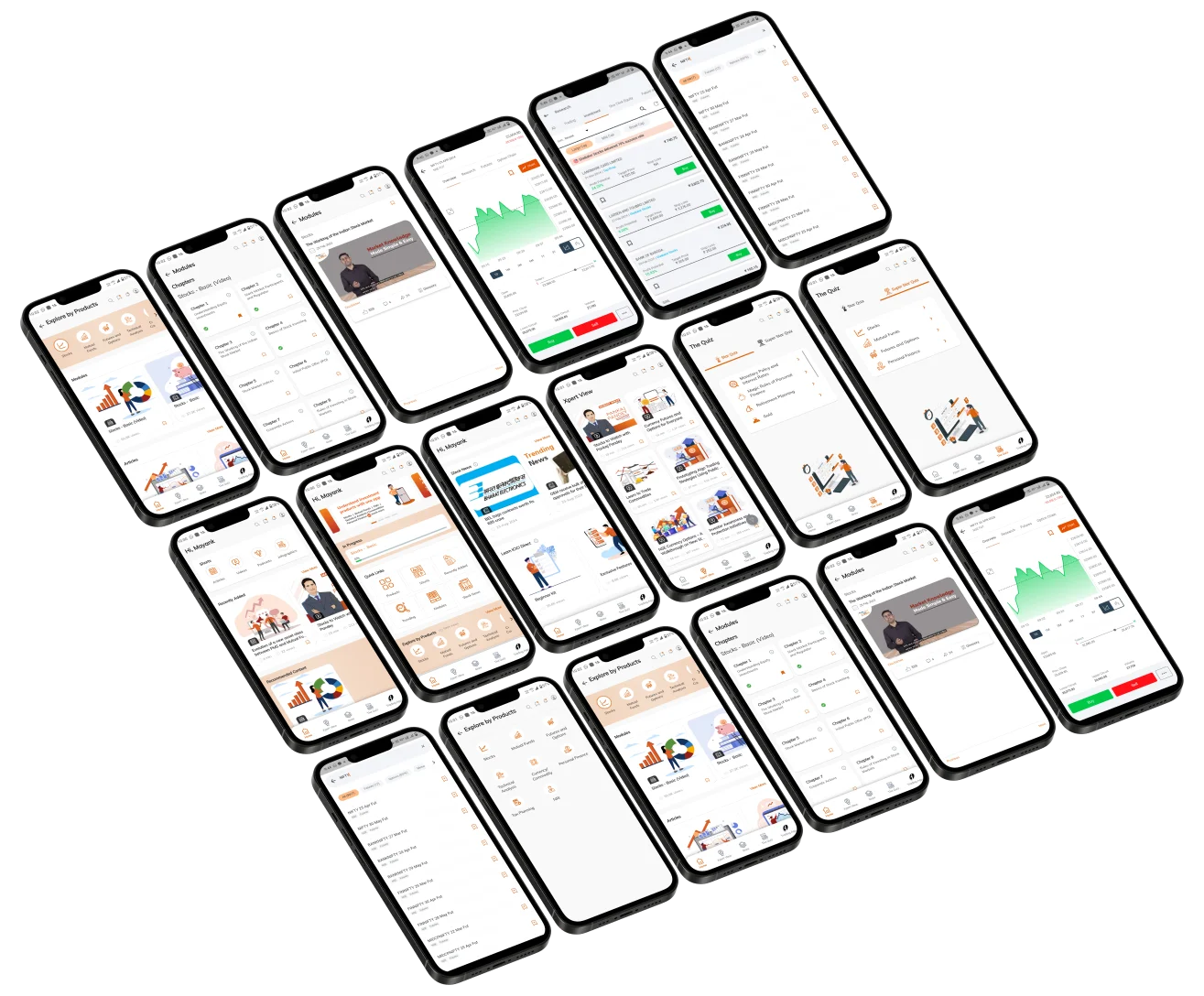
Elevate Your Financial Knowledge with the
ICICI Direct iLearn App





Investors can make a profit on stocks in different ways. One way could be a long-term investment. Another way could be a short-term strategy involving day trading. In intraday trading, you buy and sell the stocks on the same day. The transaction has to be completed before the market closes and if you fail to do so, the broker can convert it to a delivery trade or square off the position.
The purpose of intraday trading is to earn profit through the stock market movement. It is also known as day trading. You can buy and sell the same number of stocks before the market closes. This will help earn good returns. Assume that a stock opens at Rs 400 in the morning and then climbs to Rs 450 by the end of the day. If you have 1,000 stocks, you can make a profit of Rs 50,000 in a few hours. Before you engage in day trading, it helps to understand what intraday brokerage charges.
Additional Read: Five suggestions for intraday trading
When you engage in intraday trading, you have to pay intraday brokerage charges to execute trade and these include:
1. SEBI regulatory charges
2. Securities Transaction Tax
3. Transaction charges
4. Brokerage and GST on brokerage
5. Stamp duty
Let us consider each in detail.
1. SEBI regulatory charges
There is a 0.0001% of (share price * number of shares) fee charged by the Securities Exchange Board of India. This fee will be charged by all the stock exchanges in India, and it is used to meet the expenses that are incurred by SEBI to perform its duties. Whether it is an intraday transaction or delivery, the rate will remain the same.
2. Securities transaction tax (STT)
The STT will be charged 0.025% of (share price *number of shares) on the sell side of the intraday equity transaction.
3. Transaction charges
The transaction charge is levied by the stock exchange on which you make the trade. The charges are different for BSE and NSE. BSE will charge 0.00375% per transaction, while NSE will charge 0.00297% per transaction.
4. Brokerage and GST on brokerage
Intraday brokerage is the fee charged by the broker who offers services to you. ICICI direct offers intraday services at Rs 20 for options trading and it is unlimited per order. They have multiple brokerage plans to choose from.
5. Stamp duty
The stamp duty on the transaction will vary on the location.
There is a huge difference between delivery and intraday trading. When you have purchased stock on a delivery basis you can keep it as long as you want but with intraday trading, you must sell the stocks on the same day. If you do not do so, the online platform will convert it into a delivery trade and you will have to pay a brokerage.
Additional Read: How Intraday Trading Works?
Many simply square off the trade at the market price at the close of the market and if you are making a loss, you will have to bear it.
Reference links:
https://www.icicidirect.com/services/account-opening/intraday-trading-account


Copper is a widely used base metal known for its electrical and thermal conductivity, strength, ductility and corrosion resistance. It is used across electrical wiring, construction, machinery, power infrastructure and several industrial applications.
 247 views
 2 minutes
 09 Oct 2026
Natural Gas is a widely traded energy commodity used for electricity generation, industrial activity, heating and other applications. Its prices can react sharply to weather, supply and demand, inventories, global energy markets and geopolitical developments.
429 views
1 minutes
30 Sep 2026
Gold is more than a precious metal. It is a safe-haven asset, investment avenue, central-bank reserve asset and industrial commodity. For a commodity trader, understanding both Gold's fundamentals and the contract being traded is important.
563 views
3 minutes
23 Sep 2026

Elevate Your Financial Knowledge with the
ICICI Direct iLearn App
Elevate Your Financial Knowledge with the
ICICI Direct iLearn App
