







Download
iLearn application
Elevate Your Financial Knowledge with the
ICICI Direct iLearn App





If you are in the phase of starting your financial journey (stock investing), you would have heard of the term 'Demat account'. It is the first stone that you lay for your journey. And needless to say, it has to be selected correctly.
To do the right thing, you need to understand the term. In this article, we will discuss everything related to the Demat account.
The first thing we will focus on is the Demat account's meaning. You can think of a Demat account as a digital wallet for your stocks and investments. Instead of handling physical certificates, a Demat account holds your stocks and securities in an electronic form - how your digital wallets hold money instead of cash.
It makes buying and selling shares easy, just like online shopping. Each of your investments is neatly stored in this virtual account, making it convenient to track and manage your holdings.
Before we discuss how to open a Demat account, let us understand when a Demat account comes into the picture and what exactly happens at the backend. When you buy a company's shares, instead of getting physical certificates, those shares are credited to your Demat account electronically. Similarly, when you sell your shares, they are debited from your Demat account.
For example, if you buy 10 shares of Infosys Limited, those shares will be stored in your Demat account. If you decide to sell 5 of them, the Demat account will reflect that change. It makes buying and selling investments easy and secure, eliminating the need for physical paperwork.
Step 1: Enter mobile number registered with Aadhaar and Enter OTP triggered on mobile no. for verification to proceed.
Step 2: For email verification, either login through Google or enter any other email address.
Step 3: Enter OTP triggered on Email ID to complete verification and proceed.
Step 4: Verification can also be skipped at this stage and done at the end of the account opening journey.
Step 5: Enter PAN number and Date of Birth as per Aadhaar.
Step 6: Confirm name on PAN and proceed.
Step 7: Link existing ICICI bank or any other bank account.
Step 8: Complete KYC using Aadhaar
Step 9: Documents upload: Following documents are required
For trading in Derivatives, any of the below list of documents to be uploaded
Step 10: Open new Demat account or link existing ICICI Demat account.
Step 11: Register nominee for your demat account
Step 12: Enter personal and financial details
Step 13: Complete in person verification by either taking a selfie or for a device without a camera, verification using SMS can be done where an IPV link is sent in a text message on the registered mobile number.
Step 14: Complete e-Sign of the account opening documents
Step 15: A/C is opened successfully
Features and benefits of a Demat account
Account opening eligibility
The following investors are eligible to open a Demat Account:
Any resident Indian with a PAN can open an account.
Hindu Undivided Family (HUF) can open a Demat account. The account will be opened in the name of the leader or the eldest male member of the family.
Non-Indian Residents (NRI) can also participate in the Indian financial markets by opening a Demat Account. The investor has to specifically inform the DP that it is NRI Account.
Domestic companies are also eligible to open an account.
Account opening charges
There are various charges associated with a Demat Account, which are as follows:
Account opening charge – It is the fee a depository participant (DP) levies on you to open a Demat account. The charges vary from DP to DP. With ICICIdirect, the account opening charges are Nil.
Annual maintenance charge – You are required to pay an annual maintenance charge as long you hold the Demat Account with the DP. You are liable to pay this charge irrespective of whether you use the account or not.
Multiple Account Holding
If you are wondering if it is possible to have more than one Demat Account, then the answer is yes. There is no restriction to the number of Demat Accounts you can open as long as they are opened with different DPs. Every account should be linked to your PAN card as per the mandatory Know Your Customer (KYC) requirement. You have the option to assign a nominee to your account.
There are multiple types of Demat accounts, so before you open a Demat account, you must understand the categories. You must understand your needs and consider relevant factors before deciding. The below table helps you understand the different types of Demat accounts.
Regular Demat Account: Standard Demat account for residents, allowing the holding and trading of various financial securities such as stocks, bonds, and mutual funds.
Repatriable Demat Account: Specifically designed for Non-Resident Indians (NRIs), this account allows the repatriation (transfer back) of both the sale proceeds of investments and the capital invested.
Non-Repatriable Demat Account: Another option for NRIs, this account also caters to the Non-Repatriable category, meaning that funds (capital and profits) must be maintained within India and cannot be repatriated.
Basic Service Demat Account: Designed to make demat account services accessible and affordable for small investors (Students). It comes with certain limitations and concessions to cater to the needs of individuals with fewer holdings.


Gold is one of the world's most actively traded precious metals and is widely used for investment, jewellery and industrial applications. It is also considered a safe-haven asset during periods of economic or market uncertainty.
 358 views
 3 minutes
 07 Sep 2026
In this article, we’ll explore the three exchanges that matter most: NYMEX, COMEX, and the London Metal Exchange (LME) and their link with MCX.
531 views
1 minutes
31 Aug 2026
Explore the meaning of a mainboard IPO, SEBI's eligibility routes, NSE and BSE listing rules, key benefits, and the checks investors should make before applying.
2 k views
4 minutes
13 Aug 2026
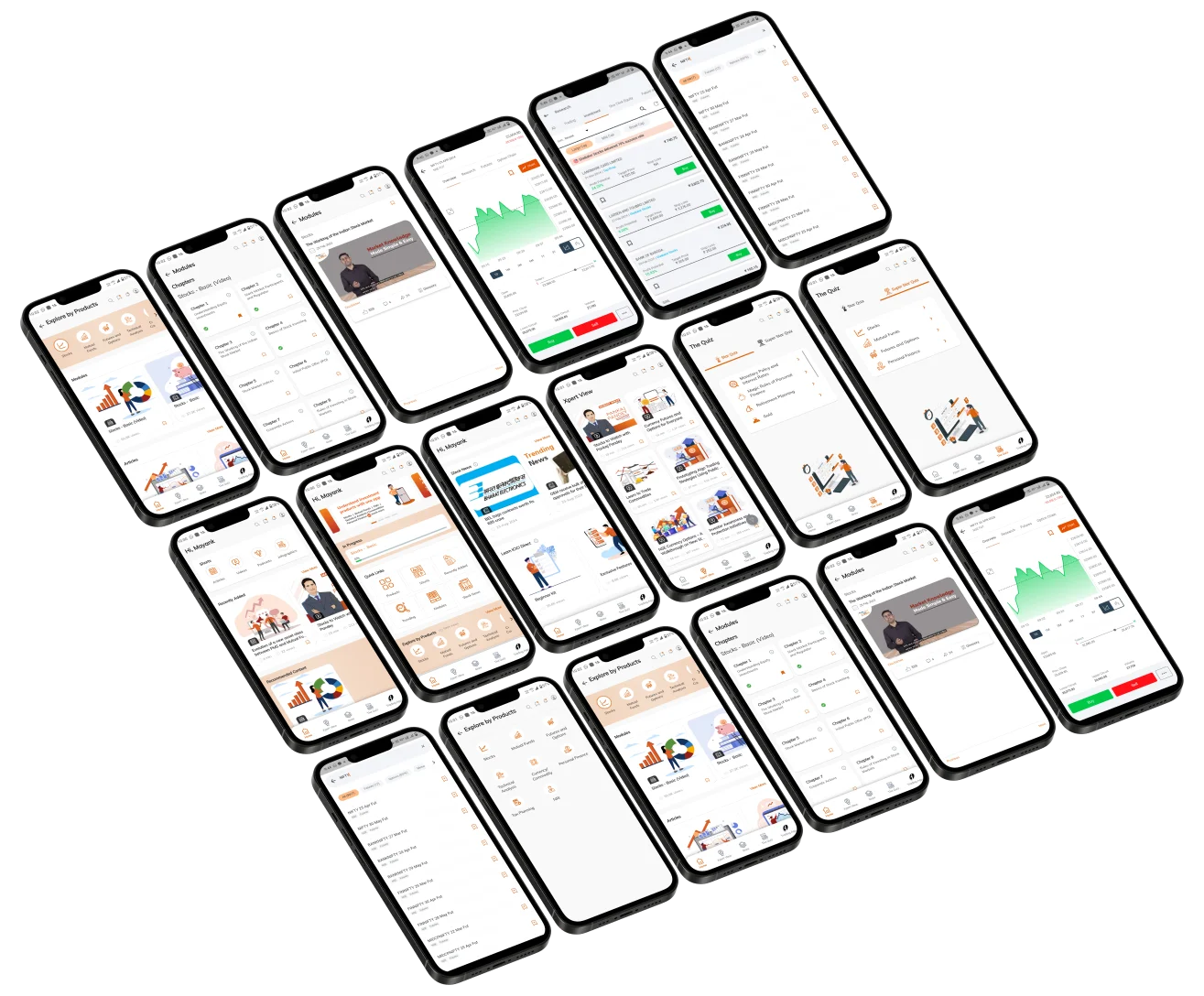
Elevate Your Financial Knowledge with the
ICICI Direct iLearn App
Elevate Your Financial Knowledge with the
ICICI Direct iLearn App
