







Download
iLearn application
Elevate Your Financial Knowledge with the
ICICI Direct iLearn App





Derivatives as financial instruments derive their price from their underlying assets. The rising importance of Derivatives in modern financial markets starting in the 1970s led to the development of different methods used to determine the price of Derivatives. The most common of these is known as the Black-Scholes method. While the basic principle of pricing Derivatives remains the same, the pricing is derived from the no-arbitrage code. Each variation of Derivatives follows its model of pricing according to its characteristics.
Futures contracts refer to bilateral agreements for the purchase or sale of an underlying asset at a given date for a fixed price wherein the parties are legally required to fulfil the contracts. Thus, the price of Futures is reliant upon the asset’s cash price, known as the Spot Price. Since the value of the underlying asset may increase or decrease during the duration of the agreement, the price of Futures may often deviate from the price of the underlying asset. The Basis is the difference between the price of the underlying asset and the Futures contract. You determine the Basis by other factors such as the quality of the underlying asset and the delivery location. The Basis is only an average measure used by investors to determine the profitability of the underlying asset and search for arbitrage opportunities. The price of Futures is adjusted every day. That allows you to hedge against any profit or the subtraction of loss incurred due to the difference between interest rates and futures price.
Forwards contracts are customised private bilateral agreements traded on Over Counter (OTC) Derivatives markets. To purchase and sell an underlying asset at a given date and a fixed price, you need to fulfil the contracts. The market determines prices of Forward contracts based on the cash price of the underlying asset and the interest expense and the cost of storage and transportation, delivery and other opportunity costs. Since the Forwards Contracts cover additional charges, they provide investors protection against price fluctuations and devaluation of assets, thereby offering a complete hedge.
Swaps are contracts in which the parties agree to exchange revenue flows from two different sources for a predetermined period. Swaps are priced so that the parties are all at zero value at the start of the contract. That is done by viewing the whole Swaps as a series of market Forwards contracts. Some contracts have a positive value, and some have a negative value. That makes their combined value equal to zero.
Options are contracts in which the buyer gains the right to purchase or sell an underlying asset at a fixed price but are not legally obligated to do so. The predetermined price of the underlying asset is called the Strike Price. Traders price Options after considering the probability of the exercise of the Options contract by the buyer and the Strike Price of the underlying asset. The includes the volatility of the underlying asset and its interest rates.
While the models of pricing Derivatives that emerged from the 1970s are still used in present international finance, the financial crisis of 2008 has led to the emergence of new models of pricing with a greater emphasis on counterparty risks. The pricing of Derivatives is a complex affair, increasing in difficulty with the variation and complexity of the Derivatives contracts.


Gold is one of the world's most actively traded precious metals and is widely used for investment, jewellery and industrial applications. It is also considered a safe-haven asset during periods of economic or market uncertainty.
 339 views
 3 minutes
 07 Sep 2026
In this article, we’ll explore the three exchanges that matter most: NYMEX, COMEX, and the London Metal Exchange (LME) and their link with MCX.
512 views
1 minutes
31 Aug 2026
Explore the meaning of a mainboard IPO, SEBI's eligibility routes, NSE and BSE listing rules, key benefits, and the checks investors should make before applying.
2 k views
4 minutes
13 Aug 2026

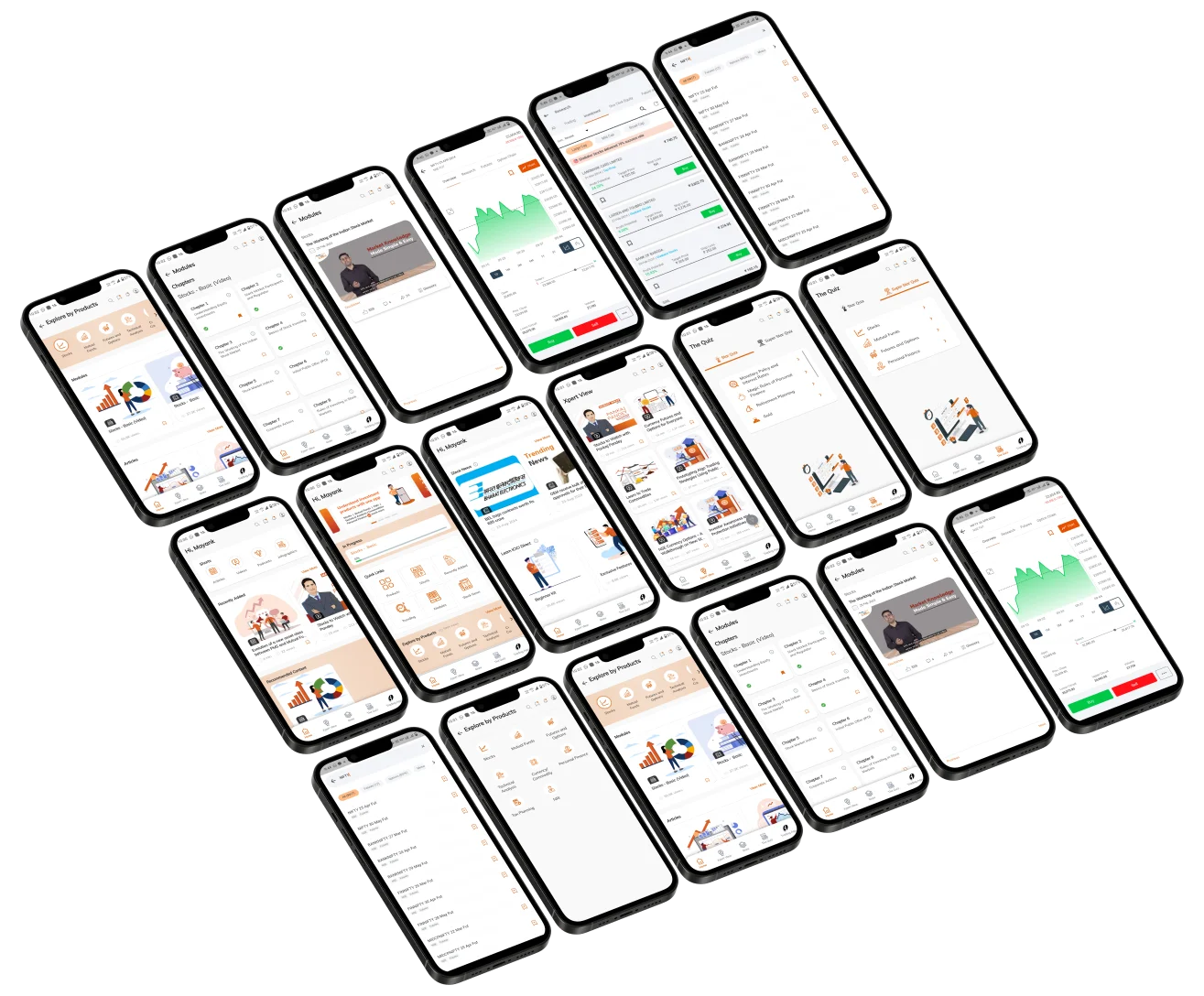
Elevate Your Financial Knowledge with the
ICICI Direct iLearn App
Elevate Your Financial Knowledge with the
ICICI Direct iLearn App
