



-202610121017596081271.jpg)



Download
iLearn application
Elevate Your Financial Knowledge with the
ICICI Direct iLearn App





The Indian Income Tax department has set a basic income exemption limit for tax filing. Once your annual income crosses this limit, you need to file your income tax return every financial year. This 2-step Income Tax Return (ITR) filing process is complete only after successful e-verification of your Income Tax Return.
Additional Read: All about Income Tax in India: Basics, tax slabs, and e-filing process
Once your ITR is uploaded on the e-filing website, the IT department gives you 120 days to get your ITR verified. If you do not complete this step within the said period, your tax filing will be invalid as per the IT laws. You can get your ITR verified online as well as offline. There is only one offline route to get the verification done, requiring you to post a copy of your ITR verification. This physical process is time-consuming and bureaucratic. So, the best option to get this verification done in a hassle-free and quick manner is the online route.
This is one of the popular choices for ITR verification. The prerequisite here is to have a Demat Account. If you don't have a Demat Account, you can click here to understand the Demat Account Opening Process. Only a registered broker can open a Demat Account.
Additional Read: Which Demat Account is best
With your functional Demat Account in place, you can easily e-verify your ITR through a short and straightforward process that can be clubbed into two significant steps.
The first step of ITR e-verification through Demat Account is prevalidating your Demat Account. It can be done as under,
This pre-validation process is approximately an hour or two long. Kindly note that you cannot change your email ID or mobile number stated in your Demat Account throughout this process. A mismatch in your Demat Records and your e-filing submission can lead to errors. If there are any errors in it, you will receive an intimation via email to rectify them.
Generating an Electronic Verification Code (EVC) is the final step in the process of e-filing an ITR. An EVC is a 10-digit alphanumeric code that serves as a verification tool to identify the taxpayer. It is sent to your registered mobile number. Hence, it is essential to not change your mobile number or email ID during this step too.
Once your depository validates your Demat Account, you can generate EVC using your Demat Account by following the process below:
You will be intimated about the success of your ITR e-verification through 'Return successfully e-verified' displayed on your device screen. You must download the acknowledgement for future requirements if any. The acknowledgement will also be emailed to you. This marks the successful completion of the e-filing and e-verification of your ITR.
Additional Read: Features and benefits of a Demat Account
ITR filing and its verification may all seem to be a complicated and exhaustive process. But the new-age technologies such as the e-filing website, Demat Account, etc., have simplified it all significantly so that anyone can do it with ease. Make the most of these beneficial tools and file your returns conveniently.
Additional Read: What are the Benefits of Filing Income Tax Return on Time?
Additional Read: How to file an income tax return for last year?
1. Can we file ITR through a Demat account?
No, you cannot file an ITR through a Demat account. You can file your ITR through the government e-filing website or an authorized e-filing portal. However, you can use your Demat account to e-verify your ITR. In order to do so, you will have to first pre-validate your Demat account.
2. How can I link my Demat account to ITR?
Linking your Demat account is easy and takes a few minutes only. Here are the steps you can follow:
- You can simply login to your ITR e-filing account.
- Now, click on pre-validate your Demat account.
- Next, click on profile settings and enter your depository name – either NSDL or CDSL.
- After this, you will be asked to submit details like your DP’s name, your Demat account number, registered mobile number, and email address.
- Once you finish the steps, your account will be linked to your ITR and can be used for e-verification when filing your taxes.
3. What is required for e verification of ITR through Demat account?
You need the following things for the e-verification of your ITR through a Demat account:
- Your Demat account number and its login details like password and ID.
- Client ID, DP ID, etc., for pre-validating your Demat account
- Your registered mobile
- Internet access and a smartphone, tablet, computer, or laptop.
4. Do I have to show the Demat account in ITR?
No, it is not mandatory to show your Demat account number while filing an ITR. However, you would have to do so if you choose to e-verify your ITR through your Demat account. Moreover, suppose you have carried out any transactions through your Demat account. In that case, you will have to specify all the transactions under the Profit and Gains section under Income from Business or Profession or as Capital Gains.


Understand contango in commodity trading, how futures prices differ from spot prices, and how financing, storage and insurance costs influence commodity pricing.
 187 views
 1 minutes
 19 Oct 2026
Copper is a widely used base metal known for its electrical and thermal conductivity, strength, ductility and corrosion resistance. It is used across electrical wiring, construction, machinery, power infrastructure and several industrial applications.
401 views
2 minutes
09 Oct 2026
Natural Gas is a widely traded energy commodity used for electricity generation, industrial activity, heating and other applications. Its prices can react sharply to weather, supply and demand, inventories, global energy markets and geopolitical developments.
671 views
1 minutes
30 Sep 2026

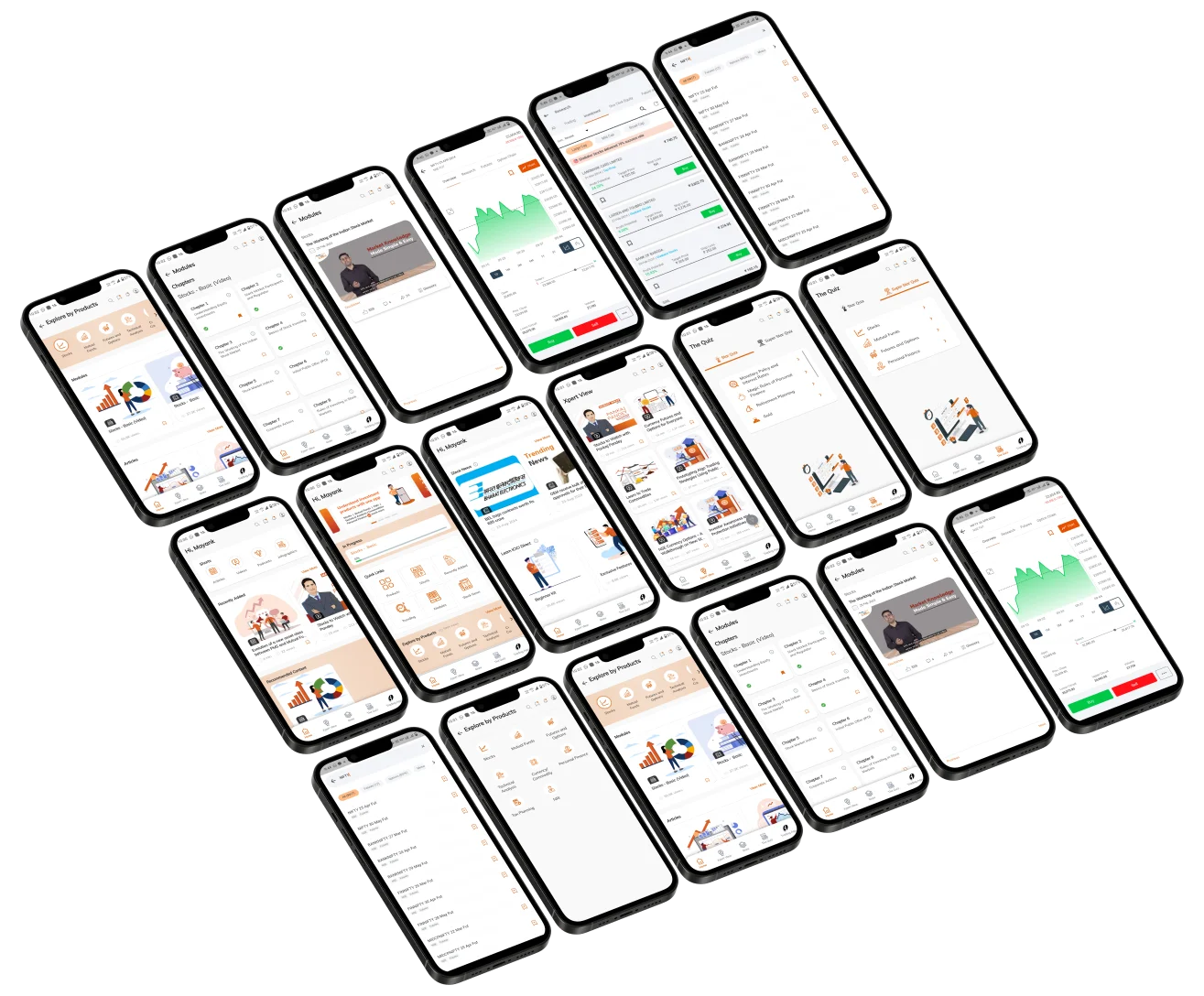
Elevate Your Financial Knowledge with the
ICICI Direct iLearn App
Elevate Your Financial Knowledge with the
ICICI Direct iLearn App
