




Download
iLearn application
Elevate Your Financial Knowledge with the
ICICI Direct iLearn App


The Future Contract, recently, has become a popular trading instrument with retail investors.Such a contract is a binding agreement through that the buyer and seller agree to purchase/sell a commodity at a fixed price on a pre-decided date in the future. Traders like entering such contracts as they can safeguard their interests against price volatility.
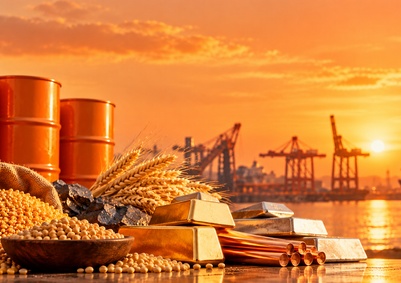
Commodity Futures is also Futures Contract where the buyer or seller agrees to buy or sell a commodity at a fixed price in the future. The commodity for such contracts comes under four categories: metals, livestock, agriculture, and energy.
The Future Contract is attractive to traders for the following reasons:
They get traded on organised exchanges, which provides a ready, liquid market. Like in the stock market, the Future Contract in commodities are bought and sold anytime on designated bourses. This is in contrast with Forward Contracts that get traded Over-The-Counter.
The volume of the underlying asset of a Future Contract that gets traded is standardised by the exchange. You need not negotiate between the buyer and seller. Moreover, the minimum price movement size is also specified by the exchange. The limit on the maximum price change within a day gets imposed by exchange. Separately, both quality and quantity in a single contract get standardised by the exchange.
A single clearing house is responsible for executing all the Future Contract and acts as the counterparty for every buyer and seller. If the trader is a buyer, then the clearing house acts as the seller. If the trader is a seller, the clearing house acts as the buyer. This minimises the default risk to a great extent.
The Commodity Futures help give necessary diversification to your portfolio. Commodity prices are controlled by supply-demand dynamics, geopolitical forces, natural disasters and weather conditions. As a result, commodities function as an independent asset class.
For an importer or an exporter, Commodity Futureshelps safeguard their interests against price fluctuations. You can procure or sell commodities at a pre-decided price before the actual transaction takes place. This ensures that you do not get impacted by any price changes that happen at a later date.
Like in other trades and investments, there is no guarantee of profit in the Future Contract in stocks or Commodity Futures. Profit depends on how accurately you predict the price movement in the market and your risk appetite. Typically, traders engage in multiple transactions in a single trade to increase their profit.
If you have a low-risk appetite, the Future Contract is not your cup of tea, as even a single trade ruins your chances of making profits. However, since it is a high risk-high reward segment, doing sufficient homework and having a solid strategy helps. Open your Trading Account to start trading in Future Contract.


Understand contango in commodity trading, how futures prices differ from spot prices, and how financing, storage and insurance costs influence commodity pricing.
 164 views
 1 minutes
 19 Oct 2026
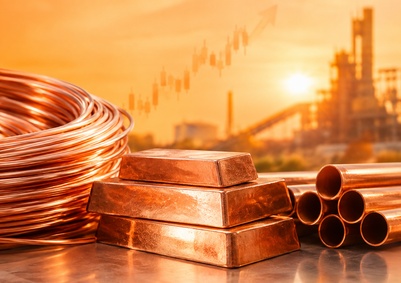
Copper is a widely used base metal known for its electrical and thermal conductivity, strength, ductility and corrosion resistance. It is used across electrical wiring, construction, machinery, power infrastructure and several industrial applications.
380 views
2 minutes
09 Oct 2026
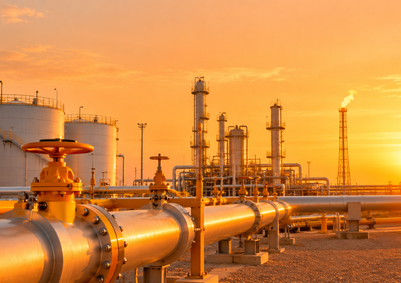
Natural Gas is a widely traded energy commodity used for electricity generation, industrial activity, heating and other applications. Its prices can react sharply to weather, supply and demand, inventories, global energy markets and geopolitical developments.
647 views
1 minutes
30 Sep 2026

Elevate Your Financial Knowledge with the
ICICI Direct iLearn App
Elevate Your Financial Knowledge with the
ICICI Direct iLearn App
