




Download
iLearn application
Elevate Your Financial Knowledge with the
ICICI Direct iLearn App




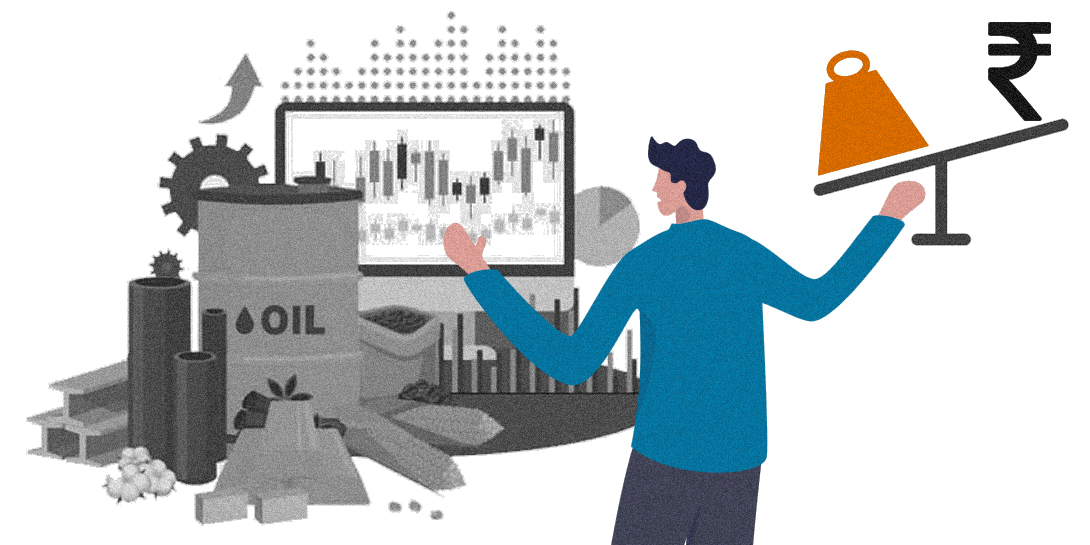
Commodity markets play an important role in any economy, as they help to determine the prices of the raw materials that are essential for many products we use on a daily basis. From agricultural products to precious metals, commodity prices are influenced by a range of factors including
Commodity prices play a critical role in the global economy, affecting everything from the cost of consumer goods to the stock market. Understanding how these factors interact to determine commodity prices is essential for both investors and consumers alike.
Supply and demand are the primary drivers of commodity prices. When demand for a commodity exceeds supply, prices will generally rise, and when supply exceeds demand, prices will generally fall. For example, if there is a shortage of a particular type of crop due to weather conditions or disease, prices for that crop will typically increase, as demand continues to outstrip supply. On the other hand, if there is an overabundance of a certain commodity, such as oil or natural gas, prices may fall as supply outpaces demand.
The level of supply in the global market is another price driving factors for the commodities. As the law of supply states that when the global supply of commodity is high, prices will fall and vice versa. This is because as the supply of a commodity increase, the competition among producers for sales will increase, and producers will have to lower their prices to sell their products. On the other hand, as the supply of a commodity decreases, the competition among producers for sales will decrease, and producers will have the ability to raise their prices to increase their profits.
Another significant factor affecting supply is the cost of production. This includes the cost of inputs such as raw materials, labor, and energy, as well as the cost of transportation and storage. If the cost of production rises, the supply of a commodity will fall, and prices will increase. On the other hand, if the cost of production falls, the supply of a commodity will rise, and prices will decrease.
Demand for commodities is influenced by many factors, including economic growth, consumer spending, and government policies. For example, if the economy is growing, consumer spending is increasing, and the government is implementing policies that encourage investment in certain commodities, demand for those commodities will increase, and prices will rise. On the other hand, if the economy is slowing down, consumer spending is decreasing, and the government is implementing policies that discourage investment in certain commodities, demand for those commodities will fall, and prices will decrease.
Geopolitical events can also have a significant impact on commodity prices. Political unrest, wars, and natural disasters can disrupt the supply of certain commodities, causing prices to spike. For instance, if a major producer of a commodity such as oil is impacted by political instability or conflict, it can lead to supply disruptions, which can result in higher prices. For instance, the commencement of war between Russia and Ukraine in 2022 resulted in supply shortage thereby leading to a sharp rise in crude oil prices. Similarly, if a major importer of a commodity experiences economic problems, it can lead to lower demand and lower prices.
Natural disasters, such as hurricanes, earthquakes and droughts also have a significant influence on commodity prices. For example, if a hurricane strikes a major agricultural area, it can lead to significant damage to crops and infrastructure, which can result in higher prices for the affected commodities. These hurricanes, especially in the Gulf of Mexico, lead to shutting down of oil drilling activities thereby leading to supply disruption. Similarly, droughts can impact the availability of water for crops, which can result in lower yields and higher prices.
In addition to supply and demand, speculation and trading also play a role in determining commodity prices. Speculators often buy and sell commodities in an effort to profit from price movements, and their activities can contribute to fluctuations in prices. For instance, if a large number of speculators believe that the price of a commodity will rise in the future, they may start buying that commodity, which can drive up its price.
Speculation can also play a role in determining commodity prices. Speculators buy and sell commodities in the hopes of profiting from price movements. If speculators believe that the price of a commodity will rise in the future, they will buy it, increasing demand and driving up prices. On the other hand, if speculators believe that the price of a commodity will fall in the future, they will sell it, decreasing demand and driving down prices.
It's important to note that commodity prices can also be influenced by government policies. For example, governments can use tariffs and import quotas to regulate the flow of goods in and out of their countries, which can impact prices. Additionally, government subsidies for certain commodities, such as biofuels, can lead to increased demand and higher prices for those commodities.
Additional Read: Chapter 16: Understand Legal and Regulatory Environment of Commodity Derivatives
In conclusion, commodity prices are determined by a complex interplay of factors including supply and demand, geopolitical events, natural disasters, speculative trading, and government policies. Understanding these factors and how they interact is essential for anyone involved in the commodity market, whether as an investor, a producer, or a consumer. By monitoring these factors, investors can make informed decisions and consumers can be better prepared for changes in the prices of the commodities they rely on.


Natural Gas is a widely traded energy commodity used for electricity generation, industrial activity, heating and other applications. Its prices can react sharply to weather, supply and demand, inventories, global energy markets and geopolitical developments.
 142 views
 1 minutes
 30 Sep 2026
Gold is more than a precious metal. It is a safe-haven asset, investment avenue, central-bank reserve asset and industrial commodity. For a commodity trader, understanding both Gold's fundamentals and the contract being traded is important.
309 views
3 minutes
23 Sep 2026
Gold is one of the world's most actively traded precious metals and is widely used for investment, jewellery and industrial applications. It is also considered a safe-haven asset during periods of economic or market uncertainty.
668 views
3 minutes
07 Sep 2026


Elevate Your Financial Knowledge with the
ICICI Direct iLearn App
Elevate Your Financial Knowledge with the
ICICI Direct iLearn App
