


-202610121017596081271.jpg)




Download
iLearn application
Elevate Your Financial Knowledge with the
ICICI Direct iLearn App





Do you know what separates a successful trader from an unsuccessful one? It’s his or her ability to draw and interpret charts, conduct stock analysis, understand market sentiments, and decipher other external factors that can impact the market. Additionally, he or she must have adequate knowledge of the market and trading compliances.
However, one aspect that we often ignore, which is very critical to become a successful stock trader, is understanding trading psychology. We all must know that whenever a trader decides on buying or selling certain stock(s), his or her decisions are guided by trading psychologies. These psychologies play a vital role in determining the success or failure of a trade.
It is essential for a stock market trader to understand trading psychologies and not allow these thought processes to impact the outcome of their trades. Let’s discuss in detail what trading psychology is, the different types of trading psychologies, and how these can impact the outcome of your trades.
Trading psychology refers to different emotions, behaviour, and mental state a trader can experience while trading in the stock markets. Trading psychology may differ from one trader to another and is mostly influenced by their emotional intelligence, biases, behaviour, and various other factors. Understanding trading psychology is as important as gaining market knowledge, experience, and skill.
Successful traders are more aware of their trading psychology and know how to keep their emotions in check while handling market volatility and price fluctuations.
Human emotions are complex. Different human beings may react differently to a stimulus and hence, may feel different emotions in the same situation. When we talk about trading psychology, we need to talk about the range of emotions a trader can experience while trading in the stock market:
One of the most common emotions that impact maximum traders is fear. Fear is a natural emotion that comes to mind whenever we face a threat or a difficult situation. In the stock market ecosystem, fear means the fear of losing your money.
When you take a position in the stock market anticipating a movement, but the stock starts moving in the opposite direction, fear starts to creep in. As you incur more losses, you may start fearing and make a sudden decision to exit the trade. However, after some time, the stock starts moving in your anticipated direction, and you’re left with a feeling of regret.
Fear refers to the anxiety of losing all your money, while greed is when you want to earn more and more when the stock is moving in your anticipated direction. Greed is the opposite of fear.
Suppose you’ve entered an active position in the market, and your stock starts moving in the anticipated direction. Now, even after earning a substantial profit, you feel that you can earn more and not exit the trade. However, suddenly the movement reverses, and you start losing all your profit until the fear creeps in.
Avoiding fear and greed while trading in the stock markets is crucial. Successful traders trade with strict targets and stop losses.
Another emotion that can impact a trader is hope. Unlike gambling, where you can sit and hope for a favourable outcome, trading in the stock markets should be done with well-defined strategies.
Imagine buying a share in anticipation that its prices will rise, but the opposite happens. However, you still hope the prices will rise and wait until you lose a large chunk of your investment.
Neither fear nor mindless hope will make you a successful trader.
When you’re trading in the stock markets, you must understand that on some days, you will make losses, and on some days, you will profit. It should never be a matter of ego that I will end the day only when my portfolio is in green. This way, you can end up making wrong decisions.
To be a successful stock market trader, you must learn how to handle market volatility and price fluctuations. You must understand different trading psychologies and know how to control your emotions while making trade-related decisions. Remember that your focus should be on the process rather than the outcome.


Copper is a widely used base metal known for its electrical and thermal conductivity, strength, ductility and corrosion resistance. It is used across electrical wiring, construction, machinery, power infrastructure and several industrial applications.
 190 views
 2 minutes
 09 Oct 2026
Natural Gas is a widely traded energy commodity used for electricity generation, industrial activity, heating and other applications. Its prices can react sharply to weather, supply and demand, inventories, global energy markets and geopolitical developments.
354 views
1 minutes
30 Sep 2026
Gold is more than a precious metal. It is a safe-haven asset, investment avenue, central-bank reserve asset and industrial commodity. For a commodity trader, understanding both Gold's fundamentals and the contract being traded is important.
500 views
3 minutes
23 Sep 2026
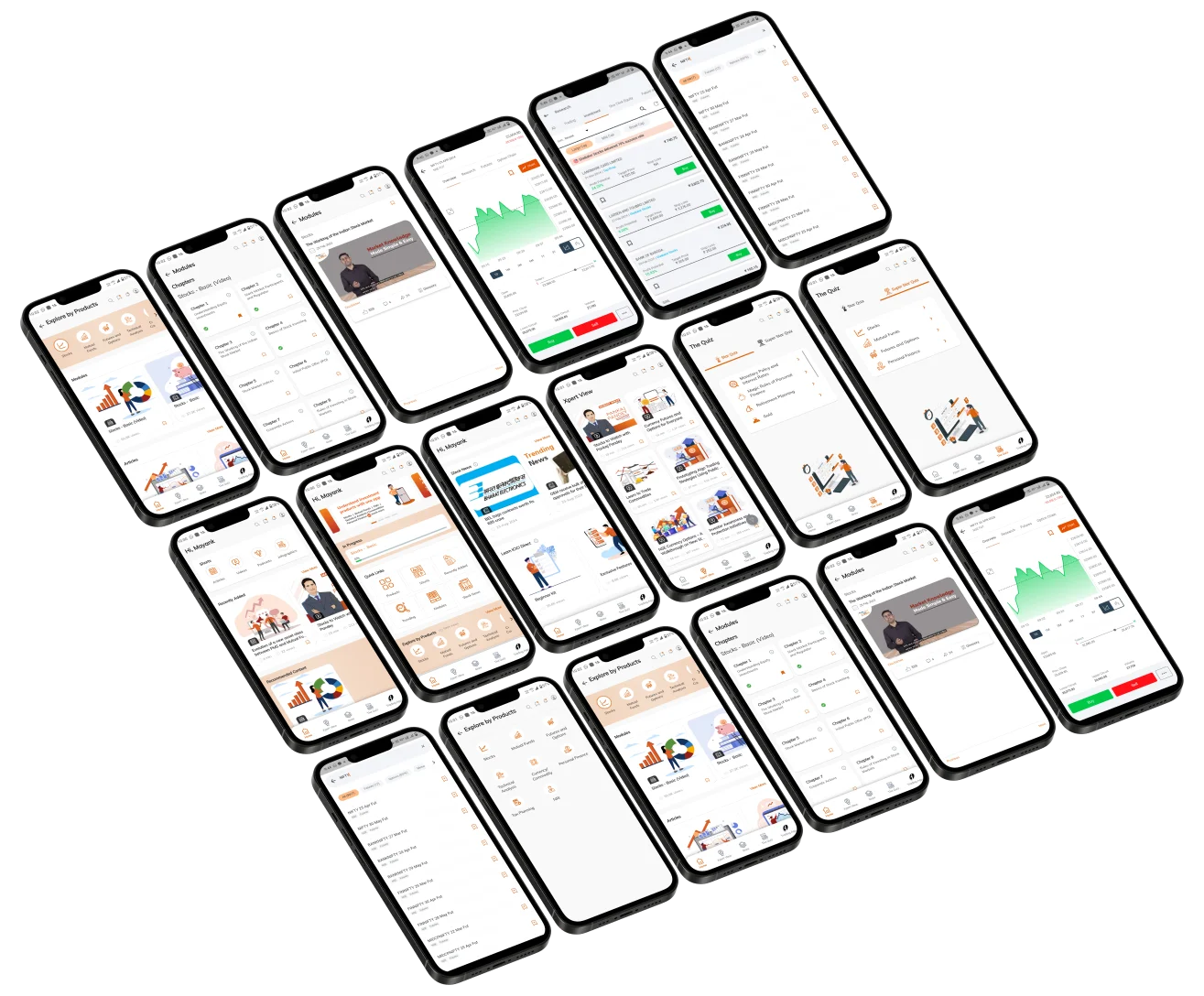
Elevate Your Financial Knowledge with the
ICICI Direct iLearn App
Elevate Your Financial Knowledge with the
ICICI Direct iLearn App
