


-202610121017596081271.jpg)




Download
iLearn application
Elevate Your Financial Knowledge with the
ICICI Direct iLearn App





The advent of technology has made it easier to trade in the stock market. From physical trading pits to mobile app-based trading, the market ecosystem has evolved enormously. You no longer need to visit the stockbroker in person to make a trade. The physical share certificates are also done away with. Today shares are held in a dematerialised form, securely in your Demat Account. And your Demat Account is secured by a Depository. Let us understand what is a depository and the services offered by a depository.
A depository is an institution that securely holds shares and other financial securities on behalf of investors in a dematerialised format or an electronic form. Investors need to open a demat account with a Depository Participant (DP), who acts as a link between an investor and a Depository.
Demat accounts store all your financial securities in an electronic form. These demat accounts are managed by the depositories. When you purchase shares, they get credited to your demat account. When you sell them, your demat account gets debited.
DPs are agents of the depository. It could be a bank, a Non-Banking Financial Company (NBFC), or a stockbroking firm. You open a Demat Account with any DP you prefer. Generally, you must consider services and associated costs to choose a suitable DP. It is also advisable to open a Trading Account with the same DP. This facilitates the seamless execution of trades.
When you raise a trade request through your DP it gets forwarded to the concerned depository, and then the trade is executed. A depository streamlines the entire trading process.
There are two depositories in India – National Securities Depository Ltd. (NSDL) and Central Depository Services India Ltd. (CDSL). Let us check out the significance and key difference between CDSL and NSDL.
National Securities Depository Ltd. (NSDL) was established in 1996. Headquartered in Mumbai, NSDL is the oldest and largest depository in India. It was the first depository to provide online trading services in India. Given this, it has played a pivotal role in shaping the modern Indian financial markets.
Central Depository Services India Ltd. (CDSL) was established in 1999. It is the second largest Depository in India, that’s headquartered in Mumbai. Similar to NSDL, it provides online trading services.
Both NDSL and CDSL are regulated by the Securities and Exchange Board of India (SEBI). Both depositories are responsible for the safekeeping of various financial securities like stocks, bonds, debentures, commercial papers and mutual funds. They keep a track of stock ownership, facilitate the trading of securities in the market and also offer clearing and settlement services,
The following are the most popular services offered by these two Depositories:
Besides regulating smooth transactions, the depositories strengthen and streamline the process of transferring the benefits to the shareholders’ accounts. The companies issue certain benefits to shareholders such as dividends and bonus shares. Depositories help in the automatic transfer of such benefits to the demat accounts of respective shareholders.
Moreover, investors can use their shares held in demat accounts as collateral against a loan. Both depositories, NSDL and CDSL provide a collateral account that holds the pledged securities till the loan is repaid.
Now, these are only some of the service offerings of depositories. You can learn more about the depository services offered by visiting their respective websites.
Following are the key differences between NSDL and CDSL to make note of:
|
Point of difference |
NSDL |
CDSL |
|
Operating market |
NSDL primarily operates in the National Stock Exchange (NSE). |
CDSL primarily operates in the Bombay Stock Exchange (BSE). |
|
Year of establishment |
NSDL was established in 1996. |
CDSL was established in 1999. |
|
Demat Account number format |
NSDL issues a 16-digit alpha-numeric number beginning with IN. |
CDSL issues a 16-digit Demat Account number. It does not have any alphabet. |
|
Promoters |
NSDL is promoted by NSE, IDBI Bank Ltd. and Unit Trust of India. |
CDSL is only promoted by BSE. |
|
Number of Demat accounts* |
3.07 crore |
7.96 crore |
|
Depository Participants* |
284 |
585 |
*As on January 31, 2023
A depository participant can choose to be registered with both depositories as well.
There is no straight answer to who is a better depository between NSDL and CDSL. The decision of choosing a depository lies with your DP. For various reasons, it may choose to hold your Demat Account with either of the two depositories. Both depositories offer similar services and provide seamless transactions in the market.


Copper is a widely used base metal known for its electrical and thermal conductivity, strength, ductility and corrosion resistance. It is used across electrical wiring, construction, machinery, power infrastructure and several industrial applications.
 189 views
 2 minutes
 09 Oct 2026
Natural Gas is a widely traded energy commodity used for electricity generation, industrial activity, heating and other applications. Its prices can react sharply to weather, supply and demand, inventories, global energy markets and geopolitical developments.
354 views
1 minutes
30 Sep 2026
Gold is more than a precious metal. It is a safe-haven asset, investment avenue, central-bank reserve asset and industrial commodity. For a commodity trader, understanding both Gold's fundamentals and the contract being traded is important.
500 views
3 minutes
23 Sep 2026

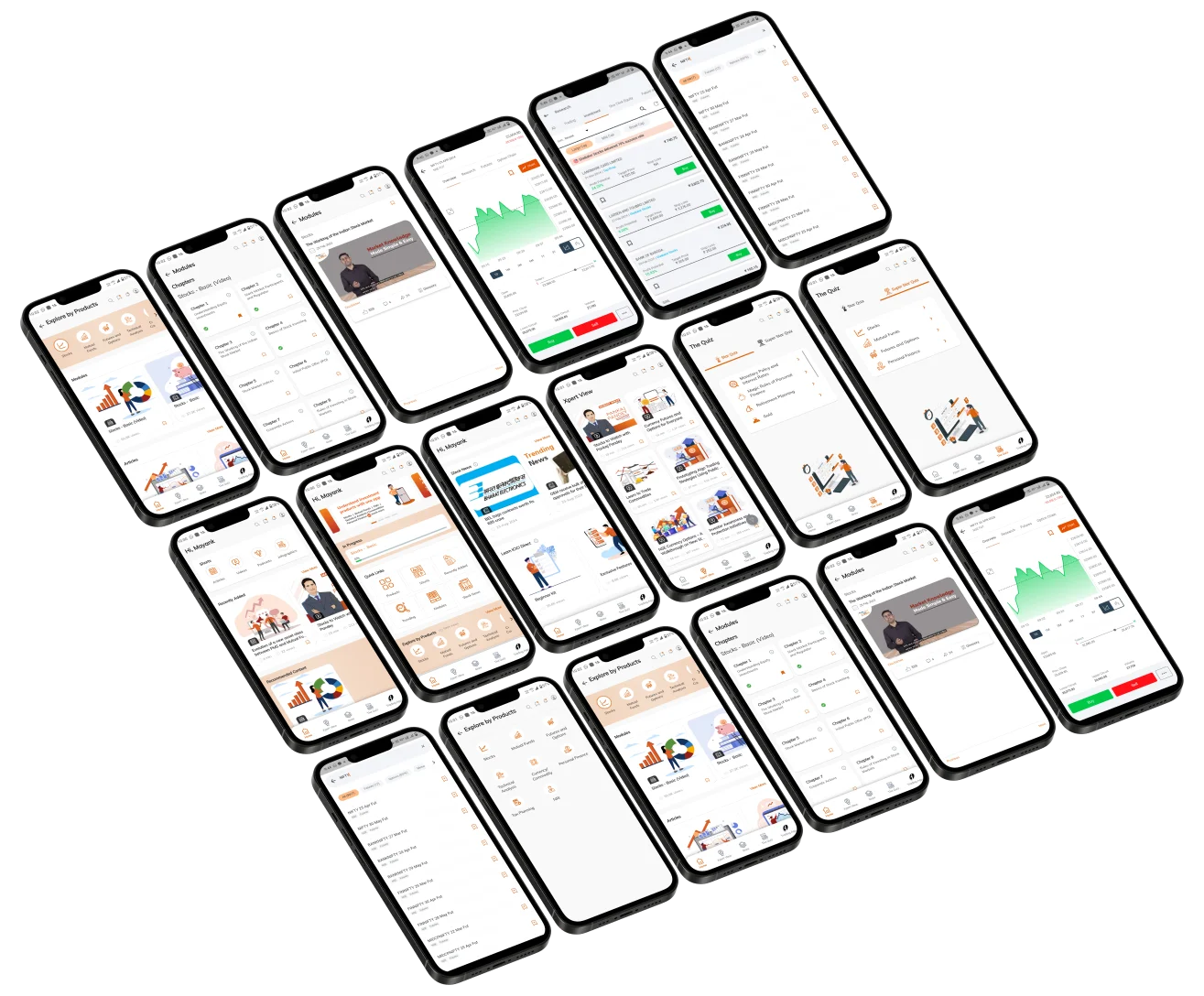
Elevate Your Financial Knowledge with the
ICICI Direct iLearn App
Elevate Your Financial Knowledge with the
ICICI Direct iLearn App
