



-202610121017596081271.jpg)



Download
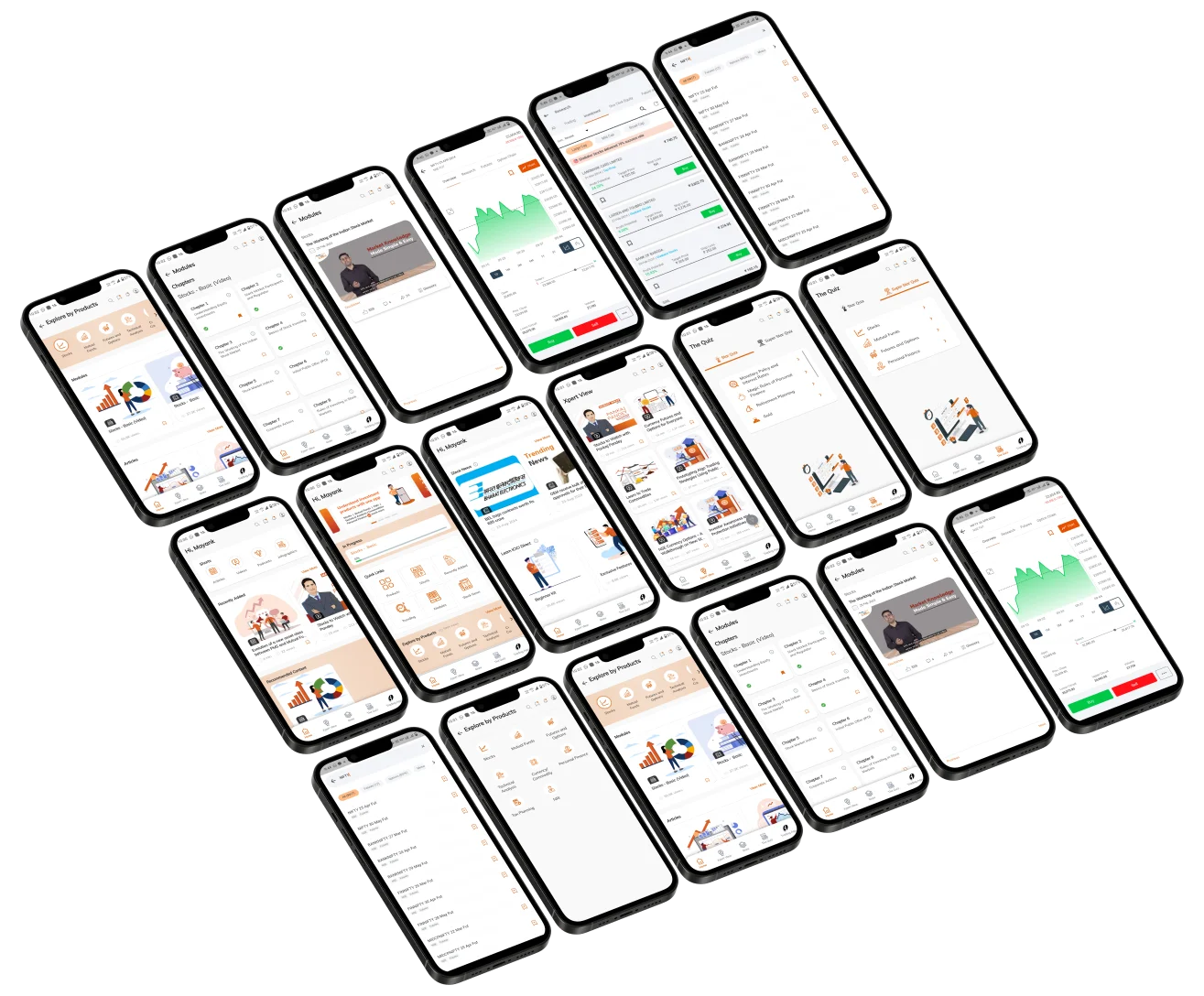
iLearn application
Elevate Your Financial Knowledge with the
ICICI Direct iLearn App





The Economic Survey of India provides in-depth details on the economic development across sectors over the previous fiscal year. It also lists the future challenges and the way forward. The Economics Division of the Department of Economic Affairs (DEA) prepares the flagship report with guidance from the Chief Economic Advisor (CEA). It is presented before the Parliament a day before the Union Budget.
Generally, there is a difference of one day between the release of the Economic Survey and the Budget. Economic Survey of India is likely to be presented on 31st January, while the Union Budget is to be presented on 1 February.
The document covers the performance of the country last year. It outlines challenges that can arise in the future and measures to tackle them. It essentially helps to identify what sectors require focus in the coming financial year and where there is a need for improvement. The goal of the document is to lay the groundwork for the presentation of the Union Budget.
Within the survey, one can find economic growth forecasts with comprehensive rationales of why the economy can grow faster or decelerate.
The Economic Survey holds value since it informs the masses about the state of the economy and the significant schemes announced by the government, which can influence their lives. Moreover, it suggests policy changes, which act as a guide in devising national policies.
Usually, the Economic Survey consists of two parts. The first part covers the economic challenges the country is undergoing. The second part reviews the activities of the previous financial year, covering all the major sectors of the economy.
This year, the Economic Survey might have one part only providing data across sectors for the financial year. Since there is no full-time Chief Economic Advisor (CEA), policy prescriptions that are a part of the main volume 1 can get skipped.
In 2018, former Chief Economic Advisor, Arvind Subramanian, released the document pink. It was something different and happened for the first time. It indicated support for women who suffered violence and promoted more gender equality. Apart from the document's colour, he also made it more interesting with quotes and additional details. Besides, for the first time, the Economic Survey consisted of data generated by the GST Network and the Indian Railways to get an idea of the flow of people and goods across states within India.
No. There is no such instruction in the Constitution. But it comes as a Government practice to release the document every year before the Union Budget.
The website for the Union Budget, www.indiabudget.nic.in, and the website of the Ministry of Finance, www.finmin.nic.in, has the Economic Survey in PDF form.
The Economic Survey is the most important document of the finance ministry. It evaluates the country's economic development over the previous financial year. It provides detailed statistical data for all sectors, including manufacturing, agricultural, and industrial sectors. Moreover, it reviews the country's macroeconomics over the previous year and prepares an outline for the coming financial year.


Understand contango in commodity trading, how futures prices differ from spot prices, and how financing, storage and insurance costs influence commodity pricing.
 187 views
 1 minutes
 19 Oct 2026
Copper is a widely used base metal known for its electrical and thermal conductivity, strength, ductility and corrosion resistance. It is used across electrical wiring, construction, machinery, power infrastructure and several industrial applications.
402 views
2 minutes
09 Oct 2026
Natural Gas is a widely traded energy commodity used for electricity generation, industrial activity, heating and other applications. Its prices can react sharply to weather, supply and demand, inventories, global energy markets and geopolitical developments.
672 views
1 minutes
30 Sep 2026

Elevate Your Financial Knowledge with the
ICICI Direct iLearn App
Elevate Your Financial Knowledge with the
ICICI Direct iLearn App
